Possible Administrative Execution in December for Illegal Landfilling in Naewari, Ulju County, Ulsan
- Input
- 2026-08-30 15:44:25
- Updated
- 2026-08-30 15:44:25
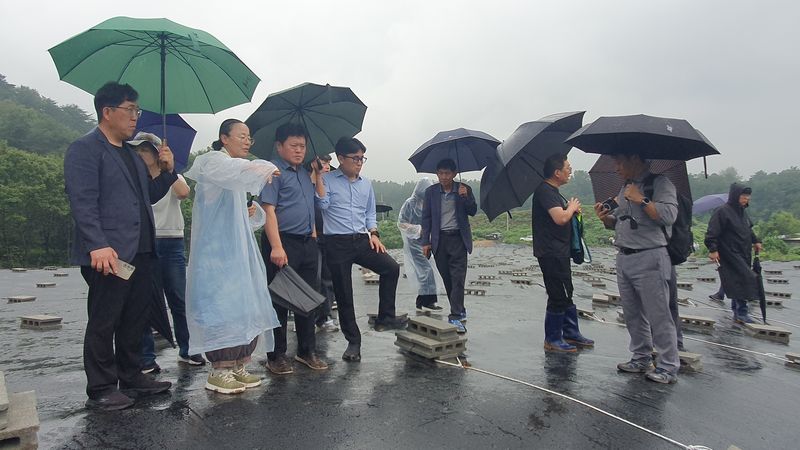
[Financial News, Ulsan = Reporter Choi Soo-sang] Despite securing funding, the administrative execution to remove the large-scale illegal landfilling and hazardous waste burial in Naewari, Duseo-myeon, Ulju County, Ulsan, is now expected to take place only at the end of this year. Ulsan Metropolitan City and Ulju County decided to make a preemptive public investment given the seriousness of the case, but delays are unavoidable because of the police investigation and the time required for essential administrative procedures.
According to Ulju County and the Ulsan Metropolitan Police Agency on the 30th, the case first came to light in late April, when residents reported that large amounts of unsuitable fill material were being brought into several farmland sites in Naewari. A joint investigation by the authorities confirmed that illegal waste had been dumped to heights of up to 4 meters, far above the legal limit of 2 meters, across about 16,500 square meters of farmland in three areas: two in Naewari, Duseo-myeon, and one in Bogan-ri. The amount of illegal waste buried so far is estimated at 46,037 tons.
The contamination at the site is severe. Detailed soil tests by the authorities found heavy metal pollution at alarming levels, with copper detected at 16 times the standard, nickel at 20 times, and zinc at 12 times. Water quality tests at seven nearby groundwater wells found that three were unfit for drinking. Among the contaminants detected was arsenic, a Group 1 carcinogen, at up to 1.2 times the standard, confirming contamination of nearby drinking water sources.
Recognizing the seriousness of the situation, Ulsan Metropolitan City and Ulju County decided to carry out a preemptive administrative execution to remove the waste first, rather than wait for the illegal operators to restore the site themselves, in order to prevent further harm to residents.
The city and county agreed to split the estimated 11 billion won emergency waste collection and disposal cost equally and included it in a supplementary budget. However, even if the budget is secured on time, some say the actual administrative execution at the site is likely to be delayed until around December.
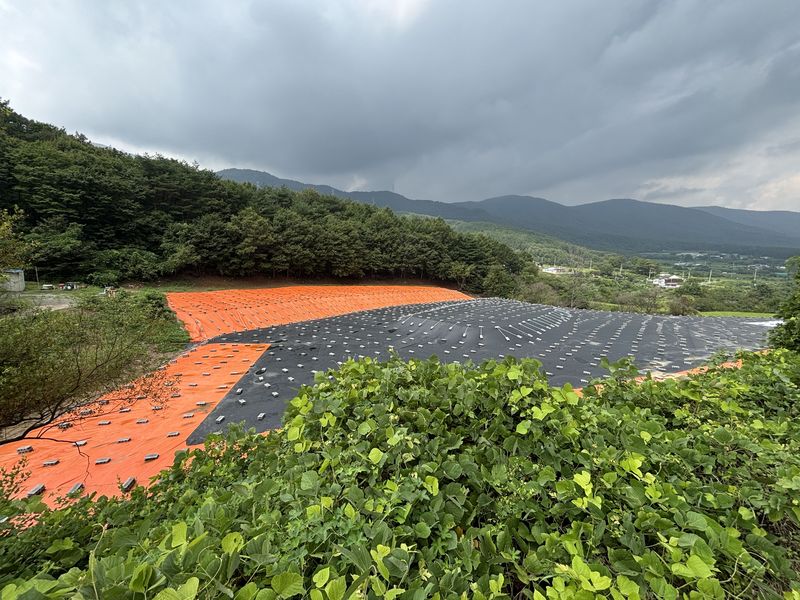
The administrative execution can be carried out in two main ways: moving the soil back to the original dumping sites identified through the police investigation, or, if those sites cannot be confirmed, legally relocating and burying the waste through a disposal company.
Unfortunately, the original source of the illegal waste has not yet been identified. If the police investigation clearly confirms the dumping sites, the soil can be forcibly returned and moved back to those locations immediately. Ulju County has identified the landowner at the Naewari landfilling site and the dump truck drivers who transported the soil, but it has not yet received information from police on the key issue: the original dumping source and its owner.
Selecting a licensed waste disposal company and moving the material to an approved landfill is not easy either. That is because the process can begin only after every step of the administrative execution procedure has been followed without exception.
At the early stage of the case, Ulju County issued restoration orders to the landowner and the responsible parties, and later extended the restoration period to about 50 to 60 days. The move was intended to avoid legal disputes that could arise if insufficient time were given for restoration.
If the site is still not restored after the voluntary restoration period expires, the county must go through a mandatory enforcement notice period of at least two more months, or 60 days, before it can actually carry out the administrative execution. Under the current situation, that means the action cannot be taken before December at the earliest.
In response to these concerns, both the police and Ulju County are working to find the fastest possible way to carry out the administrative execution.
The task force team under the major crimes unit of the Ulsan Metropolitan Police Agency, which is handling the investigation, has already identified the dumping sources for much of the soil and is now checking several smaller remaining sources.
A police official said, "We have already identified where the large volume of soil was taken from, and we plan to conduct a composition analysis to see whether it is the same as the soil dumped in Naewari," adding, "There are only a few smaller dumping sites, so we may be able to share the investigation results with Ulju County as early as the beginning of September."
Ulju County said it is preparing carefully, including receiving legal advice, to prevent delays in the administrative execution and procedural errors.
[email protected] Choi Soo-sang Reporter