Did the Fed Just Signal a Rate Hike? Could It Clash With Trump at the September FOMC?
- Input
- 2026-08-30 15:34:54
- Updated
- 2026-08-30 15:34:54
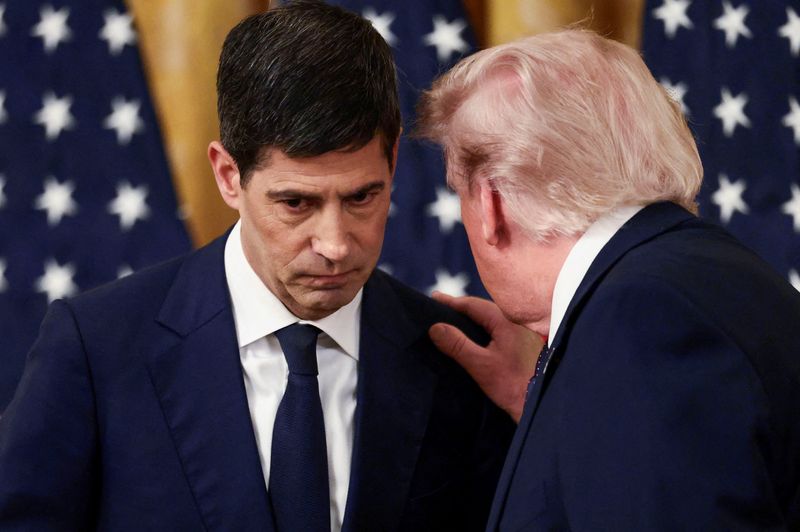
[Financial News] Kevin Warsh, the chair of the Federal Reserve System (FRS), has kept the benchmark rate unchanged for two straight meetings since taking office in May. But after suggesting that the Fed may need to tighten policy because of inflation, expectations for a U.S. rate hike have risen. Experts said Warsh appears to be taking a different view from Donald Trump, who wants lower rates, and urged markets to watch the September rate decision closely.
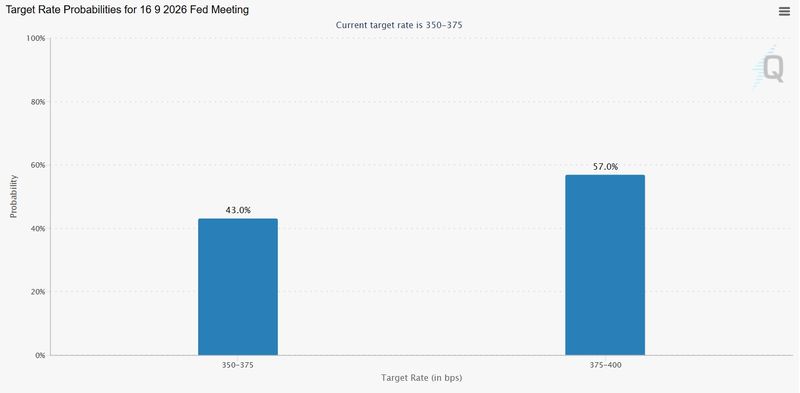
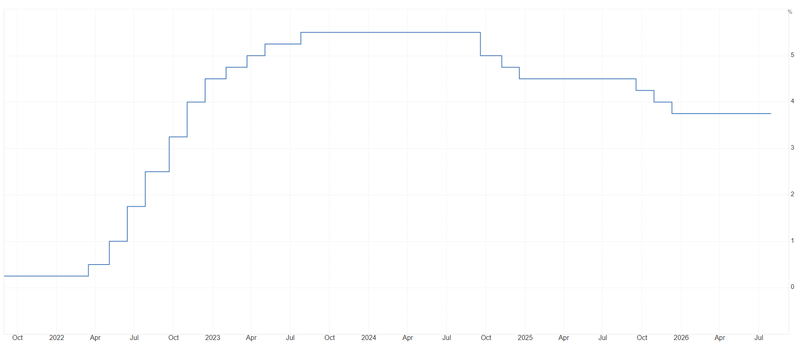
On the 29th local time, analysis of trading patterns in U.S. interest rate futures using the CME FedWatch Tool showed a 57% chance that the Fed will raise the benchmark rate by 0.25 percentage point in September. The probability of holding rates steady was 43%. The Fed is currently keeping its benchmark rate in the 3.5% to 3.75% range and will set rates at its regular Federal Open Market Committee (FOMC) meeting on the 15th and 16th of next month.
The odds of a hike jumped after Warsh's speech. On the 28th, his 100th day in office, he delivered the keynote address at the Fed's annual economic symposium, the Jackson Hole Economic Policy Symposium. He said, "From the standpoint of price stability, which is one of our responsibilities, the relevant indicators are becoming more concerning." The Personal Consumption Expenditures Price Index, the Fed's preferred inflation gauge, rose 3.7% in July from a year earlier.
Warsh said, "My standard is this: I need to be convinced that underlying inflation is moving toward the target at a clear and sufficiently rapid pace." He added, "If not, then we have work to do. That is our mission, our responsibility, and the task before us." Warsh also argued that the Fed's 2% inflation target, as measured by the PCE Price Index, is firm and fixed. He said the central bank bears full responsibility for the 65 months of elevated inflation. He also assessed that, overall, it would be difficult to describe broader financial conditions as restrictive.
Markets interpreted Warsh's remarks as a sign that he is open to monetary tightening through either a rate hold or a rate hike. The Wall Street Journal said Warsh strongly expressed his determination to curb inflation and clearly explained how the Fed intends to meet its inflation goal.
Aditya Bhave, head of U.S. economic research at Bank of America, told AP that Warsh needs to act at the September FOMC. He said, "Unless the August employment and inflation data are very weak, Warsh now has a responsibility to deliver a rate hike in September." He added, "Otherwise, he will probably lose the market credibility he gained today."
The problem is a clash with the White House. Since his first term, Trump has argued for rate cuts to ease debt burdens and support the economy, and he has repeatedly pressed Warsh to lower rates as well. In an interview on the 29th of last month, Trump was asked whether he was disappointed by Warsh's decision to keep rates unchanged. He replied, "He is fantastic, smart, and wise. I knew he wanted to cut rates." He added, "But he has a board," and said, "It is a very political board, and they want to raise rates."
Eswar Prasad, a professor at Cornell University, told the Financial Times on the 28th, "Warsh has drawn a clear line around his goals and intentions." He added, "That will put him in direct conflict with Trump, who is demanding rate cuts regardless of economic data or its consequences."
According to The New York Times on the 29th, Maurice Obstfeld, a senior fellow at the Peterson Institute for International Economics (PIIE), said Warsh is in a bind. He noted that if Warsh raises rates, he will clash with Trump, but if he holds them steady, he could lose market confidence in his commitment to fighting inflation. "He has multiple targets on his back. It is a no-win situation," Obstfeld said.
[email protected] Park Jong-won Reporter