Jeju Lowers Barriers to Tourism... 177 Sites Join 'Barrier-Free Travel'
- Input
- 2026-08-30 12:32:43
- Updated
- 2026-08-30 12:32:43
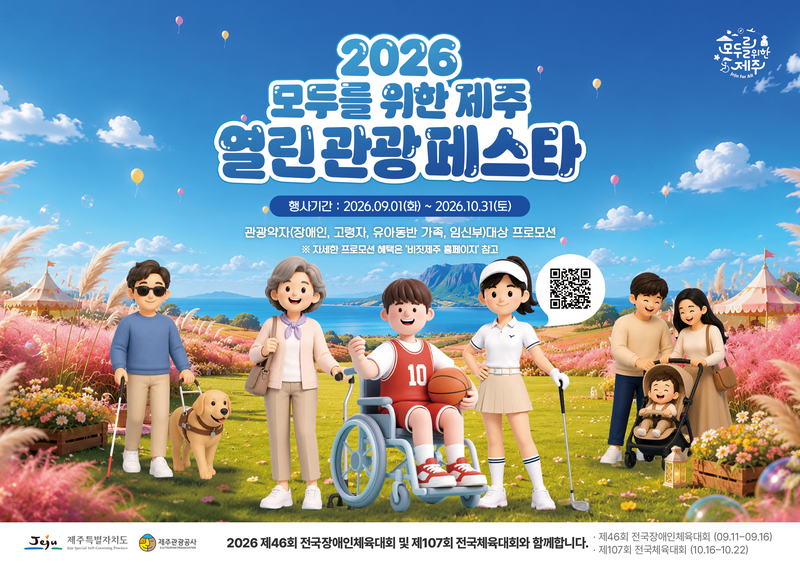
[Financial News Jeju = Reporter Jung Yong-bok] In Jeju, where the National Para Games and the Korean National Sports Festival will be held one after another, a two-month barrier-free tourism project is being launched to lower travel barriers for people with disabilities, older adults, pregnant women, and families with infants and young children.
According to Jeju Special Self-Governing Province and the Jeju Tourism Organization on the 30th, the 'Jeju for All, Open Tourism Festa 2026' will be held across Jeju Province from Sept. 1 to Oct. 31.
Barrier-free tourism is a form of tourism that reduces physical and informational constraints so that anyone can use tourist sites, transportation, lodging, and experience facilities regardless of disability, age, or mobility.
This event is aimed not only at people with disabilities, but also at older adults, pregnant women, and travelers who may face inconvenience in getting around or using facilities, including families with infants and young children.
A total of 177 sites are participating, including 117 tourism businesses and 60 public tourist attractions. Participating venues, including Jeju Shinhwa World and the Jeju Aerospace Museum, will offer discounts and improved convenience for eligible visitors.
This year's event has been expanded from once a year to twice, in the first and second halves of the year. In the spring event held in April, 175 sites took part, including 115 tourism businesses and 60 public tourist attractions.
The fall event is drawing attention because it coincides with national sports competitions. The 46th National Para Games will be held in Jeju from Sept. 11 to 16, and the 107th Korean National Sports Festival will follow from Oct. 16 to 22. The structure allows tourism accessibility programs to run at the same time as large numbers of athletes, families, and event officials visit Jeju.
The event will begin with an 'Open Tourism Concert' at 2 p.m. on Sept. 1 at Hondi Nurimteo. Artists, including the Hatbit Orchestra under the Jeju Provincial Office of Education, will take the stage with performances designed to lower barriers to cultural enjoyment.
A customized Jeju trip for people with physical disabilities, linked to the GKL Social Contribution Foundation, will also be offered. The program is designed to broaden opportunities for participation in Jeju tourism by taking disability type and mobility conditions into account.
The festival will conclude with a program that lets wheelchair users experience Jeju's natural scenery firsthand. On Oct. 31, a wheelchair marathon will be held on the Songaksan-Sagye wheelchair section of Jeju Olle Course 10. The event will showcase the potential of barrier-free tourism by allowing participants to run along an accessible travel route in Jeju.
Behind Jeju's push to expand barrier-free tourism lies the challenge of moving beyond simply increasing visitor numbers and instead building a tourism environment that is truly usable for everyone.
From whether a tourist site has ramps, to the availability of accessible restrooms and parking spaces, wheelchair routes, and access to tourism information, usability throughout the entire travel process determines where travelers with disabilities choose to go.
In particular, in regions hosting the National Para Games, not only access to stadiums but also how conveniently athletes and their families can use lodging, dining, and tourism services before and after the competition can serve as a benchmark for the host city's tourism competitiveness.
Seungchul Ko, president of the Jeju Tourism Organization, said, "We will expand participation from the tourism industry and develop content that reflects different types of disabilities and travel needs." He added, "We will reduce mobility and usage barriers for travelers with disabilities and create an environment where anyone can travel around Jeju comfortably."
[email protected] Jung Yong-bok Reporter