There Is No Future in Providing Care Alone: K-Bio Bets on ‘Research-Oriented Hospitals’ [Leaders in K-Bio New Drug Development: Research-Oriented Hospitals (Part 3)]
- Input
- 2026-09-03 14:17:44
- Updated
- 2026-09-03 14:17:44
[Financial News] Over the past decade, research-oriented hospitals have laid the foundation for expanding hospitals’ role beyond patient care to include research and development (R&D) and commercialization. The initiative began in 2013 with the designation of 10 hospitals and has recently expanded to 21 hospitals following the transition to a certification system. The remaining task is to go beyond expanding the system in name and develop hospitals into key hubs of the national biohealth industry through stable R&D support.
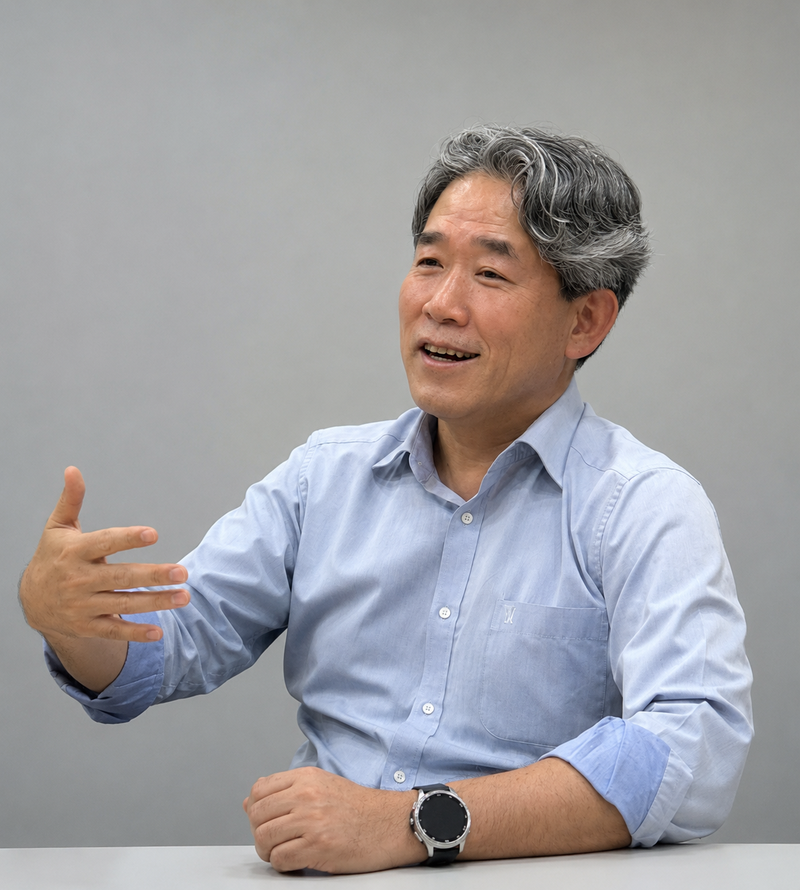
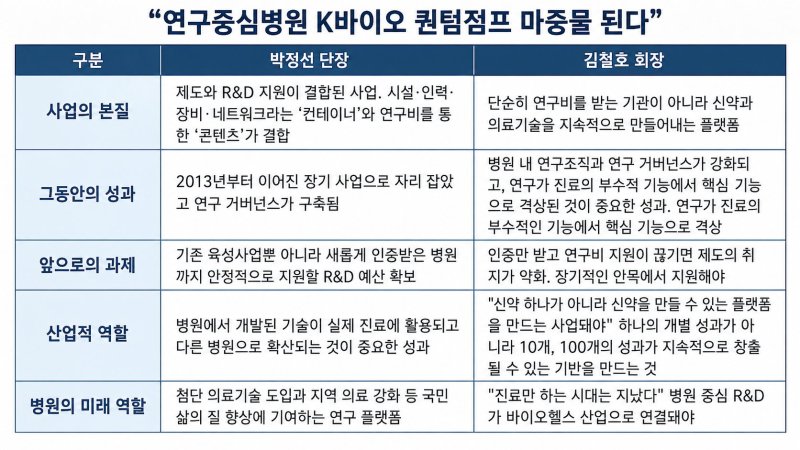
Park Jeong-seon, head of the Research-Oriented Hospital Support Team at the Korea Health Industry Development Institute, emphasized, “Because research-oriented hospitals are a program that combines long-term R&D support with an institutional framework, a stable support system looking ahead to the next 10 years is needed.”
Kim Cheol-ho, chairman of the Research-Oriented Hospital Council and director of research at Ajou University Hospital, said, “Research-oriented hospitals are not a one-off program for developing a single new drug. They are national platforms that continuously create new drugs and advanced medical technologies.” He added, “Therefore, stable investment looking ahead at least 10 years is needed, rather than support focused on short-term results.”
The Need for a Stable Support System Looking Ahead 10 Years
On the 3rd, Park compared the characteristics of research-oriented hospitals to a ‘container and content.’ He explained that the structure involves building a research foundation—including facilities, personnel, equipment, and networks—and investing research funds within it to produce results.Park said, “Research-oriented hospitals are a program that combines policy and institutions with research funding. It brings together the ‘container’—facilities, personnel, equipment, and networks—and the ‘content’ that produces results within it.”
Research-oriented hospitals, in particular, must build a research foundation over an extended period, unlike ordinary R&D programs that seek results in a short time. Park stressed that the research-oriented hospital program is a long-term project even among health and medical R&D programs, highlighting a structure that supports a major project for more than eight years.
As the system has expanded, the importance of stable budgetary support has grown. Follow-up R&D support is needed not only for the existing development program covering 10 hospitals but also to allow newly certified hospitals to continue their research.
Park said that the Ministry of Health and Welfare, the Korea Health Industry Development Institute, and the Research-Oriented Hospital Council are reviewing the past 10 years and establishing a development strategy for the next decade.
A Major Shift Toward ‘Hospitals That Build Industries’: K-Bio’s New Battleground
Kim explained the value of research-oriented hospitals from a more industrial perspective. The key is not individual research achievements but their role as platforms capable of continuously producing results.He emphasized, “Research-oriented hospitals are not a program for creating a single new drug. They are a program for building platforms capable of developing new drugs.” He added, “The goal is to create a foundation capable of producing 10 or 100 achievements, rather than just one.”
Kim stressed that hospitals do not need to possess every research facility and function themselves. However, they must serve as ‘organizers’ that connect each participant from basic research through nonclinical research, CMC, clinical trials, and commercialization. He compared this role to a ‘runway’ that connects the entire process from a researcher’s idea to commercialization.
Such platforms could provide the foundation for South Korea to leap from a follower to an innovator in the biohealth industry. The country already has world-class hospitals and medical professionals, extensive clinical experience and data, and outstanding researchers. Kim explained that research-oriented hospitals can serve as the point of connection that links these existing capabilities with companies and transforms them into new drugs and advanced medical technologies.
Kim particularly emphasized that government funding should be viewed not simply as research money but as ‘seed funding.’ He said, “The research funding provided to research-oriented hospitals is not simply research funding; it serves as seed funding.” He explained, “Hospitals can provide matching funds and attract corporate money, thereby expanding the actual scale of research.”
The achievements of research-oriented hospitals do not end with a single paper or patent. They accumulate through the process of establishing research governance, bringing researchers together, connecting clinical care with research, and ultimately leading to technology transfers and startups. This is why Kim compared building governance at research-oriented hospitals to “laying the foundation on reclaimed land.”
Ultimately, the next 10 years for research-oriented hospitals should not end with increasing the number of certified hospitals. The key is to connect long-term R&D budgets to the existing research infrastructure and medical expertise of these hospitals and convert them into industrial achievements.
Kim emphasized, “The era of providing care alone has passed.” He added, “An era is opening in which hospital-centered R&D in medicine and biohealth, beyond patient care, becomes an industry.”
Investment in research-oriented hospitals is not limited to supporting a few hospitals. It is an investment in transforming hospitals, which are closest to patients, into national R&D platforms that create new drugs and advanced medical technologies.
Now that the institutional framework of the certification system has been completed, the government must connect the potential of research-oriented hospitals to industrial achievements through long-term budgets and sustained policy attention.
[email protected] Kang Jung-mo Reporter