Ruling Party Aims to Pass Basic Society Framework Act Within the Year, Calling It a "Global Standard"
- Input
- 2026-08-31 14:23:34
- Updated
- 2026-08-31 14:23:34
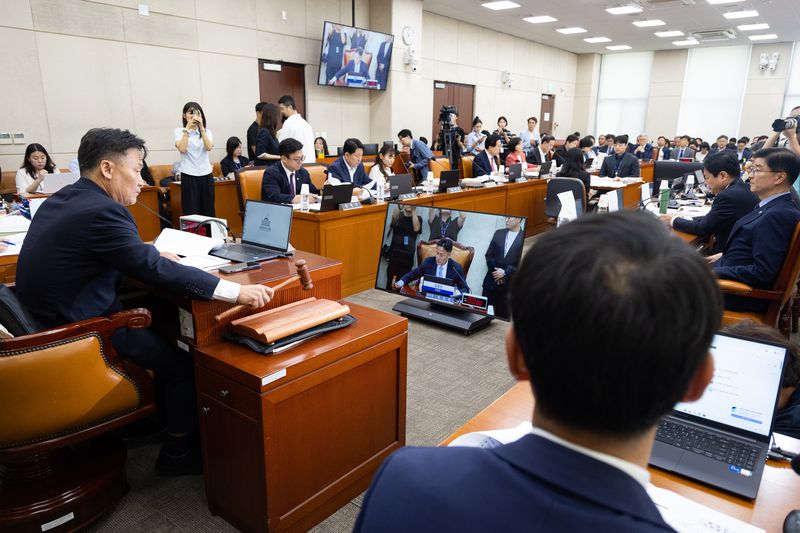
According to a key Democratic Party of Korea official on the Security and Public Administration Committee of the National Assembly on the 31st, the party plans to begin full-scale discussions on passing the Basic Society Framework Act during this Regular National Assembly session.
The Basic Society Framework Act provides the legal basis for establishing and implementing policies to realize a basic society at the national level. In particular, the framework act stipulates that the state should take the lead in establishing and carrying out policies that guarantee a minimum level of support in areas closely tied to people's basic rights, such as care, education, housing, medical services and transportation.
The Democratic Party of Korea and academic circles believe that once the framework act is passed first, it will speed up the allocation of state funds and the handling of related subsidiary bills. Two Basic Society Framework Act bills have already been submitted to the National Assembly. A party official said these bills are expected to undergo full review by the Security and Public Administration Committee once the regular session begins.
A Democratic Party of Korea official said, "The need for a basic society is growing as AI advances," adding, "It also has a global-standard aspect. Hasn't U.S. President Donald Trump also mentioned a similar idea related to a basic society?" The official expressed the party's determination to move the bill forward.
Kim Min-seok, leader of the Democratic Party of Korea, also stressed at a lawmakers' workshop ahead of the regular session, "I think people's sensitivity to the basic society concept is changing somewhat compared with the past," and added, "We need to raise and present a basic society that is more dignified and more upgraded." Analysts say this view from Kim could also become momentum for passing the Basic Society Framework Act.
The key challenge is overcoming opposition from the People Power Party. The basic society policy is a trademark of President Lee Jae-myung. In the midst of political confrontation with the government, the prevailing view is that the People Power Party will not simply step aside while the Democratic Party of Korea pushes one of the president's signature policies.
In fact, People Power Party leader Jang Dong-hyeok was reportedly considering deleting references to "universal basic income," a component of the basic society policy, from the party's platform and policy statement in December last year. However, the party has delayed the timing of that move ahead of the local elections. If the Democratic Party of Korea pushes ahead with the Basic Society Framework Act, the People Power Party is expected to take a hard-line stance, including reviving efforts to remove the universal basic income language.
The practical conditions are not easy either. Police reform has emerged as the top priority for the committee, driven by recent controversies over the so-called Jang Yoon-gi case, in which police were accused of reducing and concealing an investigation, and the Jang Mi-ran case, which sparked major public backlash after police falsely closed a missing-person report. Some analysts say this could make it difficult for the committee to fully deliberate on bills other than police reform, including the Basic Society Framework Act.
[email protected] Kim Hyeong-gu Reporter