Governor Hyun Song Shin Says the Won Has Built Up Immunity, Can Absorb $20 Billion in U.S. Investment
- Input
- 2026-08-30 10:40:41
- Updated
- 2026-08-30 10:40:41
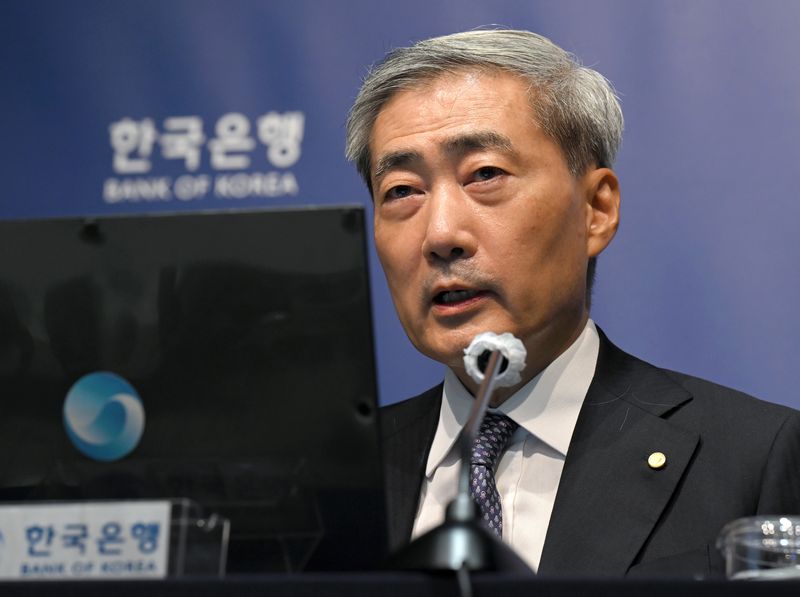
[Financial News] Hyun Song Shin, governor of the BOK, said the won has recently shown considerable resilience against external shocks.
He added that annual investment of up to $20 billion, or about 27.6 trillion won, in the United States is a level the foreign exchange market can handle, and that there is no need to worry excessively about pressure on the exchange rate.
Speaking with reporters in Jackson Hole, Wyoming, on the 28th local time during the Economic Policy Symposium, Shin said, "The exchange rate is already somewhat under control, and we are quite well prepared for any kind of shock."
He pointed to the recent rise in the DXY and the fact that the won has strengthened instead, saying, "I think the won has now built up some immunity." The won-dollar exchange rate closed at 1,372.5 won in Seoul's foreign exchange market on the 28th, its lowest level in 13 months.
"The exchange rate is a symbol of confidence in the monetary system."
Shin stressed that the exchange rate carries greater significance for the Korean economy than it does in many other countries. Because of the country's experience with the Asian financial crisis, he explained, the exchange rate is seen not just as a price reflecting trade conditions, but as an indicator of the overall economy and trust in the monetary system.He said, "In Korea, the exchange rate is especially important," and added that the BOK will continue to play a stabilizing role in the foreign exchange market.
He cited capital flows related to SK hynix's American Depositary Receipt listing in the United States and increased dollar selling by exporters as factors behind the won's recent strength.
On concerns that the agreement to invest up to $20 billion a year in the United States could weigh on the exchange rate, he dismissed them, saying, "It was agreed within a range that can be fully managed." He also noted that because the investment amount is capped at $20 billion, the actual execution could vary depending on domestic conditions.
No mechanical link to U.S. rates
On the Federal Reserve System's monetary policy, he made clear that the BOK does not need to simply follow U.S. interest rates.Shin said that even if the United States raises rates, Korea does not necessarily have to do the same. "We do not mechanically match rate differentials and follow along," he said. He added, however, that if U.S. rate hikes continue, domestic monetary policy conditions will also change, so decisions must be reassessed each time.
He described Kevin Warsh's speech, which drew attention at this year's Jackson Hole Economic Policy Symposium, as an important signal for the FOMC's policy direction in September.
Shin said Warsh has long warned against the so-called "hall of mirrors" problem, in which excessive central bank communication can distort market price formation, and he assessed that the speech included several elements the market had been looking for.
Shin also said that the BOK's digital currency experiment, Project Han-gang, was introduced as a case study at the meeting.
[email protected] Kang Jung-mo Reporter