"Japan's IPOs Have Grown Larger" Average Market Cap Tops 30 Billion Yen for the First Time
- Input
- 2026-08-30 10:23:14
- Updated
- 2026-08-30 10:23:14
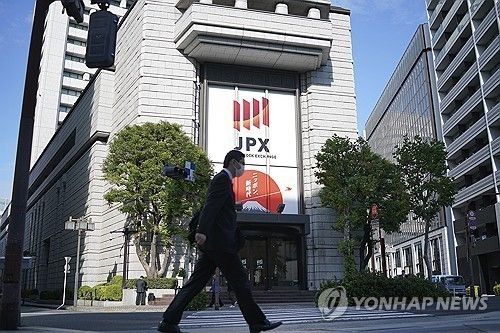
[Financial News, Tokyo = Seo Hye-jin, correspondent] The average market capitalization of companies that entered the Japanese stock market this year topped 30 billion yen, or about 25.86 billion won, for the first time ever, Nihon Keizai Shimbun reported on the 30th. The shift comes as the Tokyo Stock Exchange has tightened its listing maintenance standards, prompting companies to wait until they are larger before going public rather than listing early.
According to The Nikkei, the average market capitalization at the time of listing for companies newly listed on the Tokyo Stock Exchange between January and August stood at 30.9 billion yen, or about 26.64 billion won. That was a record high, up 60% from the same period last year. It was also 60% higher than the average since 2013, when the Tokyo Stock Exchange and the former Osaka Exchange were integrated.
The average time from a company's founding to its Initial Public Offering (IPO) also lengthened to 15 years, the longest on record. In the past, many companies went public after 12 to 13 years. More firms are now choosing to grow while remaining unlisted before seeking a listing, rather than entering the market at a relatively small size in their early stages.
Large IPOs lifted the overall average. This year, taxi-hailing app operator GO exceeded a market capitalization of 150 billion yen, or about 1.293 trillion won, at listing, while autonomous driving technology company TIER IV posted 64.4 billion yen, or about 555.1 billion won. Of the 15 IPOs this year, only seven companies had market capitalizations below 10 billion yen, or about 86.2 billion won.
In Japan's stock market, so-called small IPOs, in which companies list before their valuations have grown enough, have long been criticized for holding back the growth of emerging firms. When market capitalization is small, it is difficult to attract institutional investors with large amounts of capital, and share ownership tends to be concentrated among individual investors. As fundraising through new share issuance becomes harder, investment in new technologies and service development is also constrained.
To address these problems, the Tokyo Stock Exchange has decided to significantly tighten its listing maintenance standards for the Growth Market. Under the current rule, companies only need to reach a market capitalization of 4 billion yen, or about 34.5 billion won, within 10 years of listing. From 2030, however, they will have to achieve a market capitalization of 10 billion yen within five years of listing. The move is effectively aimed at curbing IPOs by smaller companies and requiring continued growth even after listing.
Weakness in the Growth Market is another reason behind the rule change. The Tokyo Stock Exchange Growth Market 250 Index, which is made up of emerging companies, has risen by only about 20% this year, lagging behind the Nikkei 225 Stock Average, which has gained about 30%. The exchange is concerned that emerging companies are failing to grow into large-cap stocks even after listing.
An IPO is not only a way for companies to raise growth capital, but also a means for founders, venture capital firms, and investment funds to cash out their investments. The Tokyo Stock Exchange is encouraging companies to build up their valuations sufficiently while still unlisted, rather than seeking an early listing to recover investment funds. The Nikkei said that as listed companies grow larger, institutional investor participation is expected to increase, and it will become easier to raise additional growth capital through secondary share offerings.
[email protected] Seo Hye-jin Reporter