Squid, Hairtail, Flounder and More... Seafood Prices Fluctuate Ahead of Chuseok
- Input
- 2026-08-30 10:01:46
- Updated
- 2026-08-30 10:01:46
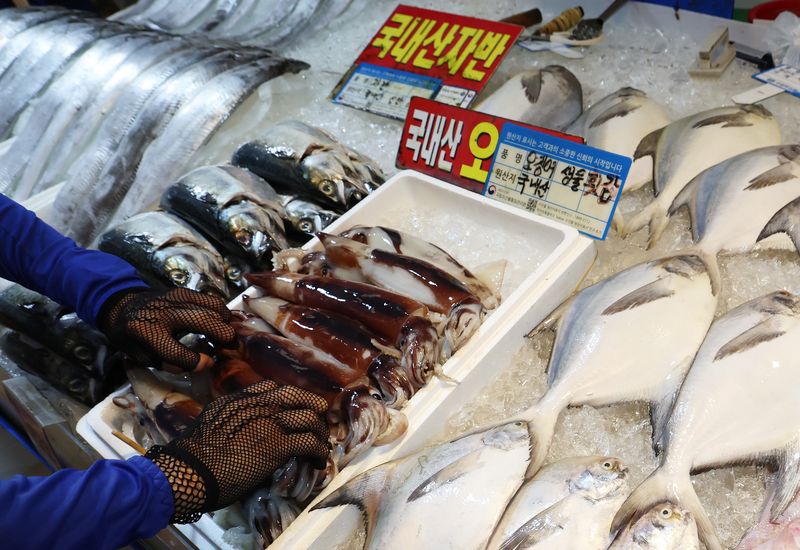
[Financial News] Prices of major seafood items have been rising one after another ahead of Chuseok. Squid and hairtail have become more expensive as supply has tightened due to lower catches, while farmed fish such as flounder and Korean rockfish are also seeing price increases after repeated damage from high water temperatures.
Imported mackerel is also on an upward trend, as lower catches in the source country have reduced the amount entering Korea.
According to the Korea Agro-Fisheries & Food Trade Corporation (aT) on the 30th, as of the 27th, squid (chilled, large) cost 5,210 won per fish, up 15.4% from a year earlier. Hairtail (chilled, large) rose 7.8% to 14,171 won, while Alaska pollock (frozen, large) climbed 6.8% to 4,146 won.
Squid was directly affected by the drop in production. Output last month came to 12,748 tons, down 28.7% from the same month a year earlier. Hairtail and Alaska pollock are also facing insufficient supply because of weak catches.
Mackerel imports plunge
Mackerel, often called the people's fish, is also becoming more expensive. Medium and large Norwegian mackerel, which Korean consumers prefer, has seen imports fall sharply as local catch quotas were reduced. Imports, which stood at 215,000 tons in 2024, fell to 160,000 tons last year and are expected to drop further to around 80,000 tons this year.As supply shrank, the price of imported mackerel per set of two fish reached 11,606 won as of the 27th, up 31.6% from a year earlier. Among major seafood items, this is the sharpest increase.
The situation is no different for farmed seafood. According to Suhyup Noryangjin Fisheries' trends for the third week of August, the price of farmed flounder reached 22,800 won per kilogram, up 6.5% from a year earlier. Korean rockfish is also trading at a higher level than last year.
The main reason for the rise in farmed fish prices is the repeated damage caused by high water temperatures in recent months.
In 2024, a high-temperature advisory lasted 71 days, killing 28.28 million farmed fish in South Gyeongsang Province alone. Analysts say the resulting supply shortage from the mass die-off is still affecting this year's prices of flounder and Korean rockfish.
Damage is continuing this year as well. As of the 27th, the number of farmed fish that had died nationwide had exceeded 9 million. Because farmed fish must be raised for a certain period before being shipped, prolonged damage from high water temperatures could affect future supply and prices.
There are also concerns that prices could face even greater upward pressure if demand rises ahead of Chuseok.
Government releases 20,000 tons from stockpiles
The government has begun releasing stockpiled seafood to help stabilize prices during the Chuseok holiday period.The Ministry of Oceans and Fisheries (MOF) said it will release a total of 20,000 tons of stockpiled seafood into the market by next month’s 27th, including 15,700 tons of Alaska pollock, 1,700 tons of squid, 1,500 tons of mackerel, 800 tons of hairtail, 200 tons of yellow croaker and 100 tons of dried anchovy.
The government-supplied products will be sold at up to 40% below market prices. MOF said it will monitor the prices of major seafood items every week and manage Chuseok inflation through stockpile releases and discount events.
[email protected] Kang Jung-mo Reporter