Jeju, where renewable energy accounts for 65%, left out of industrial electricity discount plan — the paradox of a 'demonstration island'
- Input
- 2026-08-30 09:25:22
- Updated
- 2026-08-30 09:25:22
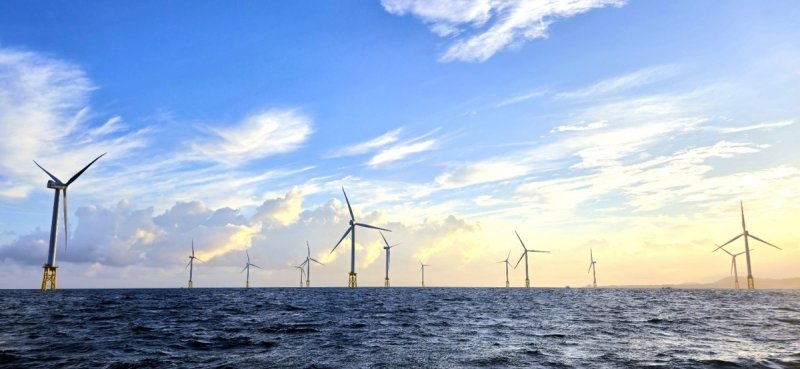
[Financial News, Jeju = Reporter Jung Yong-bok] Jeju Province, where renewable energy makes up more than eight times the share seen on the mainland, has been left out of the government's regional industrial electricity discount plan. Korea Electric Power Corporation (KEPCO) said Jeju should keep current rates because it is the first region to test new market systems such as the real-time market and the renewable energy bidding system, and because its power supply structure differs from that of the mainland.
The problem is that while other non-capital regions receive electricity bill cuts of up to 10%, companies in Jeju must continue paying the existing rates. As Jeju takes on the role of a national electricity market testbed, how to offset the relative cost gap that could affect business attraction and investment competition has emerged as a new issue.
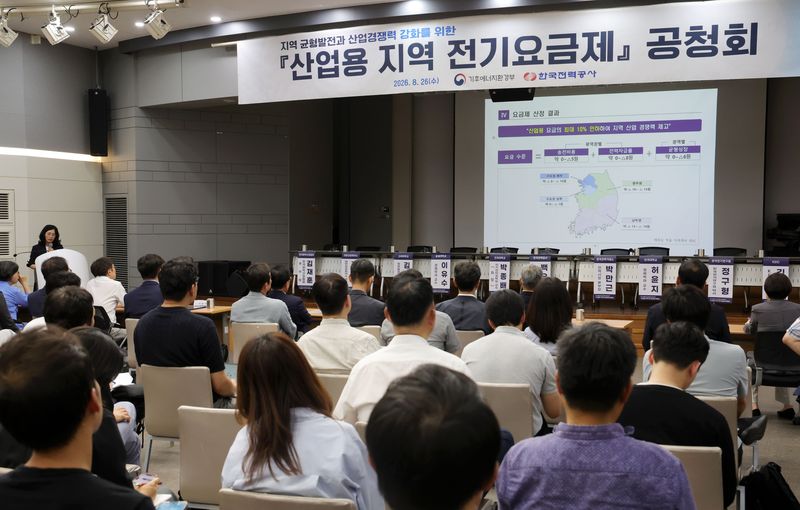
According to the Ministry of Climate, Energy and Environment and KEPCO on the 30th, the government held a public hearing on the 26th at KEPCO's southern Seoul headquarters in Yeongdeungpo District, Seoul, and unveiled a draft design for the 'industrial regional electricity pricing system.' It is the first concrete regional tariff plan released 2 years and 2 months after the Special Act on Activation of Distributed Energy took effect in June 2024.
The plan would add a new 'regional adjustment charge' to electricity bills, which currently consist of a basic charge, energy charge, climate and environment charge, and fuel cost adjustment charge, and set different industrial rates depending on where the electricity is used.
The system applies to industrial power, which accounts for 51% of KEPCO's sales. The government aims to shift companies and electricity demand toward non-capital regions with abundant power, as electricity price differences can influence where factories are located and where companies choose to invest.
The tariff calculation uses three criteria: transmission costs, self-sufficiency in electricity, and balanced regional growth. The country is divided into four broad zones — southern Seoul, northern Seoul, the central region, and the southern region — based on the power grid structure, and then further subdivided into 11 areas by applying balanced-growth conditions such as regional preference indexes and industrial crisis zones.
Jeju Province was excluded from this classification. The maximum discount by region reaches 18 won.
In southern Seoul, rates will remain at current levels or be adjusted by around 1 won per kWh. In northern Seoul, they will fall by up to about 10 won, while in the central region, including Gangwon and Chungcheong, they will drop by up to about 15 won.
In the southern region, where many nuclear and renewable power facilities are located, rates will be cut by as much as 18 won. That is about 10% of the 2025 average industrial electricity sales price of 181.9 won.
The government estimates that the industrial electricity burden will fall by about 2.8 trillion won. The final amount could change depending on how the regions are ultimately divided.
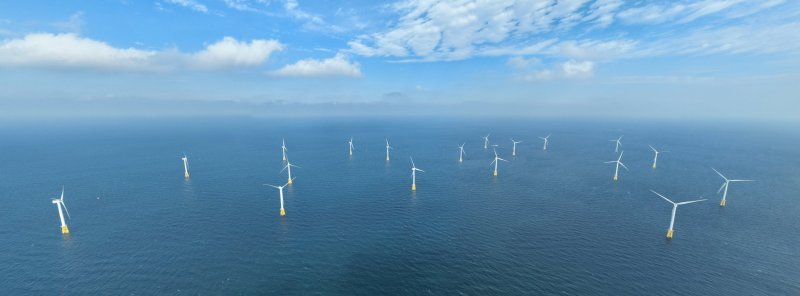
So why was Jeju Province, which is also a non-capital region, left out? KEPCO explained in response to a Financial News inquiry on the 28th that Jeju should be viewed as an 'independent grid' separate from the mainland.
Jeju receives electricity from the mainland through a high-voltage direct current (HVDC) subsea cable. KEPCO said this creates relatively high transmission costs and a lower self-sufficiency rate, meaning that applying the same regional tariff formula as the mainland could actually lead to higher rates.
Regarding Jeju's exclusion, KEPCO said, "We maintained the current tariff level so that the Jeju industrial sector would not face any additional burden from higher rates."
One number worth noting here is the share of renewable energy.
According to KEPCO, renewable energy accounted for 65% of generation in Jeju Province in 2025, compared with 8% on the mainland. At first glance, those figures may suggest that Jeju has a surplus of electricity, but 'renewable energy share' and 'electricity self-sufficiency' are different indicators.
The 65% figure refers to the share of electricity generated in Jeju that comes from renewable sources such as solar and wind. It is calculated differently from electricity self-sufficiency, which shows how much of the island's total electricity consumption is covered by local generation.
That is why Jeju Province can have a high renewable energy share while still exchanging electricity with the mainland through HVDC lines.
Its high renewable energy share is also why Jeju became a testing ground for new electricity market systems. The real-time market and the renewable energy bidding system are already operating there ahead of the mainland.
The real-time market is a system that trades and supplies electricity by reflecting conditions close to actual demand and generation. Its importance grows as the share of solar and wind power increases, since output can change sharply with the weather.
The renewable energy bidding system allows generators to submit in advance the amount of power they can supply the next day and then adjust output according to actual supply-demand conditions.
An energy storage system (ESS) central contract market is also being piloted in Jeju. It is a market that secures large-scale storage facilities through long-term contracts so electricity can be stored when renewable generation is high and supplied again when needed.
Additional testing is also being considered for retail tariffs. According to KEPCO, a time-of-use tariff is currently in operation in Jeju Province.
Other options under review include a 'peak-save tariff,' which offers benefits when consumers reduce usage during peak demand hours; a 'dynamic tariff,' which adjusts prices more flexibly depending on supply-demand conditions; and a 'renewable energy charging tariff,' which encourages electricity use or charging during periods of high renewable generation.
This is another reason KEPCO excluded Jeju from the regional tariff plan.
The logic is that the current tariff must remain unchanged as a benchmark if the effects of the new system are to be tested.
KEPCO explained that if a regional adjustment charge is applied first and Jeju's industrial electricity rates change, it becomes difficult to tell whether changes in power use are due to the regional discount or the price signals from the experimental tariff.
"To objectively analyze the effects of the pilot projects underway in Jeju, it is necessary to keep the current tariff level unchanged as a comparison standard," KEPCO said.
It added that if the pilot is conducted after regional tariffs are introduced, the results could be distorted.
The reason Jeju serves as a kind of electricity market 'testbed' becomes even clearer when looking ahead. The 11th Basic Plan for Electricity Supply and Demand set out a path to expand national renewable energy capacity from about 30 GW in 2023 to 121.9 GW by 2038, roughly four times the current level.
Solar and wind output varies with the weather. As their share grows, flexible market systems such as real-time pricing, ESS, demand response, and renewable energy bidding become more important. KEPCO's plan is to let Jeju Province, where renewable generation already accounts for 65%, experience the problems first and test the systems there before considering whether they can be applied to the mainland.
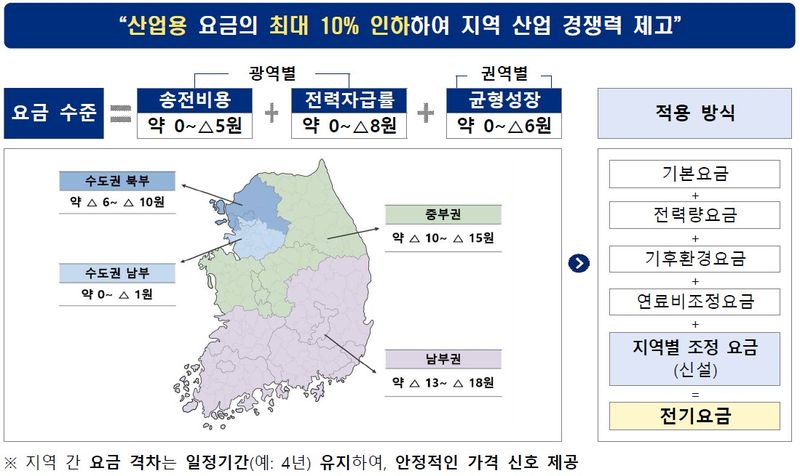
From a business perspective, however, another issue remains. If the regional electricity pricing system is implemented, companies in the southern region will see rate cuts of up to 18 won per kWh, those in the central region up to 15 won, and even northern Seoul up to 10 won.
Even if electricity bills in Jeju do not rise, a relative price gap will emerge once rates fall in other regions.
This comparison is unavoidable in Jeju, especially since the government has presented regional electricity pricing itself as a policy tool to encourage companies to invest and relocate factories outside the capital area.
KEPCO did not offer a separate industrial tariff discount for Jeju that would match the up to 10% reduction available in other non-capital regions, nor did it present a concrete compensatory measure.
The new retail tariff options under review in Jeju also include systems that have not yet been piloted or are still under consideration, so it is difficult at this stage to directly compare how much they could reduce industrial customers' bills.
Jeju's exclusion is not necessarily final. KEPCO said, "After sufficient pilot results have been accumulated in Jeju, we can review whether to include the island in the mainland's regional tariff system or establish a separate tariff structure suited to Jeju's characteristics."
In the end, Jeju faces a twofold challenge. It must continue serving as a national testbed that uses its high renewable energy share to verify future electricity market systems first, while also preventing its companies from becoming less competitive in power costs than those in other non-capital regions.
The government and KEPCO plan to introduce the industrial regional electricity pricing system within the year after gathering opinions at the public hearing, finalizing the regions, and revising notices and electricity tariff terms.
Whether a tariff structure or investment incentives that separate Jeju's testbed role from companies' cost burden will be included in the follow-up design is expected to become a new variable in the island's industrial competitiveness.
[email protected] Jung Yong-bok Reporter