Basic Pension for Those Earning 4.68 Million Won a Month? Reform Plan Faces Last-Minute Hurdles
- Input
- 2026-08-30 08:59:00
- Updated
- 2026-08-30 08:59:00
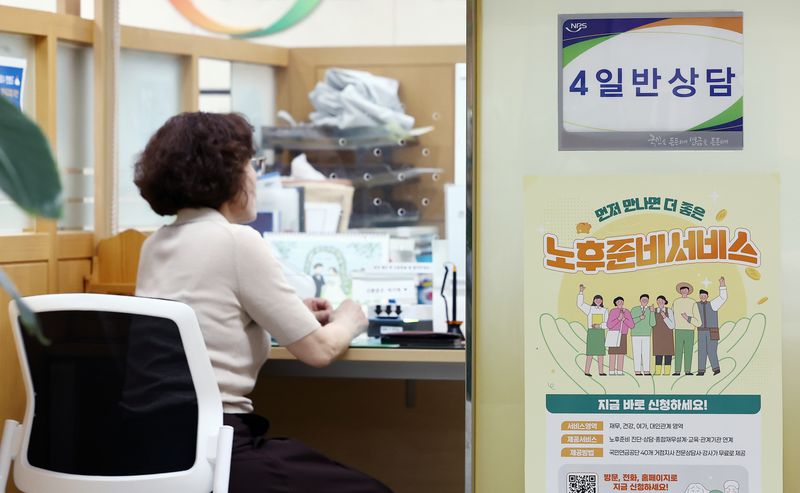
[Financial News] The government is pushing ahead with a sweeping overhaul of the Basic Pension system, but disagreements are continuing until the last minute.
The key proposal is to replace the current system, which pays the same amount to 70% of seniors aged 65 and older with the lowest incomes, with a model that provides differentiated support based on income level.
Critics have long pointed out that under the current system, even seniors with substantial actual income can receive the Basic Pension. The government aims to make eligibility standards more realistic, strengthen support for low-income households, and reduce the rapidly growing fiscal burden.
According to the Ministry of Health and Welfare (MOHW) on the 30th, the government had initially planned to announce the Basic Pension reform plan at the end of this month, but the schedule has been delayed. A pre-briefing session scheduled for the 28th was also canceled about an hour before it was set to begin.
The MOHW says some details have yet to be finalized. However, observers inside and outside the government say differences over reducing the number of recipients and adjusting benefits for existing recipients are emerging as a key last-minute variable.
Why can someone earning 4.68 million won a month still receive the Basic Pension?
The biggest problem with the current Basic Pension system is the gap between eligibility standards and actual income levels.In 2026, the eligibility threshold for a single-person household will be 2.47 million won per month. That equals 96.3% of the median income benchmark of 2.56 million won for all households.
At first glance, it may seem that eligibility is determined by monthly income of 2.47 million won, but the actual calculation is more complicated. For earned income, the system first deducts 1.16 million won per month, then applies an additional 30% deduction to the remaining amount.
As a result, a single senior household with no other assets such as real estate can receive the Basic Pension even if earned income alone reaches about 4.68 million won a month. That works out to more than 56 million won a year.
The threshold is even higher for two-person households. If other conditions are met, such as having no additional assets, a couple can still qualify even with combined earned income of around 8 million won a month.
That is why the government says the current system creates an "income illusion." The gap has widened between the original purpose of the program, which is to secure retirement income for low-income seniors, and the actual group of beneficiaries.
From the bottom 70% to a median-income-linked system
The core of the reform plan under review is a change in how recipients are selected.At present, the government selects seniors aged 65 and older from the bottom 70% of income earners and generally pays the same amount. Going forward, it is considering a shift to a "lower-income, higher-benefit" structure linked to median income, under which those with lower incomes would receive more support.
Under the government plan, eligibility would start at 90% of median income in 2027, then be gradually lowered to 86.6% in 2028 and 83.3% in 2029. By 2030, the threshold is being considered for reduction to 80% of median income or below.
Benefits would also be differentiated by income level. The current flat monthly payment of 350,000 won would be replaced by a three-tier system.
For low-income households earning 20% or less of median income, the plan calls for a monthly payment of 380,000 won in 2027, rising to 400,000 won in 2028. For the 20% to 40% bracket, the payment would increase from 359,000 won to 367,000 won a month, while the upper bracket above 40% would keep receiving 350,000 won.
In effect, support for low-income seniors would be strengthened, while benefits for relatively higher-income recipients would remain largely frozen.
Reducing fiscal pressure and strengthening support for low-income households
Another reason the government is moving quickly on the reform is fiscal pressure. This year, the total budget for the Basic Pension, including both national and local government funds, amounts to 27.4 trillion won.As the elderly population continues to grow, maintaining the current system would inevitably increase the fiscal burden further. The government says it wants to secure fiscal sustainability by resetting eligibility based on income level.
At the same time, support for vulnerable groups would be expanded. The plan includes gradually abolishing the spouse benefit reduction applied to low-income elderly couples and extending the Basic Pension to low-income recipients of occupational pensions with median income at 40% or below. The goal is to broaden support to low-income recipients of the Public Officials Pension, Teachers' Pension, and Military Pension systems.
However, reducing the number of recipients and effectively freezing benefits for some existing beneficiaries is likely to trigger significant backlash. In particular, older adults who are already receiving the Basic Pension may worry about a real drop in income after the system changes.
In the end, the key issue in this reform is who gets how much. The government will need to expand support for low-income seniors while minimizing resistance from current recipients and ensuring fiscal soundness, so attention is focused on the final plan it will unveil.
[email protected] Kang Jung-mo Reporter