A prison officer who helped more than 40 people start new lives... Choi Jeong-jong, deputy warden at Gyeongbuk Northern Prison No. 3 [Seocho-dong Warm Interview]
- Input
- 2026-08-31 16:01:23
- Updated
- 2026-08-31 16:01:23
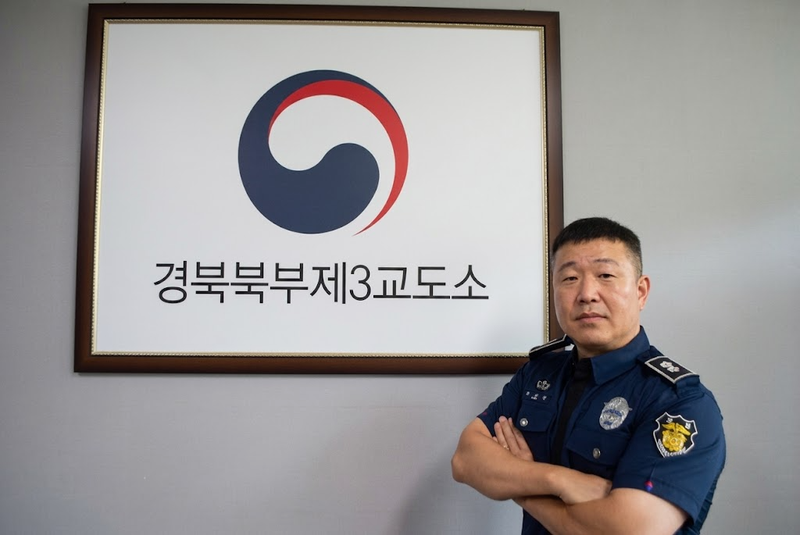
[Financial News] Prison doors are closed to keep people in. But helping someone find a place to return to after release happens outside those walls, not inside them. On the morning of release, some people disappear because they have nowhere to go and nowhere to stay. One prison officer has filled that one-day gap with jobs and shelter. He is Choi Jeong-jong, deputy warden at Gyeongbuk Northern Prison No. 3, who has spent 27 years on the front line of corrections.
He connected people who had committed crimes out of hunger with factories.
Choi first took on the job of helping released inmates find employment and start businesses when he was working in the vocational training division at Gyeongbuk Northern Prison No. 1. The prison provides job training so inmates can settle down after release, and when a trained inmate is hired by a small or midsize company, the company receives an incentive of 1 million to 1.8 million won. It was a system that seemed to leave companies with little to lose, but reality was harsher. Many of those inmates had very low self-esteem and no place to stay, so few actually made it into jobs.
He went out and did the work himself. Together with a junior officer, he traveled to places such as the Seongseo and Daedeok industrial complexes in Daegu and to Busan, finding companies and matching them with inmates. He persuaded firms that were initially reluctant. He explained that most of the inmates he recommended had committed livelihood-related crimes, and that because the Ministry of Justice vouched for them and their identities were verified, there would be little risk. In small and midsize companies short on workers, that argument worked.
The bigger problem was the gap between release and employment. If someone was released on a Sunday morning and told to start work on Monday, it was common for them to fail to get through that one day and then lose contact. So he personally accompanied them even on holidays. Through local branches of the Korea Rehabilitation Agency, he arranged for them to stay and eat near industrial complexes, and he created a foundation for independence by requiring them to save part of their wages if they wanted to keep staying there.
The results came back as heartwarming stories. He placed a man in his mid-20s at a window-frame factory in Daegu and arranged nearby lodging. When the man later became an outstanding employee, the factory called first to thank him. The story reached the Ministry of Justice, and last year he received the top prize at the Correctional Service Awards. He has helped connect more than 40 released inmates in this way.
Of course, not everyone succeeded. Some quit after six months, and one man was already drunk and unconscious at dawn on the day they were supposed to meet the next morning. When things could not be salvaged, he used money from the city office for bus fare and sent them back to their hometowns. There was even a case in which he got into a traffic accident while driving a released inmate. Still, he looked back on the work and said, "After spending so long controlling and restraining people inside, going out and helping someone make a fresh start felt much lighter on the heart." He added, "Even when it failed, the process itself was deeply rewarding."
"A 120% inmate population rate cannot be handled by a system run on overworked staff."
Choi, who scored a perfect mark on this year's promotion exam for correctional officers, is set to be appointed as a correctional officer on the 7th. After 27 years in the field, he says there are inmates he can help connect to the outside world, but the greater challenge lies in the difficulties he faces on the job. He has handled notorious criminals such as Ji Chung-ho, Sin Chang-won, and Cho Doo-soon, yet he says the biggest burdens over his 27 years in corrections have been staff shortages and poor working conditions.
Machines now handle opening and closing the doors, but no machine can replace sitting down with inmates for counseling and preventing incidents. Yet there are not enough people. The current inmate population rate has exceeded 120%, and six people sleep shoulder to shoulder in a small room. In summer, the lack of ventilation makes it unbearably hot, and inmates collapse one after another. Even when he freezes bottled water donated by correctional volunteers and hands it out morning and evening, and runs fans, there is a limit. In reality, when 1,000 people turn on the taps at once, the water pressure drops and even water does not come out.
As inmate rights have been emphasized, the burden has fallen entirely on prison officers. He said, "If something goes wrong inside, prison officers are held fully responsible, so everyone patrols every 30 minutes." He added, "In fact, 30 minutes after a patrol passes is enough time for an incident to happen. It would be much better if the system were eased, at least in terms of responsibility for the outcome." He also voiced frustration over the reality that if someone is dissatisfied, requests for information disclosure and criminal complaints or accusations follow immediately.
Along with police officers, firefighters, and soldiers, prison officers are counted among the four major uniformed public servants, but they work in the shadows. He said, "If we do not control these people, society would quickly fall into chaos, but because we are not visible, there are few who recognize our work." He added, "When I first started, people even said it was a job only a half-crazy person would do." He noted that the shift from a three-shift system to a four-shift system and improvements in treatment have helped, but there is still a long way to go compared with other uniformed public servants.
[email protected] Jeong Gyeong-su Reporter