The Worst Super El Niño on Record Clouds the Global Economy, Raising Fears of Damage to Food, Logistics and Resources
- Input
- 2026-08-30 05:59:35
- Updated
- 2026-08-30 05:59:35
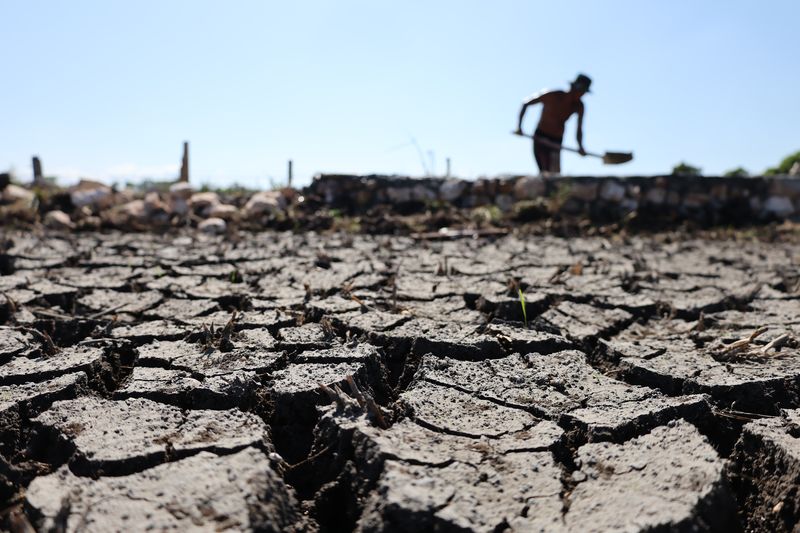
There are growing concerns that the global economy could suffer a major blow from El Niño, which is expected to be the worst on record.
In particular, this El Niño is expected to continue into next year, when the world is also likely to see its hottest year on record. That could trigger severe food shortages, disrupt logistics, and hamper the production of resources such as copper. A shortage of copper could also deal a significant blow to rising power demand fueled by the Artificial Intelligence (AI) boom.
The Worst El Niño on Record
According to The Wall Street Journal (WSJ) on the 29th, local time, scientists declared the start of El Niño in June based on multiple data sets.
The event, expected to be the strongest ever observed, is likely to last into next year and leave lasting damage to the global economy.
Christopher Callahan, a climatologist at Indiana University, said drought damage alone could cost tropical countries trillions of dollars.
Bloomberg Economics projected that the Consumer Price Index (CPI) in Indonesia and the Philippines would rise by about 2 percentage points because of the drought shock.
Farmers are expected to face a heavy burden, as prices for fertilizer and agricultural diesel have already risen because of the Iran war.
Food Crisis
There are fears that a food crisis could emerge as rice production in Asia's breadbaskets takes a major hit.
India's monsoon rainfall is expected to fall 13% from the average, making damage to rice crops in South Asia and Southeast Asia unavoidable. A food crisis similar to the price surge caused by India's 2023 rice export ban cannot be ruled out.
Cocoa and sugar prices are also moving higher.
The aquaculture industry is also expected to take a hit.
Peru, the world's largest anchovy producer, halted fishing early this year to prevent the depletion of fish stocks caused by rising water temperatures. Fish feed prices, which support a $300 billion aquaculture industry, have surged to record highs.
Logistics Disruptions
The Panama Canal, which connects the Atlantic and Pacific oceans, is expected to face serious operational disruptions because of drought linked to El Niño. The canal cuts through high ground, so it sits above sea level. For that reason, it uses a system of stepped locks: when a ship enters a lock, water is filled in to raise it before it moves to the next lock. About 190,000 tons of water are needed for a single vessel to pass through. With rainfall from May to August down 34% from the previous average, water shortages are already disrupting canal traffic.
The Panama Canal Authority has cut the number of ships allowed to pass each day from 36 to 32. Auction prices for vessels using the larger locks have also soared more than threefold, from $800,000 to $2.5 million.
To secure water resources, Panama has launched a $2 billion project to divert up to four rivers into the canal system. It has signed a contract with the U.S. Army Corps of Engineers.
Copper Production Emergency
Copper production is also being disrupted by El Niño.
While breadbasket regions struggle with drought, Chile, one of the world's largest copper producers, has seen mine operations halted by sudden snowstorms. Copper producer Antofagasta lowered its production outlook for this year after 5 million cubic meters of snow piled up at the Los Pelambres mine last month and forced a shutdown.
As copper demand surges amid electrification, including data center workload and electric vehicles, shrinking supply is likely to deepen power supply and demand imbalances.
The possibility of drought in Africa is also keeping the industry on edge.
Copper production in Zambia was hit in 2023 and 2024, when drought linked to El Niño weakened hydropower generation.
At present, major mines in the Independent State of Papua New Guinea are facing disruptions to river transport because of water shortages caused by drought.
[email protected] Song Kyung-jae Reporter