Trump Says U.S. Secures Control of 65 Billion Barrels of Venezuelan Oil, Will Control It for 100 Years
- Input
- 2026-08-30 03:20:59
- Updated
- 2026-08-30 03:20:59
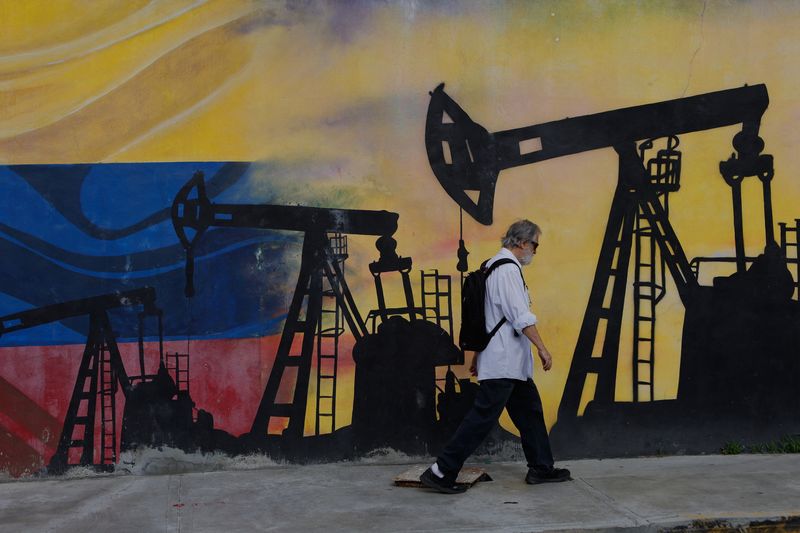
U.S. President Donald Trump said on the 28th local time that the United States would be able to control more than 65 billion barrels of Venezuelan oil.
The remark suggests that the January transfer of Venezuelan President Nicolás Maduro Moros to the United States, after he was arrested by U.S. special forces on drug trafficking charges, was ultimately driven by a desire for oil.
According to foreign media including the Financial Times, Trump said on his social media platform Truth Social late that night that Secretary of State Marco Rubio, Defense Secretary Pete Hegseth, and Venezuela's interim president Delcy Rodríguez had agreed to the "biggest oil deal in world history."
Trump said, "This historic deal, which is more than twice the size of U.S. oil reserves, will massively increase our oil supply and, in the future, significantly lower gas prices for all Americans." He added, "At the same time, it will help Venezuela continue on the path to tremendous success and great prosperity." He also said, "This deal will greatly strengthen the already improving relationship between Venezuela and the United States."
U.S.-Venezuela joint venture established... 100-year rights secured
A White House official said the United States will secure 55% of the actual oil production from the newly created private joint venture. The venture would become the world's second-largest private oil company by reserves after Saudi Aramco. The official added that the joint project between the U.S. government and a "private operator with experience in this sector in Venezuela" will hold rights for 100 years over oil fields with confirmed reserves of 65 billion barrels.
Rubio said the agreement would bring in "nearly $100 billion in private investment" to Venezuela and lead to the country's economic "reconstruction."
The announcement came as U.S. gasoline prices were surging ahead of the November midterm elections.
After arresting President Maduro in January, the United States lifted sanctions on Venezuela to allow U.S. companies to invest in the oil sector. Venezuela also passed oil-related laws in January, sharply reducing the role of the state oil company Petróleos de Venezuela, S.A. (PDVSA) and allowing private companies to directly operate oil wells.
Based on this, European oil majors such as Repsol, Eni, and Shell plc signed contracts with the Venezuelan government this year, while Chevron Corporation, the U.S. oil major that has operated in Venezuela for the past 100 years, expanded its stake in a joint venture with PDVSA in April.
Experts say a short-term drop in oil prices is unlikely
Private-sector experts said the large-scale production increase Trump promised would require years of development and massive investment.
Michael Alfaro, CIO of energy hedge fund Gallo Partners, said, "This agreement appears to be one of a series of actions President Trump is taking to bring down oil prices." He added, "But large reserves do not immediately translate into higher supply." He noted that it is unclear who would make such enormous investments, and that such projects would require a long period spanning multiple changes of government.
Venezuela's current oil output is about 1.12 million barrels per day, less than 10% of the United States' 13.8 million barrels per day.
[email protected] Song Kyung-jae Reporter