Busan Confirmed as Host of UN Ocean Conference; Jeju and KMI Seek 'Five Mega-Regions and Three Special Self-Governing Provinces' Marine Agenda
- Input
- 2026-08-29 11:42:29
- Updated
- 2026-08-29 11:42:29
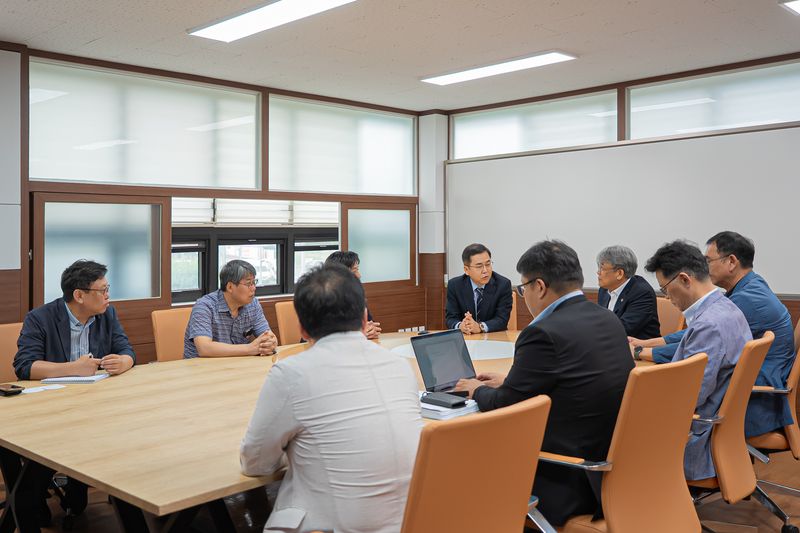
JEJU, Financial News = Reporter Jeong Yong-bok] With Busan confirmed as the host city for the Fourth United Nations Ocean Conference (UNOC4) in 2028, Jeju Province has joined forces with KMI to draw up follow-up strategies that link marine and fisheries issues to national policy agendas.
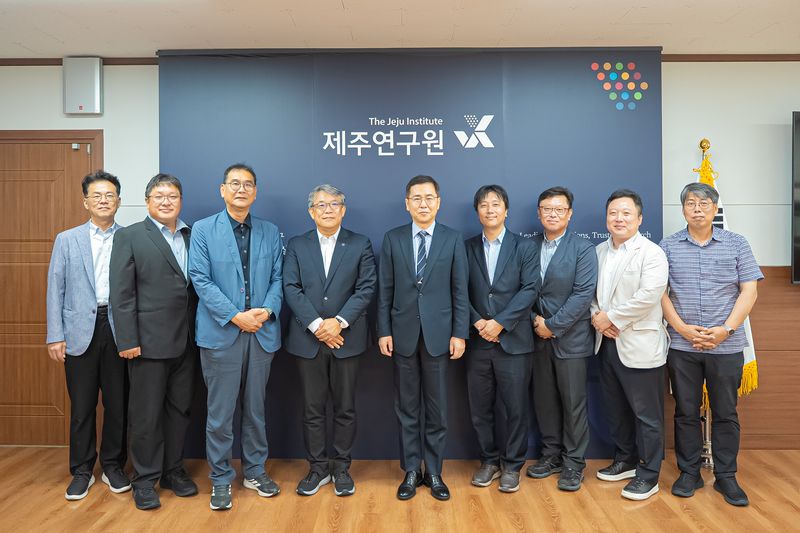
According to KMI and the Jeju Research Institute on the 29th, the two organizations held a "KMI-Jeju Research Institute Marine and Fisheries Policy Meeting" at the Jeju Research Institute the previous day and discussed major local marine and fisheries issues, as well as directions for research cooperation.
The meeting was attended by Jo Jeong-hee, president of KMI, Yoo Young-bong, president of the Jeju Research Institute, along with researchers and officials from both organizations.
The main agenda was how to connect Jeju's marine and fisheries issues with the government's Five Mega-Regions and Three Special Self-Governing Provinces Policy for balanced national growth.
The policy is the government's balanced growth strategy aimed at moving away from a Seoul-centered one-pole structure and building a region-led growth system around five major economic zones and three special self-governing provinces, including Jeju, Gangwon and Jeonbuk. As Jeju is one of the three special provinces, the move is seen as widening channels for linking local issues with central government policy and research projects.
The two organizations agreed to identify policy research topics that can be jointly pursued in Jeju's marine and fisheries sector and to examine ways to combine their research capabilities and expertise. They plan to further organize research themes and cooperation needs that reflect Jeju's local characteristics before fleshing out specific projects.
Ways to connect Jeju with UNOC4 in 2028 were also discussed as a key agenda item. The United Nations Ocean Conference is the largest high-level international conference in the ocean sector, addressing the conservation and sustainable use of marine environments and marine resources under the UN Sustainable Development Goals. South Korea and Chile will co-host the 2028 conference.
Busan and Jeju competed to host the event in South Korea, but Busan was ultimately selected on the 10th. Busan's strong base of marine industries, research institutions and educational organizations was highly regarded.
Although Jeju failed to win the main conference, it has asked the government to consider holding pre-events or special events on the island in connection with the summit.
That issue was also addressed separately at the meeting under the agenda item "Trends in Jeju international events linked to the Fourth United Nations Ocean Conference." KMI and the Jeju Research Institute shared related developments and looked into areas where future cooperation could be possible in research and policy. A key point going forward will be how the government's detailed UNOC4 hosting plan and Jeju's proposals are reflected.
The two research institutes already have a foundation for cooperation. KMI and the Jeju Research Institute signed an agreement in 2017. Building on this meeting, they plan to revisit areas of mutual research interest and cooperation needs, while expanding exchanges through joint research and seminars.
For Jeju's marine and fisheries issues to produce tangible results, they must be developed into specific research projects within the Five Mega-Regions and Three Special Self-Governing Provinces Policy framework and linked to central government policy and budget programs. With UNOC4 now confirmed for Busan, it has become increasingly important for Jeju to present differentiated side events that highlight its island identity and marine environment.
Jo Jeong-hee, president of KMI, said, "Jeju is a region with great potential to present a new direction for Korea's marine and fisheries sector, based on its unique marine resources and regional characteristics." He added, "We will gradually develop research cooperation measures that can make a practical contribution to resolving local issues and supporting Jeju's development."
[email protected] Reporter Jeong Yong-bok Reporter