Death Toll in Nepal Floods in China’s Tibet Rises to 7, 554 Missing
- Input
- 2026-08-29 10:24:19
- Updated
- 2026-08-29 10:24:19
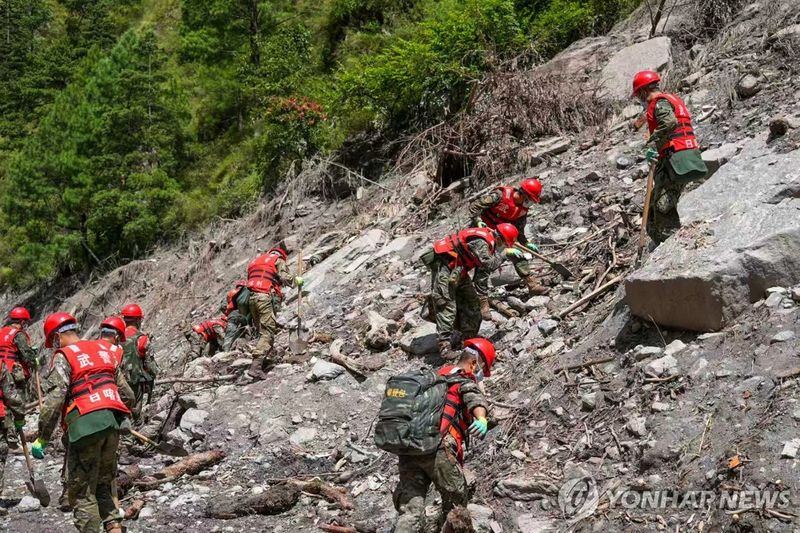
[Financial News] The death toll on the Chinese side has risen to seven after a massive flood in the Himalayas along the border between Nepal and China.
As of 1 a.m. on the 29th, local time, seven people had died and 554 were missing in Jilong County, Xigaze, in the Tibet Autonomous Region, according to the region’s emergency management authorities. Two local residents who had initially been listed as missing were rescued.
Chinese authorities believe that on the 26th, after glaciers and rocks collapsed in the highlands of the Himalayas, a large flood swept through moraines in the valley and turned into debris flows, inundating areas of Jilong County near Nepal.
Authorities are continuing search operations centered on the hardest-hit areas. According to Xinhua News Agency, the Tibet Autonomous Region Emergency Management Department has deployed 2,141 rescue personnel from various levels to the scene. A total of 505 people, including firefighters and local officials, are carrying out rescue work on the front lines.
Eighty-six specialists in fields such as natural resources are checking for the possibility of additional geological disasters in nearby mountains and roads. A 1.02-km road leading to the affected area has also been restored.
A land search team from the Sichuan Fire and Rescue Corps under the China Rescue Team is searching through debris around the Jilong border checkpoint. The rescue team is looking for the missing through water access using rubber boats, on-foot searches in mountainous areas, and aerial reconnaissance with drones.
The authorities are also preparing for the possibility of further disasters. A five-member observation post is monitoring in real time a landslide-dammed lake formed by the collapse. The Ministry of Water Resources has instructed officials to examine the lake’s inflow, outflow, and stability in order to assess the risk of collapse and the expected scope of damage.
[email protected] Park Seong-hyeon Reporter