Can Future Humans Think Without AI? [AI Sapiens—Asking About Intellectual Sovereignty 5]
- Input
- 2026-09-03 06:31:29
- Updated
- 2026-09-03 06:31:29
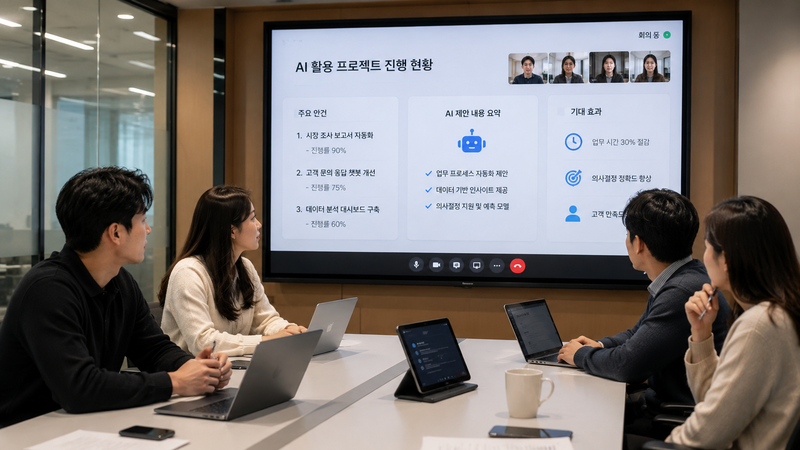
AI finds information, writes sentences and even presents conclusions on behalf of people. But deciding what to ask, judging which answers to accept and explaining the results remain human responsibilities. In Part 5, we examined how people can preserve their ability to think independently in an era of living alongside AI.
[Financial News] #. A worker in his or her 40s, identified as A, does not immediately turn on artificial intelligence (AI) when preparing for meetings these days. First, A writes the meeting agenda on paper and separately marks the issues they understand and the materials that need to be checked. Only then does A ask AI to summarize the materials and suggest possible questions.
The sequence is different from when A used to enter the materials into AI from the outset. Reading an AI-generated summary first made meeting preparation faster, but when questions arose, A found it difficult to explain why a particular conclusion had been chosen. A said, "After looking at an AI answer, I end up thinking within its framework," adding, "I need to write down my own judgment first so I can see later what I changed."
B, a high school teacher, asks students about their writing process rather than simply whether they used AI in writing assessments. During class, students must explain what materials they read, how they revised their drafts and what evidence supports the sentences they ultimately kept. B said, "Simply preventing students from using AI does not solve the problem," adding, "We need to see whether students can explain things in their own words."
AI has changed the order of searching and judging, as well as studying and working. The issue now goes beyond whether AI is used. As people become accustomed to receiving AI-generated answers first, it has become important to secure time for them to formulate their own questions, examine the evidence and explain matters in their own words. The central question has become where to place so-called "intellectual agency" in the AI era.
Schools and workplaces check whether people have thought for themselves
Schools and companies are considering both a complete ban on AI use and allowing it within certain limits. They may permit grammar corrections and idea organization while restricting the use of AI to write an entire piece, or require students and employees to indicate whether and how extensively AI was used in assignments and reports.
In South Korea, a proposal has also emerged to keep records of AI use during the assessment process. In guidelines for managing the use of artificial intelligence in performance assessments developed with education offices in 2025, the Ministry of Education identified several key areas: setting the scope of AI use, guiding students to document how it was used, providing notices and advance training on precautions, designing assessments and protecting personal information.
The guidelines also call for real-time, activity-based assessments in which teachers directly observe students’ performance during class to improve the reliability of evaluations. Rather than merely trying to detect whether students used AI, the approach examines which tools they used, for what purpose and how they revised the results.
Similar changes are appearing in the workplace. Even when AI first organizes report drafts, meeting minutes and market research materials, people must provide the final explanation. Accepting an AI-generated conclusion without question may speed up work, but individuals may differ in their ability to explain why that conclusion is necessary.
This is also why A writes down questions before meetings. Starting to think only after seeing an AI-generated answer can blur the standards A considered important with those proposed by AI. A has recently begun marking each report to distinguish between "issues I identified first" and "issues added by AI."
What AI struggles to replace: the human realm of thought
Universities overseas are also changing their assessment methods in the AI era. It has become difficult to determine whether students truly understood the content based solely on reports or essays written at home. As generative AI rapidly produces lengthy texts, the writing process and the ability to explain one’s work have become more important than the final submission alone.
The London School of Economics and Political Science (LSE) has required courses to distinguish the scope of AI use under its generative AI guidelines for the 2025–26 academic year. The options include prohibiting AI, allowing it on a limited basis only as a learning aid and permitting it on the condition that the scope of use is disclosed. The standards are to vary according to each course’s learning objectives and the abilities being assessed.
LSE also provides guidance on using oral assessments. It explains that even if a presentation or report draws on other materials or receives help from AI, questions and answers can reveal whether the student understands the content. Students may be asked to respond briefly about their submission or explain why they selected certain materials and how they reached their conclusions.
Such assessments can be burdensome for students because they must demonstrate their understanding on the spot instead of submitting answers polished in advance. Yet this is precisely where the reading, explanation and judgment that AI struggles to replace become visible. AI can create sentences, but explaining why a sentence is needed remains a human responsibility. This is where human thinking ability matters in the AI era.
Companies face the same issue. No matter how polished an AI-generated report may be, the person responsible must explain the sources and interpretation when questioned in a meeting. In an era when AI can write drafts, the person who can explain a report may become more important than the person who wrote it.
They examine everything from drafts and interim presentations to oral questions
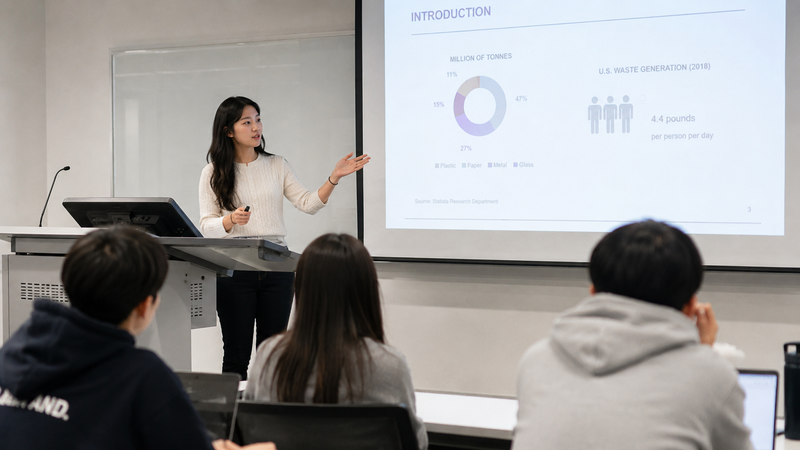
In the AI era, assessment is increasingly focused on checking the intermediate process rather than a finished product completed all at once. Methods include requiring students to submit a research proposal, draft, interim presentation and final report in stages, or reviewing revisions through a portfolio.
The assessment includes what materials students read, what questions they considered before reaching a conclusion and which of AI’s suggested answers they changed. When AI can create a draft, it becomes more important to examine the path by which the final sentence was produced than the sentence itself.
Jisc, a British digital education organization, explained in a 2025 report that generative AI is changing assessment in higher education. The report identified oral assessments, verification of the research process, portfolios and process-based assessment as key approaches. Rather than ending with students submitting a completed piece of writing, the approach requires them to explain how the writing was produced.
This approach assumes that AI will be used. Instead of requiring students to prove that they did not use AI at all, it examines how they handled AI-generated results. If AI was used to draft a text, students may be asked which sentences they changed; if it was used to search for materials, how they verified the sources; and if an AI suggestion was incorporated into the conclusion, why they accepted it.
Assessments that focus on the process rather than the result also matter outside school. As the use of AI-generated reports and meeting materials increases in the workplace, it has become important to know whether the person submitting the work can explain its evidence and reasoning. In the AI era, thinking ability includes not only the ability to work without AI but also the ability to reconsider AI-generated answers through one’s own judgment.
Why time spent turning off AI is necessary
Limiting AI use is not based solely on rejecting the technology. AI use may be restricted in tests that assess memorization and calculation, assignments that evaluate direct writing and presentations, and classes where hands-on participation is important, such as experiments and discussions.
Conversely, in courses or jobs that require the ability to use AI in real-world work, its use may be permitted while the process of verifying and revising the results is assessed. The important task is not to apply the same rules to every assignment and job, but to set the scope of AI use and the responsibility to explain it according to what is being evaluated.
The AI literacy framework presented in 2026 by the Organisation for Economic Co-operation and Development (OECD) and The European Commission also emphasizes human agency. The framework includes the ability to judge when to delegate tasks to AI and when people need to regain control, rather than simply accepting AI’s results as they are.
UNESCO has also emphasized a human-centered approach to using generative AI in education. Its "Guidance for Generative AI in Education and Research" explains that generative AI could have long-term effects on learning and assessment methods, and proposes that educational institutions reconsider knowledge, learning outcomes and assessment practices.
Relying on AI-generated summaries and secondary information can reduce the time spent directly observing materials and learning through trial and error. Conversely, if assessments include checking the accuracy and potential bias of AI outputs and evaluating the ability of people and AI to collaborate on solving problems, AI use itself can become part of the learning and work process.
Can you explain it without AI? The need to retain control over "thinking"

Whether people can live without AI is not simply a matter of choice. Searching, document writing, meeting preparation and learning processes have already changed around the assumption that AI will be used. But whether people can think without AI is a different question. They must decide what they want to ask before seeing an answer, judge what to believe after receiving it and ultimately explain it in their own words.
In this regard, A, an office worker, deliberately sets aside time before meetings without turning on AI. A reads the materials and writes down the issues first, then checks AI’s answers. B, the teacher, asks students to explain why they revised AI-generated sentences. Their methods differ, but they share the practice of preserving human judgment both before and after AI produces an answer.
Ultimately, the question of whether people can think without AI leads to whether they can continue to retain control over judgment. Even if AI presents answers quickly, deciding what to ask, examining whether to accept the answers and taking responsibility for the results remain human responsibilities.
Experts explain that the more algorithms take over everyday judgments, the more important it becomes for people not to surrender control. Gerd Gigerenzer, an emeritus director at the Max Planck Institute for Human Development and a researcher of "judgment and decision-making," emphasized in his book "How to Stay Smart in a Smart World," "The more deeply algorithms enter everyday judgment, the more important it is for people to maintain control themselves rather than blindly trusting technology or fearing it vaguely."
[email protected] Han Seung-gon Reporter