"From Waste Paper to Functional Packaging" Blue Industrial Development Reshapes the Packaging Value Chain Under EU Rules
- Input
- 2026-08-28 16:43:34
- Updated
- 2026-08-28 16:43:34
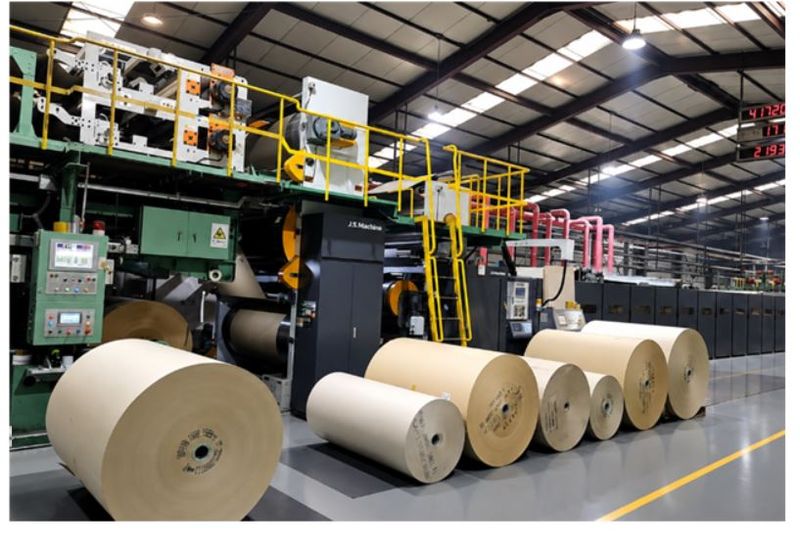
[Financial News] As the European Union (EU) has recently tightened packaging regulations and reshaped the global packaging materials market, Blue Industrial Development's business restructuring is drawing attention. The company is expanding its value chain from raw material procurement, including waste paper, to paperboard production, corrugated cardboard processing, and functional packaging materials.
According to industry sources on the 28th, the Packaging and Packaging Waste Regulation (PPWR) took full effect on the 12th of this month. Starting in 2030, reuse targets will apply to some transport packaging, while standards for recycled content in plastic packaging will be tightened.
By contrast, corrugated boxes were explicitly excluded from the reuse targets for transport packaging. As plastic regulations become stricter, paper-based packaging has greater room to emerge as an alternative. In South Korea as well, retailers and food companies are increasingly replacing EPS cushioning materials with pulp and corrugated cardboard, while adopting packaging with waterproof and cooling functions.
The key point for Blue Industrial Development is not just rising demand, but a shift in its cost structure. For corrugated cardboard, fluctuations in the price of waste paper, a key raw material, determine profitability. Even if demand for eco-friendly packaging grows, margin improvement can remain limited if waste paper prices rise.
In fact, the company established Youngpoong Recycling and YP Recycling last year to strengthen its sourcing base for recycled raw materials. By linking paperboard production at its existing Pyeongtaek plant with corrugated cardboard processing at its subsidiary Blue Package, it has built a value chain spanning waste paper procurement, paperboard production, and corrugated cardboard processing.
Profitability has also improved. In the first half of this year, the company posted consolidated sales of 52.6 billion won and operating profit of 260 million won, swinging from a loss in the same period last year to a profit. Gross margin rose to 15.1% from 2.4% a year earlier.
The next step is to move further up the value chain. In July, the company acquired a stake in BIOX, a specialist in eco-friendly functional packaging materials, expanding its product lineup from standard corrugated cardboard to functional packaging with waterproof and cooling features.
Blue Industrial Development's strategy can be summed up as keeping raw materials in-house and moving products upmarket. It aims to improve resilience against price volatility through its raw material sourcing network while increasing the share of functional products to raise added value.
An industry official said, "In the eco-friendly packaging market, raw material price management and the share of high-value-added products matter just as much as demand growth when it comes to profitability," adding, "Companies that secure a value chain from raw material sourcing to processing could stand out in competitiveness."
A Blue Industrial Development official added, "As the eco-friendly packaging market expands, price competitiveness and product functionality will become more important," and said the company plans to respond to market changes by leveraging its paperboard and corrugated cardboard production base.
[email protected] Kim Kyung-a Reporter