Lee Rejects Nomination for Supreme Court Justice, Citing the Supremacy of Elected Power
- Input
- 2026-08-28 16:36:23
- Updated
- 2026-08-28 16:36:23
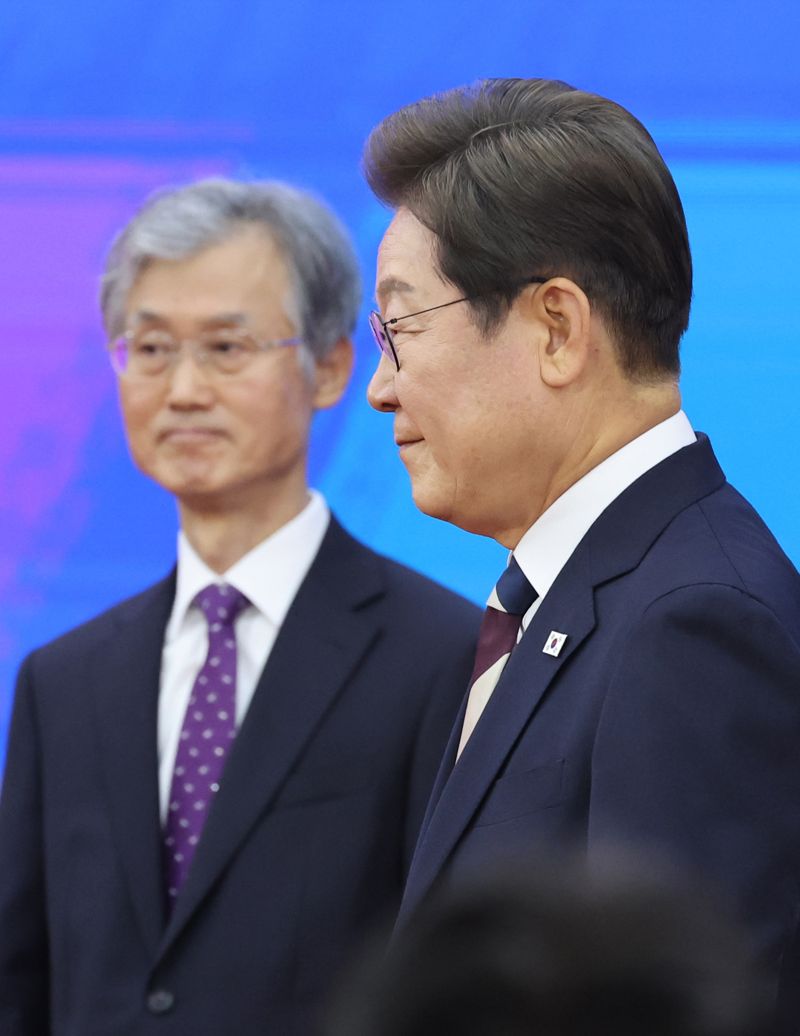
[Financial News] President Lee Jae Myung has decided not to submit a motion to the National Assembly for the appointment of Judge Son Bong-gi of the Daegu District Court, who had been recommended as the successor to former Supreme Court Justice Rho Tae-ak. Instead, he asked Chief Justice of the Supreme Court of Korea Cho Hee-dae to recommend another candidate. It is the first such case in constitutional history in which a president has rejected a recommendation for a Supreme Court justice. As the main opposition People Power Party protested, saying the Constitution does not grant a right to request a re-nomination, the presidential office and the ruling camp cited the supremacy of elected power.
Cheong Wa Dae said on the 28th that it had asked Chief Justice Cho to recommend another candidate instead of Son, citing a lack of procedural completeness. It argued that Cho had submitted Son’s name in writing without prior consultation with the government. By custom, the chief justice coordinates with the government in advance and then meets the president in person to make the recommendation.
In response, People Power Party lawmakers on the Legislation and Judiciary Committee of the National Assembly issued a statement that day, criticizing the move and saying, "There is no constitutional right to request a re-nomination."
They said, "The president's 'shopping for Supreme Court justices,' in which he rejects nominees he does not like, is unprecedented in constitutional history." They added, "There is no provision in either the Constitution or the Court Organization Act that allows the president to reject a recommendation or demand that it be made again. That is unconstitutional in itself."
They also pushed back against the presidential office's claim of procedural incompleteness, asking, "If only people who have been coordinated in advance can be recommended, why does the Constitution even give the chief justice the power to recommend?" They continued, "It is a constitutional safeguard designed to check executive influence over judicial appointments. Prior consultation is only a custom, while the power to recommend is a constitutional authority. How can custom stand above the Constitution?"
Article 104, Paragraph 2 of the Constitution states that "Supreme Court justices are appointed by the president with the consent of the National Assembly upon the recommendation of the Chief Justice of the Supreme Court of Korea." People Power Party lawmakers said Lee's rejection of the recommendation infringes not only the chief justice's recommendation power but also the National Assembly's authority to consent to appointments. They pointed out, "Refusing to even send the appointment motion means eliminating the National Assembly's chance to make a judgment."
On the constitutional dispute, Cheong Wa Dae invoked the supremacy of elected power, a view Lee had previously advanced. Chief Spokesperson Kang Yoo-jung said, "The president is the representative of the people, who are the sovereign, and the chief justice is appointed by the president with the consent of the National Assembly." She added, "In light of the principle of popular sovereignty, a re-nomination does not replace or neutralize the appointment power. Rather, it is an authority that supports the proper exercise of that power."
The ruling Democratic Party of Korea (DPK) also defended Lee's request for a re-nomination, citing the same principle of elected power. Chief Spokesperson Park Seong-jun said, "Under the principle of popular sovereignty, the recommendation power is merely an authority that helps the president, who is directly elected by the people, exercise appointment power properly. It is not a power to install one's own people." He added, "This is the first recommendation for a Supreme Court justice under a government of popular sovereignty. If there is a procedural flaw that the public cannot accept, it must be corrected. The request for a re-nomination was unavoidable."
Park also urged, "Chief Justice Cho should quickly recommend a candidate who meets public expectations, including greater diversity on the Supreme Court, protection for socially vulnerable groups, and the guarantee of the right to seek a trial." He added, "To clear the stain of being accused of entering politics, I hope he will properly exercise the recommendation power entrusted to him by the people this time."
[email protected] Kim Yun-ho Reporter