Auditor General apologizes for Yoon administration's statistics and West Sea audit, says factionalism and abuse of audit powers were tolerated
- Input
- 2026-08-28 15:01:06
- Updated
- 2026-08-28 15:01:06
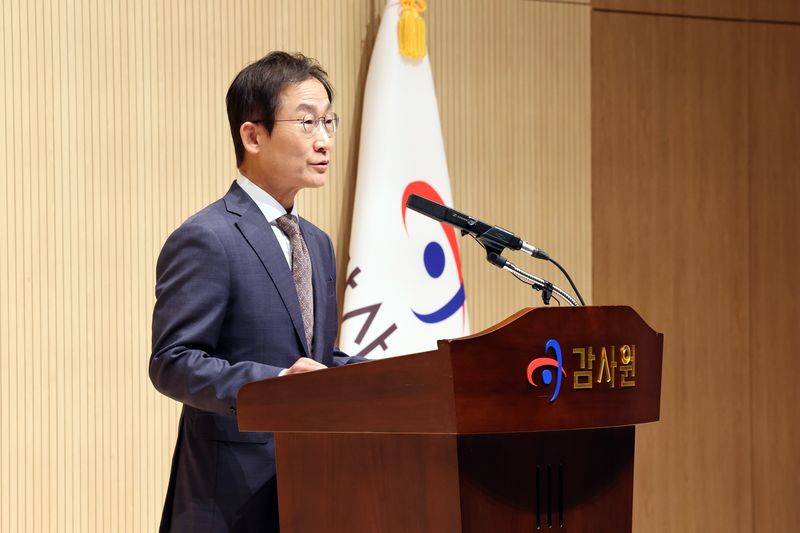
[Financial News] Kim Ho-cheol, Auditor General, issued a formal apology on the 28th after coercive questioning, persuasion and other abuses of audit powers were found during audits of statistics under the Yoon Suk Yeol administration and the investigation into the killing of a civil servant in the West Sea. He also said that the BAI had effectively allowed "the formation of factions and the abuse of audit powers," and warned that those involved would face strict action.
In his commemorative address for Audit Day, Kim referred to the results of the BAI task force's internal probe into the statistics and West Sea audits, which were released the previous day, and said, "As the head of the BAI, I offer my apology to the public and to all public officials."
He added, "I promise that those responsible will be held to account and face strict measures." He continued, "If we fail to confront and boldly cast aside the mistakes and abnormal practices that allowed factionalism and the abuse of audit powers, restoring public trust will remain a distant goal."
The BAI said the day before that its internal investigation found coercive interviews and excessive use of digital forensics during the audit of "the production and use of major national statistics" and the "inspection related to the West Sea civil servant killing case" under the Yoon Suk Yeol administration. In the request for a criminal investigation tied to the statistics audit, 220 cases of inconsistent or insufficient evidence were identified, and some auditors were also found to have used high-handed language and fabricated interview records.
Kim also said the BAI would overhaul its overall audit operations in response to the problems. "From now on, we will transform every audit into one that improves public welfare," he said. "The final consumer of audits is the public, and the results must lead to better public benefit."
Accordingly, the BAI will establish a Climate and Environment Audit Bureau to handle systematic audits of climate and environmental crises. It also plans to expand audit units for investigative agencies and constitutional bodies, taking into account the NEC's infringement on voting rights and the separation of investigative and prosecutorial powers. However, audits of investigative agencies will focus on institutional improvements rather than intervening in investigations themselves.
The BAI will also introduce a system that allows the public to directly participate in selecting audit targets. It is reviewing ways to reflect ordinary citizens' perspectives in the process of choosing audit topics through the Citizens' Request for Audit (CRA), an Audit Participation Group and a Policy Advisory Committee.
The way audit results are handled will also change. Instead of merely listing findings as before, the BAI will include the overall inspection results in its reports. When determining accountability, it will also consider the public-benefit contributions of the officials concerned before deciding whether to take no action or reduce penalties.
"For major national tasks such as the climate and environmental crisis, we will work to strengthen policy response capabilities, and we will also prepare thoroughly so that audits of investigative administrative affairs and other areas are not neglected in protecting people's fundamental rights," Kim said.
[email protected] Sung Seok-woo Reporter