HD Hyundai Heavy Industries and Samho Face Strike Threat as Labor Dispute Looms Over K-Shipbuilding Supercycle
- Input
- 2026-08-30 13:23:55
- Updated
- 2026-08-30 13:23:55
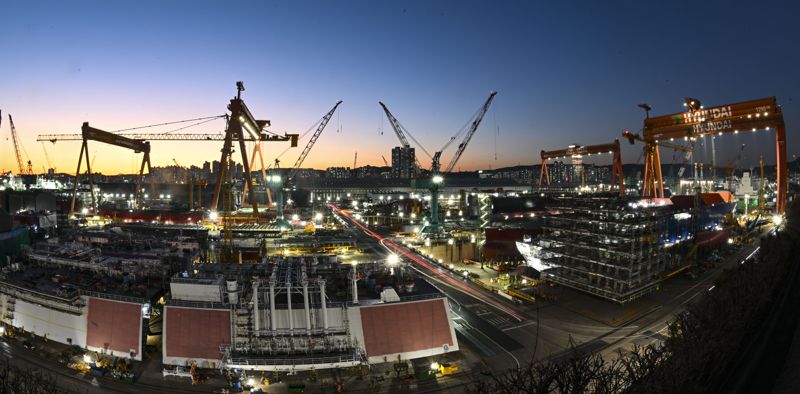
[Financial News] The labor union at HD Hyundai Heavy Industries has secured the right to strike with overwhelming support of nearly 96%, opening the door to a summer labor offensive. As shipbuilding enters a supercycle for the first time in more than a decade and posts record earnings, the gap between labor and management remains dangerously wide over demands for at least 30% of operating profit to be shared and for expanded welfare benefits. With unions at major shipbuilders, led by HD Hyundai Heavy Industries, HD Hyundai Samho, and Hanwha Ocean, threatening coordinated strikes, concerns are growing that docks filled with three years' worth of orders could come to a halt all at once.
According to the industry on the 30th, the Hyundai Heavy Industries branch of the Korean Metal Workers’ Union held a vote on industrial action over three days starting on the 25th. Of the 8,127 eligible members, 5,607 participated, for a turnout of 69.0%, and 5,379 voted in favor, passing the strike proposal with 66.18% support of all eligible members and 95.93% of voters. After the National Labor Relations Commission decided to suspend mediation, the union also secured the right to strike, making lawful industrial action possible. The union also staged four full strikes and 11 partial strikes last year after wage negotiations collapsed, so another strike this year appears likely.
The core of the dispute is how to distribute the gains from the boom. According to the union newsletter, at the 17th main bargaining session held the previous day, the union pressed the company, saying, "The gains from the shipbuilding boom must be shared with workers, and wages should not be determined only by corporate profits, so raises must also be made during downturns." In response, management countered, saying, "We question whether the demand to share 30% of operating profit applies to all workers, and whether it is asking for distribution even when there are no profits during a downturn," citing volatility in raw material prices and external uncertainty.
Management proposed holding main bargaining and working-level talks in parallel three times a week starting next week, but the union drew a line, saying, "What matters is not the number of meetings but a responsible proposal from management, and if it is not acceptable, we will exercise the collective action rights we have secured."
The front is widening across the group's shipbuilding affiliates. The HD Hyundai Samho union, the Hyundai Samho Heavy Industries branch, also remained at odds with management over revisions to the collective agreement during its 10th round of talks.
The union demanded that the ceiling for housing loans be raised from 100 million won to 200 million won and that the requirement for workers to be without a home be removed. Management, however, said this did not fit the purpose of helping first-time homebuyers and expressed reluctance. On demands to eliminate discrimination against workers supporting in-laws, expand caregiving support amid aging, and increase gold awards for employees with more than 20 years of service, management also cited cost control and budget burdens, leaving no agreement in sight.
The industry is closely watching the possibility that the dispute could spread into a joint strike by the Shipbuilding Industry Labor Union Alliance, which includes unions from eight shipbuilders such as Hanwha Ocean, Samsung Heavy Industries, and K Shipbuilding, starting with HD Hyundai affiliates.
An industry source said, "Shipbuilders have entered a full-fledged profit-making phase by absorbing demand for eco-friendly vessel replacements, especially high-value ships such as LNG carriers, but even a shutdown of just a few days would inevitably trigger a chain reaction of disruptions in downstream processes." The source added, "If delivery deadlines are missed, the companies would face massive delay penalties, as well as a drop in trust from global shipowners, which could deal a serious blow to the profitability and order competitiveness of K-Shipbuilding."
[email protected] Kim Dong-ho Reporter