Korean Federation of Community Credit Cooperatives posts net loss of 1.3 trillion won to 676.8 billion won; delinquency rate rises to the 6% range
- Input
- 2026-08-28 10:18:02
- Updated
- 2026-08-28 10:18:02
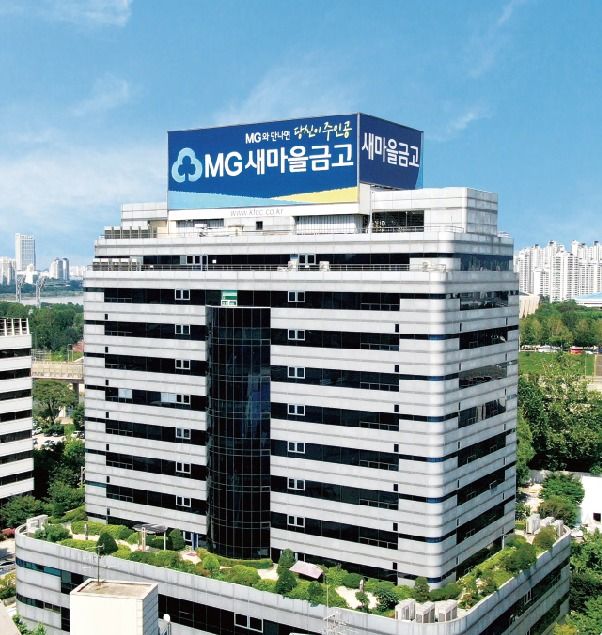
[Financial News] The Korean Federation of Community Credit Cooperatives reported a net loss of 676.8 billion won in the first half of this year. The deficit continued as the federation set aside loan-loss provisions, but the loss narrowed by 651.9 billion won, or 49%, from 1.3287 trillion won in the same period last year. By contrast, the overall delinquency rate rose back into the 6% range from the 5% range at the end of last year, and the corporate loan delinquency rate climbed above 10%.
The Ministry of the Interior and Safety (MOIS) said it will focus on managing soundness indicators such as delinquency rates and liquidity to prepare for uncertainty in the financial market in the second half.
On the 28th, MOIS released provisional first-half operating results for 2026 for the 1,239 community credit cooperatives nationwide. As of the end of June, the overall delinquency rate stood at 6.34%, up 1.26 percentage points from 5.08% at the end of last year. It was still 2.03 percentage points lower than 8.37% at the end of June last year.
The burden from corporate loans remained heavy. The corporate loan delinquency rate rose 2.40 percentage points from 7.77% at the end of last year to 10.17% at the end of June this year. Over the same period, the household loan delinquency rate increased 0.12 percentage points from 1.78% to 1.90%.
Overall lending shrank. Total loans fell by 1.3 trillion won, or 0.7%, from the end of last year to 181.8 trillion won. Corporate loans dropped by 3.3 trillion won, or 3.3%, from 100.8 trillion won to 97.5 trillion won, while household loans increased by 2 trillion won, or 2.4%, from 82.3 trillion won to 84.3 trillion won.
The federation also shrank in size. Total assets declined by 13.4 trillion won, or 4.7%, from the end of last year to 273.3 trillion won. Total deposits fell by 12.1 trillion won, or 4.7%, over the same period to 243.2 trillion won.
MOIS said the decline in deposits was affected by the movement of funds into the stock market amid a rally and restrictions on high-interest deposit products.
Deposits fell from 258.4 trillion won at the end of 2024 to 255.3 trillion won at the end of last year, and then to 243.2 trillion won at the end of June this year. MOIS said it is managing available funds to prevent liquidity problems.
The net capital ratio, which indicates capital adequacy, rose to 7.96%, up 0.05 percentage points from 7.91% at the end of last year. It was also 0.28 percentage points higher than 7.68% in the same period last year. The ratio remained above the regulatory minimum of 4%. However, the ratio of non-performing loans classified as fixed or below rose 0.70 percentage points from 7.03% at the end of last year to 7.73%.
Losses narrowed sharply. The net loss of 676.8 billion won in the first half of this year improved by 651.9 billion won from 1.3287 trillion won in the first half of last year. MOIS explained that the loss narrowed as costs related to the sale of delinquent loans and the merger of troubled cooperatives declined.
Restructuring of troubled cooperatives is also continuing. The federation merged five cooperatives in the second half of 2023, 12 in 2024, and 25 last year, then merged 21 more in the first half of this year. It plans to merge 30 additional cooperatives by the end of the year.
MOIS said it will expand the disposal of delinquent loans through asset management companies in the second half and speed up restructuring of troubled cooperatives. Starting at the end of this month, deposits at the Korean Federation of Community Credit Cooperatives will be included in the Financial Supervisory Service's real-time monitoring system, and liquidity conditions will be reviewed together with financial authorities. The ministry also plans to use supervisory measures, including prompt corrective action, to push restructuring at troubled cooperatives that are reluctant to merge.
[email protected] Lee Bo-mi Reporter