Drones in the Sky, Robots Inside the Complex: Apartment 'Unmanned Delivery' Becomes Reality
- Input
- 2026-08-28 12:00:00
- Updated
- 2026-08-28 12:00:00
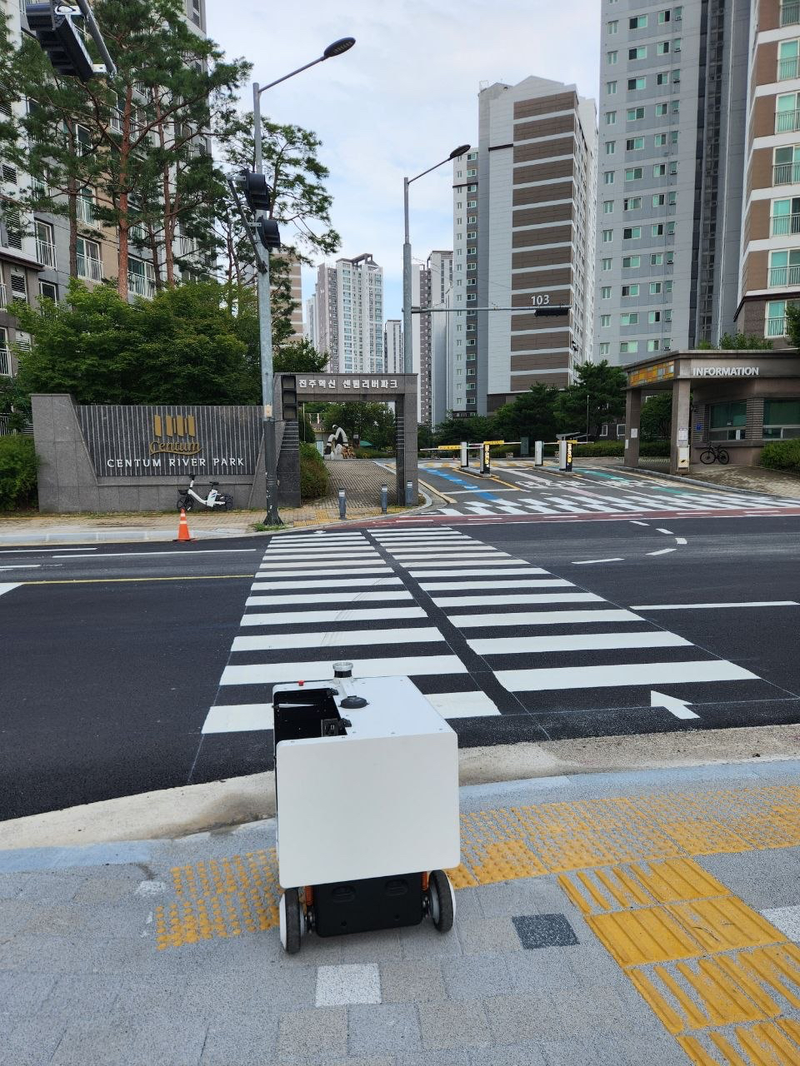
[Financial News] Delivery technology that links drones and robots has been demonstrated in an urban apartment complex. The goal is to build a fully contactless delivery and transport system in urban living spaces and move toward commercialization.
The Korea AeroSpace Administration said on the 28th that it has been developing a contactless delivery system for heavy cargo, with drones and robots working together to handle loads of up to 40 kg, in cooperation with the Electronics and Telecommunications Research Institute (ETRI). From the 24th to the 29th, the system is being field-tested in a densely populated area inside an apartment complex in Jinju Innovation City.
To raise the reliability of drone-robot delivery technology to a commercial level, the agency has continued to verify the system in real operating environments across a range of conditions nationwide. It previously confirmed the feasibility of linked operations among drones, robots and stations in Naepo New Town in South Chungcheong Province in 2025. In Jeju Province in March and April 2026, and in Sacheon in August, it also tested delivery capabilities in environments connected to island regions and public and logistics facilities.
This demonstration in Jinju expands the scope of the technology to apartment complexes in urban residential areas. Its main goal is to secure technical reliability for the drone-robot delivery system in densely populated living spaces. In particular, it thoroughly tested the autonomous driving capability of the robot, which handles transport through narrow passages, crosswalks and inside apartment complexes where drones have difficulty reaching.
First, a drone transported toys and books ordered by customers from a toy bank and a children's library to a major delivery hub, then handed them over to an autonomous robot, which carried them to the front door of the apartment. The total weight of the toys and books can reach up to 40 kg, and repeated deliveries are helping improve the stability and reliability of the system.
Because the demonstration is being carried out in a densely populated area, the Korea AeroSpace Administration is paying special attention to preventing safety accidents. It has prepared response procedures for various emergencies, including drone body or power system malfunctions, communication failures and severe weather, and has strengthened safety management around the drone-robot approach routes. The agency also expects the demonstration to help establish a fully contactless delivery and transport system for heavy items of up to 40 kg in urban living spaces, with drones and robots automatically linked, and to pave the way for commercialization.
Administrator Oh Tae-seok of the Korea AeroSpace Administration said, "For drone and robot delivery services to be used in people's daily lives, securing social acceptance in real residential environments is important." He added, "We will do our utmost to use this demonstration to improve technological completeness and lay the groundwork for commercializing the service."
[email protected] Youn Ji-an Reporter