"Stop the Reverse Landing of Kioxia Leveraged ETFs": Japan's Financial Services Agency Halts Sales
- Input
- 2026-08-28 10:07:31
- Updated
- 2026-08-28 10:07:31
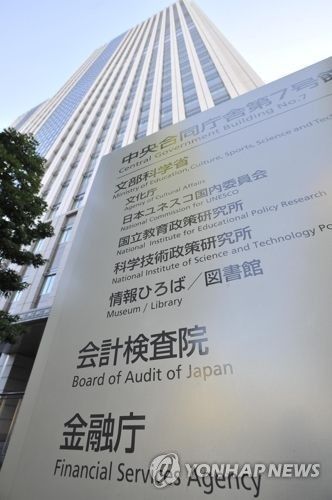
[Financial News, Tokyo = Correspondent Seo Hye-jin] Japan's Financial Services Agency has moved to block the "reverse landing" of leveraged exchange-traded funds (ETFs) tied to individual Japanese stocks such as KIOXIA Corporation and Toyota Motor Corporation, which are being prepared for listing in the United States. The agency believes that if high-risk products not allowed in Japan are sold to domestic investors through the U.S., volatility in specific stocks could rise and price discovery in the market could be distorted.
According to Nihon Keizai Shimbun on the 28th, the agency revised its Q&A on financial instruments and exchange business the previous day and said that selling leveraged ETFs based on individual Japanese stocks, created overseas, in Japan is "not appropriate from a public-interest standpoint." It was effectively a warning to securities firms and others not to handle such products.
The move is a preemptive response to a series of efforts by U.S. asset managers to launch leveraged ETFs based on major Japanese companies. Five U.S. firms, including Turtle Capital Management, ProShares and Tidal Financial Group, recently filed with the U.S. Securities and Exchange Commission (SEC) for approval to list leveraged ETFs tracking KIOXIA's share price. Products linked to Toyota, Sony Group Corporation and SoftBank Group Corp. are also awaiting approval.
Leveraged ETFs are designed to track two or three times the daily return of a specific stock. They can generate large gains when prices rise, but losses also grow by the same multiple when prices fall. There are also concerns that repeated buying and selling of the underlying shares to maintain the leverage ratio could amplify price swings.
Japan allows leveraged ETFs that track stock indexes, but it does not permit domestic listings of products linked to individual company share prices. However, ETFs approved overseas could be sold as "foreign investment trusts" if the manager filed with Japanese regulators and completed disclosure procedures. In effect, U.S. asset managers had a loophole: they could list products in the U.S. that could not be created in Japan, then sell them back into the Japanese market.
Matthew Tuttle, CEO of Turtle Capital, which is pushing the KIOXIA leveraged ETF, has said he would notify Japanese authorities of the product's sale once SEC approval is obtained. Through the revised Q&A, the Financial Services Agency has now clearly shut down that possibility of reverse landing.
Sharp market swings in South Korea also appear to have heightened Japanese regulators' caution. In South Korea, leveraged ETFs tracking individual stocks such as Samsung Electronics and SK hynix were listed in May, and as retail investors poured in, related share prices swung sharply. In response, Korean financial authorities raised the deposits required for trading and temporarily suspended new listings, among other tighter regulations.
[email protected] Seo Hye-jin Reporter