"I’m Already Paying 2 Million Won a Month in Interest. If Loan Rates Hit 8%, I’ll Have to Cut My Child’s Academy Classes" — Homebuyers Break Into a Cold Sweat
- Input
- 2026-08-29 06:00:00
- Updated
- 2026-08-29 06:00:00
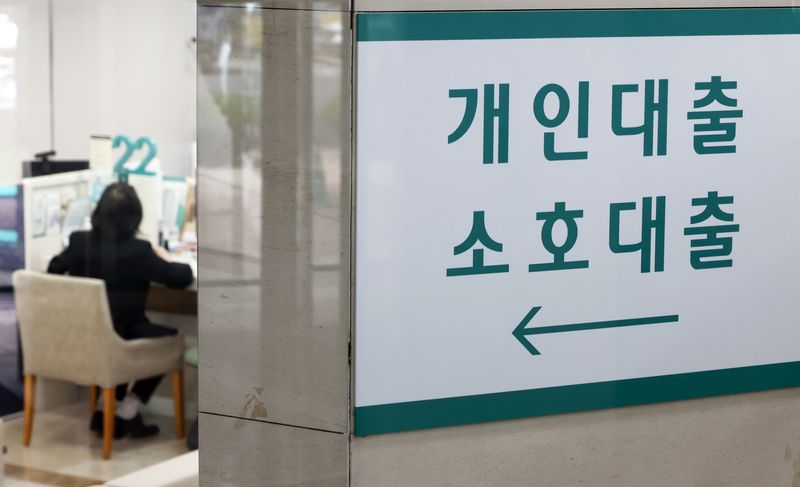
[Financial News] #. A dual-income couple in their 40s living in Seoul recently let out a sigh of relief as home prices kept rising. In 2022, they took out a 340 million won mortgage with a 30-year term and a five-year variable rate of 5.5% to buy a 59-square-meter apartment in Gwangjin District, Seoul. Although they pay 1.93 million won in monthly interest, they felt proud to own a home in Seoul. But as market rates began to creep up earlier this year, the benchmark rate was also raised to 3%. With news that mortgage rates could surge to 8% ahead of next year’s refinancing, they are now worried they may have to cut their child’s academy classes first.
As the Bank of Korea (BOK) has raised the benchmark rate for a second straight month, forecasts are emerging that mortgage rates at commercial banks could break through the 8% mark. As market rates climb and banks tighten household lending, the upper end of mortgage rates has already jumped into the 7% range. If rates rise further from here, the burden on borrowers will only grow heavier.
Benchmark rate raised for a second consecutive month... upper end of mortgage rates reaches 7.17%
On the 27th, the Monetary Policy Board of the Bank of Korea raised the benchmark rate by 0.25 percentage point from 2.75% to 3.00%. This followed last month’s increase from 2.50% to 2.75%, marking two straight months of hikes.
As of that day, five-year fixed mortgage rates at the five major commercial banks — KB Kookmin Bank, Shinhan Financial Group, Hana, Woori Bank, and NH NongHyup — were estimated at 4.72% to 7.17% a year. Following the BOK’s rate hike, the upper end of mortgage rates had briefly climbed above 7.5% before easing back into the low 7% range, but it has recently turned upward again as bank bond yields fluctuate. Some observers say that if the BOK continues raising rates, the upper end of mortgage rates could exceed 8%.
If a borrower takes out 300 million won over 30 years, the impact becomes even clearer. At the current upper-end fixed rate of 7.17% at the five major banks, the monthly payment comes to about 2.03 million won. If the rate rises to 8%, that amount would increase to 2.201 million won.
The situation is no different for variable-rate mortgages. COFIX, the benchmark for variable-rate loans, stood at 3.18% last month for new loans, up 0.13 percentage point from the previous month.
COFIX is an index that reflects the cost banks incur when raising funds through deposits, savings products, or bank bonds. As funding costs rise, COFIX also increases, and after a certain lag, that burden is passed on directly to variable-rate mortgage borrowers.
More new borrowers are choosing variable rates... taking the full hit in a rising-rate environment
The problem is that, despite this trend, new borrowers are increasingly turning to variable-rate loans. In July, the share of new mortgages with variable rates rose to 68.1%, while fixed-rate loans fell to 31.9%, the lowest level since February 2014. Looking at the average rate for mortgages newly extended in July, fixed-rate loans stood at 4.76%, compared with 4.35% for variable-rate loans, a gap of 0.41 percentage point. This appears to reflect borrowers’ desire to reduce interest costs for now.
However, if COFIX and short-term market rates continue to rise, variable-rate borrowers will have to absorb those increases each time their rates are reset.
Even those who signed up for five-year fixed products at low rates of 2% to 3% a few years ago cannot feel safe. These products are repriced at each scheduled reset, based on the market rate and the spread at that time. Given the wide gap between the low-rate era and today, monthly payments could jump sharply after repricing.
[email protected] Kim Su-yeon Reporter