Gwacheon Juam Data Center Regulation Ordinance Ultimately Rejected, Leaving the Site Bruised by a 'Sprouting Everywhere' Standard
- Input
- 2026-08-28 09:49:37
- Updated
- 2026-08-28 09:49:37
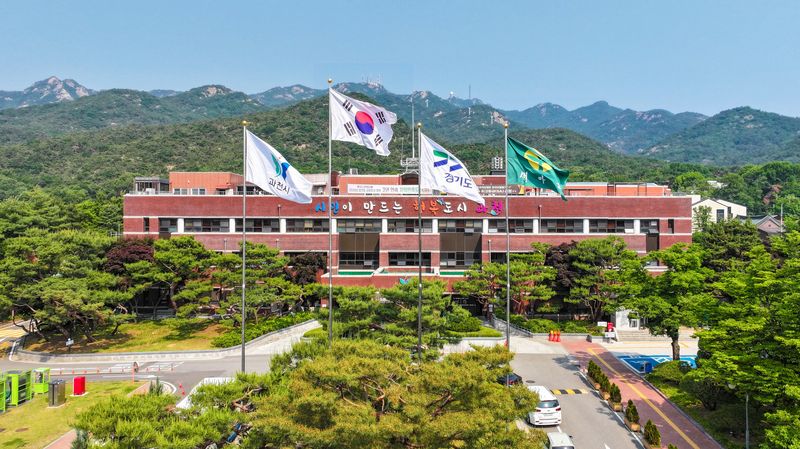
[Financial News] An ordinance aimed at blocking the construction of the Juam Data Center in Gyeonggi Province's Gwacheon City was ultimately rejected. An industry official said, "Local governments are now applying inconsistent, ad hoc standards in response to complaints, and data center disputes are appearing across the country," adding that "the Gwacheon City Council's rejection this time is highly significant."
According to the industry on the 28th, the Gwacheon City Council reviewed the proposed partial revision of the Gwacheon City Urban Planning Ordinance the previous day and voted it down.
The project at the center of the controversy is the Juam Data Center. It is being pursued by local residents who received land compensation instead of cash. The project is moving forward through the proper legal procedures under the current plan. However, as residents opposed it, some city council members introduced an ordinance to put the brakes on the construction.
The revision would have established new development permit standards requiring certain separation distances from residential areas and homes depending on contracted power capacity. Its key provision was to restrict development permits for data centers with contracted power of 5 MW or more if residential areas or houses were within 300 meters of the site boundary, and within 200 meters for those below 5 MW.
It also included a transitional clause that would apply the new standards even to development permit applications filed before the ordinance took effect, as long as permits had not yet been issued. In short, it was designed to stop the Juam Data Center project now being carried out by local residents through land compensation.
The residents argued that they purchased the land and launched the project based on the existing urban plan and District Unit Plan, so a belated ordinance restricting construction could infringe on their property rights and the principle of trust protection. They also stressed that risks such as electromagnetic waves and noise should be assessed through objective data and expert verification.
The revised ordinance was ultimately rejected after review. According to the city council, the vote ended with one in favor, two against, and three abstentions among the six members present, resulting in the ordinance's defeat.
The industry is concerned that the controversy over data centers is spreading even to small-scale facilities such as Juam DC. One official said, "Unfounded rumors and ghost stories about issues such as electromagnetic waves are spreading even to Edge Data Center sites," adding that "local governments' inconsistent administration, driven by complaints, is also playing a part." Another industry official said, "Because there are no clear government-level location and safety standards or guidelines, confusion on the front lines is getting worse."
[email protected] Lee Jong-bae Reporter