"Was There a Thief in Your Bank Account?" ... Earning 4.09 Million Won a Month, Yet Still in the Red — A Closer Look
- Input
- 2026-08-28 10:11:06
- Updated
- 2026-08-28 10:11:06
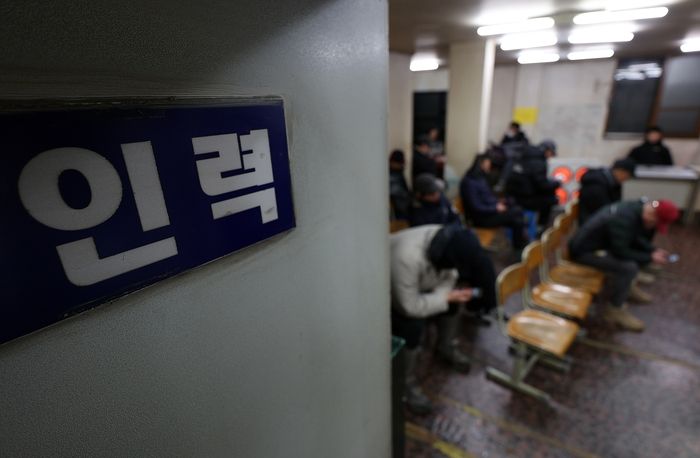
[Financial News] Real wages, adjusted for consumer price levels, fell for a third consecutive month, showing that wage growth is still failing to keep pace with inflation.
Average monthly pay was 4.09 million won, while real wages adjusted for inflation came to 3.41 million won
According to the results of the July 2026 Business Labor Force Survey and the April 2026 Regional Business Labor Force Survey released by the Ministry of Employment and Labor (MOEL) on the 27th, the average monthly gross pay per worker at businesses with at least one regular employee stood at 4,094,000 won in June, up 123,000 won, or 3.1%, from a year earlier.
Pay for regular employees rose 3.6% to 4,375,000 won, while wages for temporary and daily workers increased 3.8% to 1,773,000 won. For regular employees, special pay jumped 17.2%, helped by retroactive wage increases in semiconductor-related industries and larger bonuses.
However, real wages, which reflect inflation, fell 2,000 won, or 0.1%, from a year earlier to 3,412,000 won. After dropping 1.0% in April and 1.4% in May, real wages posted negative growth for a third straight month. It was the first time real wages had declined for more than three consecutive months since a five-month streak of declines from April to August 2023.
At a briefing that day, Jeong Hyang-suk, chief of the Labor Market Survey Division at MOEL, said, "Inflation is now at its highest level since the period of high prices in 2022." She added, "Because inflation is running higher than the modest pace of wage growth, real wages are showing negative growth."
For the second quarter, the average monthly nominal wage per worker rose 2.1% from a year earlier to 4,036,000 won, but real wages fell 0.8% to 3,370,000 won.
Still, real wages for the first half of the year as a whole came to 3,606,000 won, up 0.3% from the same period last year.
Employment in July rose by 220,000 from a year earlier... but 65% came from temporary and daily workers
On the employment side, the number of workers at businesses as of the end of July reached 20,718,000, up 226,000, or 1.1%, from a year earlier, extending the upward trend.
By employment status, the number of regular employees rose 78,000, or 0.5%, to 17,280,000. Temporary and daily workers increased by 147,000, or 7.6%, to 2,071,000, while other workers rose by 1,000, or 0.1%.
Temporary and daily workers accounted for about 65% of the total increase of 226,000 workers.
[email protected] An Ga-eul Reporter