"We can tackle hair loss without touching hormones"... Professor Young Kwan Sung opens the path to non-hormonal new drugs [100 Hair Loss Experts Interview]
- Input
- 2026-08-28 15:17:53
- Updated
- 2026-08-28 15:17:53
When things that should be present are absent, they bring loss. Hair loss, a source of deep and heavy loss for many, has emerged as a major issue of our time. To confront hair loss head-on and overcome it, we are meeting 100 hair-loss experts, starting with the medical doctor who pioneered first-generation hair-loss treatment. Please look forward to the new stories that will unfold beyond the two letters of "hair loss." [Editor's note]
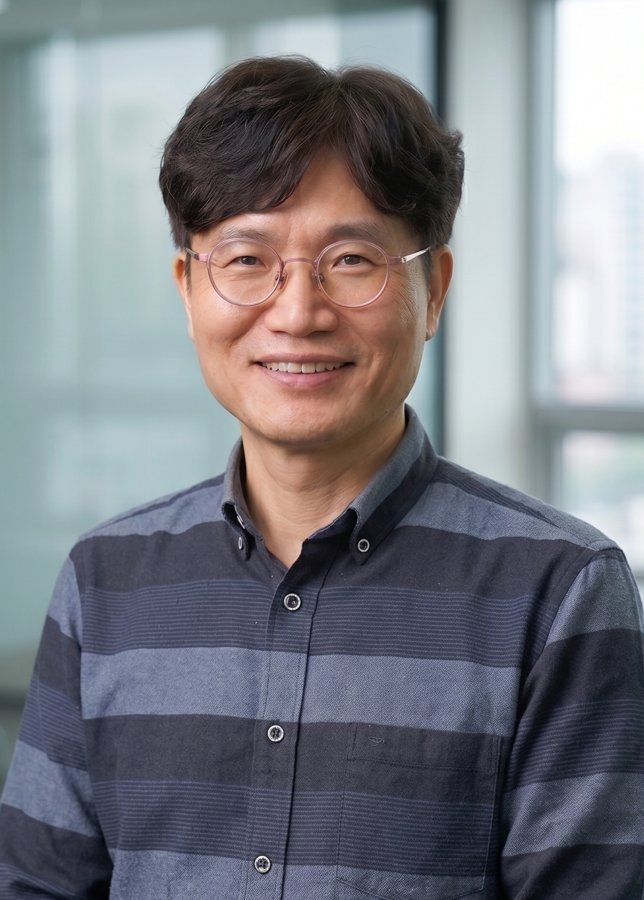
[Financial News] It is an era in which even bald heads can be transformed into full heads of hair through hair transplant surgery. A single pill a day may even help control the stubborn genes behind hair loss. Yet researchers in basic medicine and clinicians who treat patients in the field alike continue to point out the limits of current hair-loss treatment. Hair transplants rely on non-balding areas, treatment options are extremely limited, and there are side effects as well as cases in which patients do not respond at all.
Professor Young Kwan Sung of Kyungpook National University School of Medicine also stresses that the future of hair-loss treatment should move beyond simply transplanting or preserving hair follicles and toward "fundamental regeneration and precision treatment." To that end, he has spent the past 20 years in the lab uncovering the mechanism of male-pattern hair loss and advancing hair follicle cloning technology. Based on those findings, he is now accelerating the development of a non-hormonal hair-loss treatment that does not involve hormones. We met Professor Sung on the 27th to hear where hair-loss treatment research stands today.

The specific mechanism of the DHT hormone that causes hair loss has been identified... and the findings were published in the field's most prestigious journal.
― You have been researching hair loss in basic medicine for 20 years. How would you summarize your work?▲ The past 20 years of research can be broadly divided into two phases. During the first 10 years, I focused on uncovering the mechanism of male-pattern hair loss. During the next 10 years, I concentrated on "hair follicle cloning," that is, creating new hair follicles outside the body.― Isn't the mechanism of male-pattern hair loss that the male hormone testosterone is converted into dihydrotestosterone (DHT), which then causes aging of the hair follicles?▲ That is correct. We went a step further and identified in detail how DHT acts on hair follicles. When DHT penetrates dermal papilla cells, which produce hair, and binds to androgen receptors, specific signals are activated. The stimulated dermal papilla cells then secrete hair-damaging factors such as DKK-1, Interleukin-6 (IL-6), and Prostaglandin D2 (PGD2).DKK-1 forcibly blocks hair-growth signals, while IL-6 induces inflammation and degeneration in cells, causing hair to fall out earlier. PGD2 reduces the size of hair follicles, making hair thinner. Because of these three factors, the growth phase of hair becomes shorter and the hair becomes finer, leading to symptoms of hair loss.― It is striking that multiple proteins with different roles act together. Was this the first time it was identified anywhere in the world?▲ Until now, the medical community has studied hair loss within the broad framework that DHT causes it. This is the first study to clarify which signaling molecules destroy hair follicles and through what process. The findings were introduced in the Journal of Investigative Dermatology (JID), the most authoritative journal in dermatology, and follow-up studies have also been published in other prestigious international journals.
Research on a "non-hormonal hair-loss treatment" that can be used by women of childbearing age and older adults is gaining pace... with government support.
― If you have identified a new mechanism, I assume you are also researching new treatments. For male-pattern hair loss, finasteride and dutasteride, which act on male hormones, are used. Can we now expect a non-hormonal hair-loss treatment?▲ In fact, the government and the Kyungpook National University Industry-Academic Cooperation Foundation are researching a "non-hormonal hair-loss treatment" as part of a startup and technology commercialization project. As mentioned earlier, patients with male-pattern hair loss show very high levels of PGD2, a substance that is secreted outside cells and delivers specific signals. When PGD2 binds to a particular receptor, the hair follicle shrinks and the hair becomes thinner. We have developed a mechanism that blocks PGD2 from binding to that receptor. In simple terms, it is like closing the entrance so that the flame (PGD2) cannot enter the house called the hair follicle.In addition, PGD2 can trigger subtle inflammatory signals around the hair follicle, and we expect the new drug to block those signals as well. Because it does not suppress male hormone production itself, unlike existing drugs such as finasteride or dutasteride, it can fundamentally avoid side effects such as reduced sexual function.― That is welcome news. Until now, women and older adults have had a hard time because they could not use hormone-related hair-loss treatments. Can the new treatment be used for various types of hair loss?▲ The non-hormonal new drug now under development is expected to offer a new option for hair-loss patients who could not benefit from existing drugs because of sex or age. Instead of interfering with hormones, it presents a fundamental treatment approach that protects hair follicles. It could be used broadly, including by women of childbearing age who worry about birth defects caused by hormonal disruption, menopausal women with hormonal imbalance, and older adults concerned about side effects such as orthostatic hypotension or sarcopenia.
Korea, which already leads the world in hair transplantation, will guide the global standard for hair-loss treatment with K-BIO innovative new drugs.
―This could change the landscape of the hair-loss market.▲ The development of hair-loss treatments has stagnated for more than 30 years since finasteride, dutasteride, and Minoxidil were approved. Because there are so few treatment options, many people hesitate to seek treatment or give up because of side effects or limited efficacy. Yet the market is worth trillions of won a year. It is even growing by nearly 10% annually.
In short, hair loss affects people across generations and many are desperate for solutions. Through this new drug, we want to help people suffering from psychological shrinkage and stress, and contribute to greater vitality across society. We also hope to reduce the enormous social costs spent on scientifically unproven hair-loss treatments and self-care.― When can we expect to see the new treatment? I look forward to the day when hospitals or pharmacies can recommend a non-hormonal hair-loss treatment.▲ For an oral treatment, if we follow the usual new drug development track, we expect it to take about eight years, or as long as 10 years, before launch. However, for a topical treatment, which is applied to the skin, the lower systemic absorption makes safety easier to secure, so we believe the timeline could be shortened by one to two years. Our plan is to launch the topical treatment first and then the oral treatment in stages.― As a researcher, how do you see the current state and future of hair-loss medicine?▲ People often say that the final destination of hair-loss treatment is hair transplantation. And Korea is world-class in that field. The "Choi Implanter," which KNUH researchers commercialized for the first time in the world in the 1990s, is also widely used around the world. It is a representative example of the clinical capability of hair-loss medicine in Korea.
However, surgical hair transplantation has a clear limitation: it inevitably depends on the number of hair follicles in the patient's own non-balding areas. Drug treatments can also come with problems such as systemic side effects or reduced effectiveness over long-term use. That is why I believe we must now move toward suppressing the mechanism of hair loss itself, or toward fundamental regenerative treatment and precision cell therapy.
If I have devoted the past 20 years to research, I plan to spend the next 10 years bringing the core technologies I have developed into the world and commercializing them. If many researchers join forces, I am confident that Korea will soon be able to present the global standard for hair-loss treatment with "K-BIO innovative new drugs" that combine cutting-edge bio technologies such as targeted drugs, stem cells, and gene regulation.
[email protected] Kim Hyun-sun Reporter