Fed officials gathered in Jackson Hole warn in unison about inflation
- Input
- 2026-08-28 07:39:54
- Updated
- 2026-08-28 07:39:54
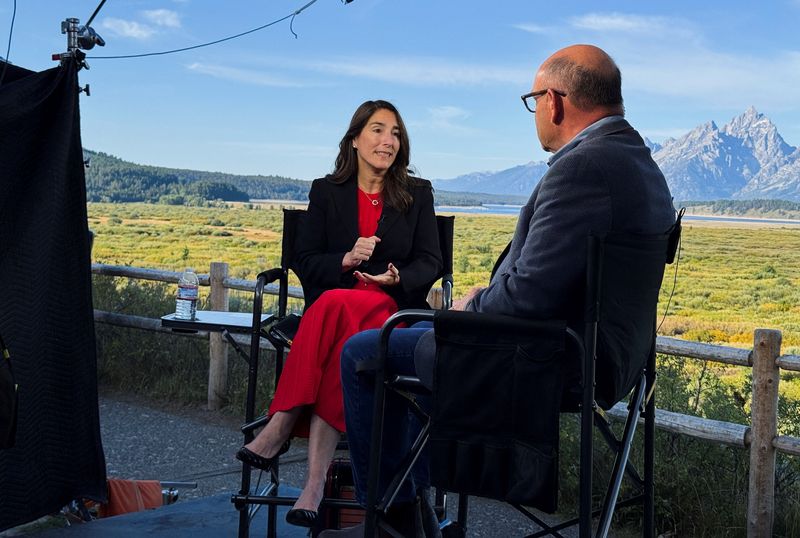
[Financial News] Regional bank presidents of the Federal Reserve System (FRS), who gathered for the Jackson Hole Economic Policy Symposium, issued warnings about the recent rise in U.S. inflation. However, they were split on whether interest rates should be raised to bring prices under control.
The Kansas City Federal Reserve Bank, under the FRS, hosted the central bank's annual economic symposium, the Jackson Hole Economic Policy Symposium, in Jackson Hole, Wyoming, from Aug. 27 to 29 local time. Fed Chair Kevin Warsh will deliver the opening keynote at 11 p.m. on Aug. 28, Korea time.
Jeffrey Schmid, president of the Kansas City Federal Reserve Bank, who arrived in Jackson Hole, told CNBC on Aug. 27 that "inflation remains stubborn and sticky" and that "we need to keep looking for ways to break through it." He also questioned whether the Fed's current benchmark rate of 3.5% to 3.75% is restrictive enough to slow the economy.
Schmid said, "I don't know what we are restraining with the current interest rate policy." Asked whether he supports a rate hike, he replied, "I need a little more information," adding that he is trying to identify demand-side factors driving both growth and inflation.
Beth Hammack, president of the Cleveland Federal Reserve Bank, told CNBC that "I don't want to prejudge anything, but I think it's time to act."
She was one of three officials who dissented at last month's Federal Open Market Committee (FOMC) meeting, arguing for a rate hike instead of holding rates steady.
Hammack said inflation has remained above the Fed's 2% target for more than five years and argued that current monetary policy is not restraining the economy. She added that "the idea that inflation will persist is starting to take hold in the economy to some extent," and said, "I don't think we are there yet, but I definitely want to avoid that situation."
Austan Goolsbee, president of the Chicago Federal Reserve Bank, said on the "Rapid Response" podcast that "everyone needs to be cautious," adding that his biggest short-term concern is that inflation is still not under control.
He said the inflation trend over the past three months "doesn't look that bad" and added that if there is evidence that prices are moving toward the Fed's 2% target, rates could be lowered gradually over time.
Susan Collins, president of the Boston Federal Reserve Bank, took a cautious stance in an interview on Aug. 27, describing recent inflation data as "mixed." She said monetary policy is "slightly restrictive" and identified a gradual slowdown in inflation as the most likely scenario.
The U.S. Personal Consumption Expenditures Price Index (PCE Price Index) for July, released the previous day, rose 3.7% from a year earlier, beating market expectations of 3.6%. Core PCE also held steady at 3.3% from the previous month. The index is widely used by the Fed to gauge inflation.
[email protected] Park Jong-won Reporter