Trump Renames Lake Ontario on Canada Border to Lake America
- Input
- 2026-08-28 06:49:23
- Updated
- 2026-08-28 06:49:23
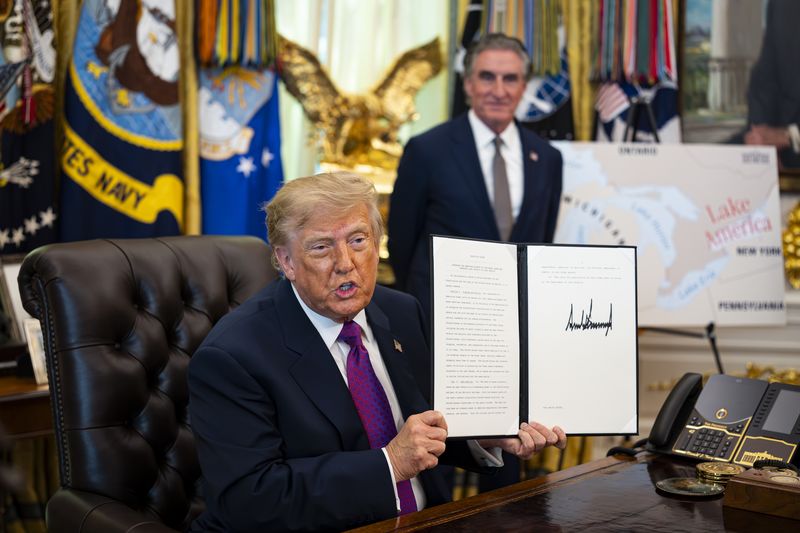
[Financial News] President Donald Trump, who is engaged in a trade war with Canada, signed an executive order renaming Lake Ontario, which lies on the border between Canada and the United States, to Lake America.
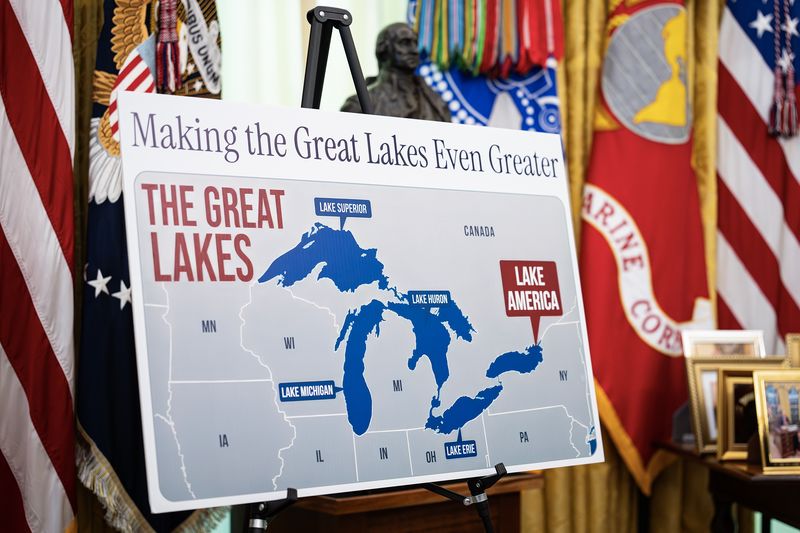
According to CNN, Trump signed the order at The White House on the 27th (local time) and instructed U.S. government agencies to carry out the name change. The order claimed that because the deepest point of Lake Ontario lies in U.S. territory, the United States has rights to most of the lake's water. It also said the United States plays the largest role in protecting the five Great Lakes along the border, including Lake Ontario.
Trump repeated his claim on the 27th, saying, "Canadian officials have treated us very badly. They are nasty people," and again accused Canada of taking advantage of the United States. He had posted on Truth Social on the 25th that he was considering renaming Lake Ontario, and signed the executive order three days later.
After Trump signed the order, Canadian Prime Minister Mark Carney said on X that Lake Ontario "will always have been, is, and always will be called Lake Ontario." He noted that the word "Ontario" comes from the language of the Wendat people and means "beautiful lake" or "great lake," stressing that it is a "name more than 400 years old" that predates both the founding of the Canadian Confederation and the U.S. Declaration of Independence. He added, "We know the United States is changing. Its trade relations, foreign policy, national monuments, and place names are changing too."
Lake Ontario is a large lake between Ontario, Canada, and the State of New York in the United States. It is one of North America's five Great Lakes and serves as part of the border between the two countries. Ontario was established in 1867 and took its name from the lake.
The announcement came amid the trade war between the United States and Canada. Last month on the 20th, the U.S. government said it would add a 50% tariff on $20 billion worth of Canadian imports, including dairy products, liquor, machinery, textiles, cement, furniture, and electronics, saying Canada had discriminated against U.S. products.
The United States and Canada continued negotiations through this month but ultimately failed to reach an agreement. The 50% tariff took effect at 12:01 a.m. on the 22nd. In a national address on the 22nd, Carney said of the United States, "If you are attacked, you are at war, and we have been attacked." He then announced plans to impose retaliatory tariffs on U.S. imports starting Sept. 8. Ontario Premier Doug Ford also lashed out at Trump this month, saying he would not back down in the face of U.S. threats.
Trump also used a place-name change to pressure Mexico last year during a trade dispute. Shortly after taking office, on Jan. 20 last year, he signed an executive order renaming the Gulf of Mexico to the Gulf of America. On the 27th, Trump said, "We have a gulf and we have a lake. Now all we need is an ocean," adding, "We may have to rename the Atlantic Ocean or the Pacific Ocean. Maybe we will."
[email protected] Park Jong-won Reporter