"He Had His Nail Pulled Out and Even Scraped Down to the Bone" ... The Scary Disease That Struck Do Kyung-wan [Health Talk]
- Input
- 2026-08-28 05:30:00
- Updated
- 2026-08-28 05:30:00
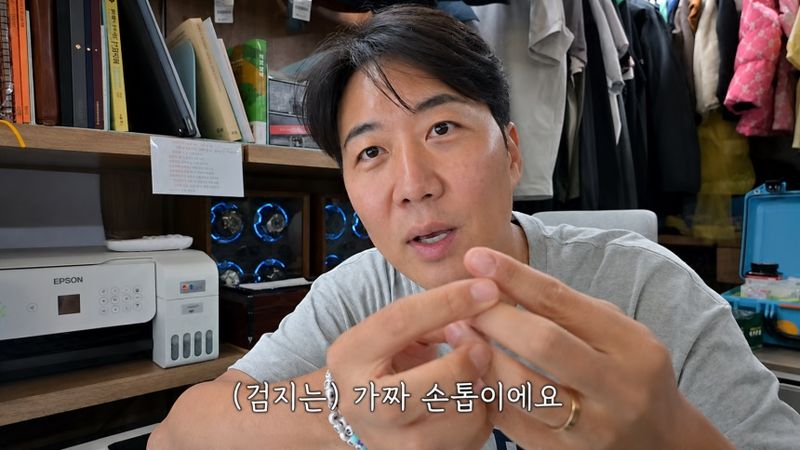
[Financial News] Do Kyung-wan, 44, a former announcer and broadcaster, has revealed that he underwent surgery to remove a fingernail and treat the bone after developing acute osteomyelitis in his finger.
On the 22nd, through the YouTube channel 'Dojang TV,' Do Kyung-wan explained the aftermath of the surgery and the reason he began collecting watches over the past three years. He said, "I developed acute osteomyelitis in my hand, had surgery, and took a break from activities for about two to three years." He added, "They removed my nail and operated on the bone underneath, so the nail never grew back. I still wear a fake nail on my index finger." He went on to say, "I was stressed by how my hand looked after the surgery, and I started wearing a wristwatch to draw attention away from it."
Normally, a nail will grow back even if it is pulled out. But if the nail matrix, the root tissue that produces the nail, is severely damaged by inflammation or surgery, as in Do Kyung-wan's case, it may never grow back permanently.
Bacteria can invade deep into the bone ... If left untreated, it can become chronic and cause permanent deformity
The acute osteomyelitis that Do Kyung-wan suffered from is an infectious disease in which pathogens such as bacteria or fungi invade the bone and bone marrow, causing inflammation.
The most common culprit is GBS. Infection usually occurs in one of several ways: bacteria may spread directly into the bone through a skin wound or inflammation around the fingernail or toenail, known as Paronychia; they may travel through the bloodstream from another part of the body; or inflammation in nearby tissue may spread.
When the disease develops, severe pain, tenderness, fever, and swelling can appear rapidly in the affected area, making movement difficult. Fever and chills may also occur throughout the body.
Early diagnosis and prompt treatment are essential for acute osteomyelitis. If it is left untreated, the inflammation can destroy bone tissue and form pus, leading to bone necrosis or chronic osteomyelitis, which is much harder to treat.
In the early stage of infection, treatment involves high-dose antibiotics tailored to the causative organism and given intravenously. However, if an abscess has already formed inside the bone or tissue has become necrotic, surgery is unavoidable, as in Do Kyung-wan's case, where the nail had to be removed and the dead tissue scraped out.
Specialists warn that if a minor cut on the fingertip or Paronychia around the nail is left untreated or handled unsanitarily, the inflammation can spread into the bone. If swelling and pain in a finger persist for several days or the area feels hot, it should not be dismissed as a simple infection. Seek medical attention immediately for a thorough examination.
[email protected] Moon Young-jin Reporter