[Editorial] BOK’s Back-to-Back Rate Hikes Signal It Is Time to Prepare for Tightening
- Input
- 2026-08-27 18:39:26
- Updated
- 2026-08-27 18:39:26
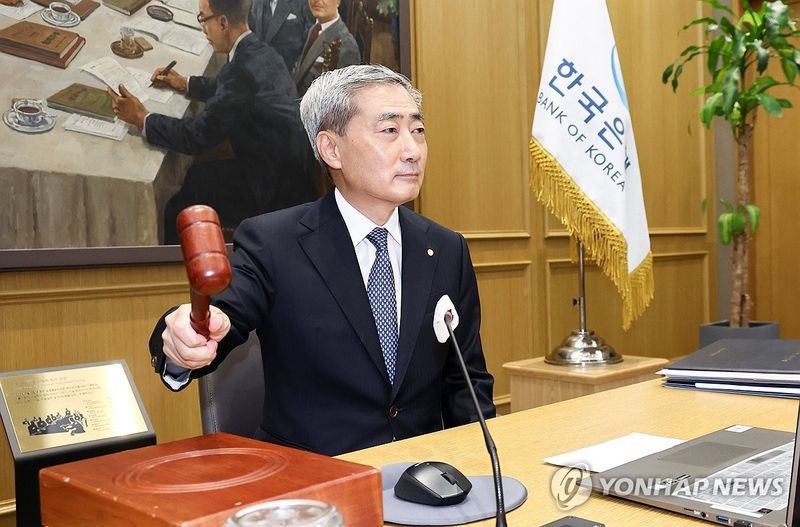
The BOK’s latest rate hike reflects its view that both Gross Domestic Income (GDI) and Gross Domestic Product (GDP) growth have exceeded forecasts, while oil-price and exchange-rate volatility are stoking inflation expectations among households and companies. It is hard to dispute the BOK’s judgment that it must break the inflationary cycle and rein in overheated housing prices in the Capital Region as well as the rapid growth in household debt.
Prices have remained unstable, driven by factors such as surging oil prices amid the prolonged Arab-Israeli conflict. Consumer inflation has struggled to fall below the 3% range. By contrast, semiconductor exports have kept GDP growth at a high level, and the cumulative Current Account Balance through the end of June exceeded $190 billion, marking an all-time high for a half-year period. Reflecting these trends, the BOK raised its annual growth forecast for this year by 0.7 percentage point, from 2.6% to 3.3%. It also took into account the possibility that strong growth could feed into higher inflation.
In particular, a clear warning on financial stability was needed to curb the sharp rise in housing prices in the Capital Region and the increase in household lending despite the high-rate environment. The move is also expected to help stabilize the Korean won and prevent capital outflows by narrowing the interest rate gap with the Federal Reserve System (Fed).
However, a rate hike pushes up market interest rates and increases borrowers’ interest burdens. Household Credit, a broad measure of household debt, surpassed 2,000 trillion won at the end of the second quarter for the first time on record. That reflects a surge in young people rushing into the loan market out of fear of soaring apartment prices, borrowing as much as they can, and a wave of debt-fueled stock investing using credit loans as the market rises.
In this situation, the BOK has signaled that it may maintain a tightening stance for the time being. Market participants are also raising the possibility of another rate hike within the year. This means the rate-hike cycle is not over yet. The interest burden on vulnerable groups, including multi-debt borrowers and small business owners, could snowball.
According to the financial sector, fixed-rate (five-year) mortgage loans at the Five Major Commercial Banks have recently climbed to the mid-7% range. After last month’s BOK rate hike, the upper end briefly rose to the mid-7% range before easing somewhat, but it has recently rebounded again. Some market watchers even expect the upper end to break above 8%. The financial industry broadly estimates that every 0.25 percentage point increase in the benchmark rate adds trillions of won to households’ annual interest burden.
The problem is that the shock of tightening falls most heavily on vulnerable groups. As interest burdens surge for small self-employed business owners and debt-heavy borrowers, financial authorities must activate a precise financial safety net for ordinary households in response to this hike. Fundamental measures are also needed to break the vicious cycle of debt-fueled borrowing and investing by stabilizing the real estate market and the stock market. The South Korean government, the BOK, and financial authorities should work together on a finely tuned policy mix that can support both domestic demand recovery and price stability. Companies and households, too, must recognize that the economy is now in a period of rising rates and devote all efforts to debt restructuring and risk management.