[Editorial] Nepal Flood Tragedy Calls for a Fresh Review of Safety Nets at Overseas Worksites
- Input
- 2026-08-27 18:39:21
- Updated
- 2026-08-27 18:39:21
This disaster is especially alarming because it is different from the kind of flood damage we are used to dealing with. The United States Geological Survey (USGS) initially said a magnitude 4.4 earthquake had occurred, but later corrected that statement, saying the event was not an earthquake but the result of a massive glacier collapse. Ice and rock gave way at an altitude of more than 5,000 meters, sending debris flows down the river. With some sections upstream still blocked, there are concerns about a second flood. It is also said that the area had seen almost no rain before the flood. The exact cause still needs to be determined, but it is clear that this was a complex disaster that cannot be addressed with safety measures focused only on heavy rain and earthquakes.
The Upper Trishuli-1 Hydropower Project (UT1), which Korean companies are building, is located in a high-altitude gorge near the Bhotekoshi River north of Kathmandu. In this area, if a landslide or debris flow occurs upstream, fast-moving water can rush downstream in an instant. That said, it would be premature to conclude from this accident alone that the companies failed to manage safety properly. Still, it is necessary to closely examine whether the site’s warning, evacuation, and emergency communication systems were sufficient to respond to such an unexpected disaster.
Our public enterprises and construction and energy companies are carrying out large-scale projects in Southeast Asia, the Middle East, South America, Central Asia, and other regions where disaster-response capabilities are not fully developed. In overseas project risk management, preparedness for extreme disasters has become just as important as construction costs, schedules, and financial risks. Disasters that are hard to predict from past statistics alone, such as glacier collapses, flash floods, massive wildfires, and heat waves, must now be treated as business risks.
The government should use this accident as an opportunity to review its national safety support system for high-risk overseas worksites. It is difficult for individual companies to predict and prepare for every special disaster, including glacier collapses. The government needs to systematically analyze regional disaster risks, share that information with companies, and establish early-warning and emergency rescue systems centered on diplomatic missions abroad. Companies should then strengthen site-specific emergency response systems based on that framework.
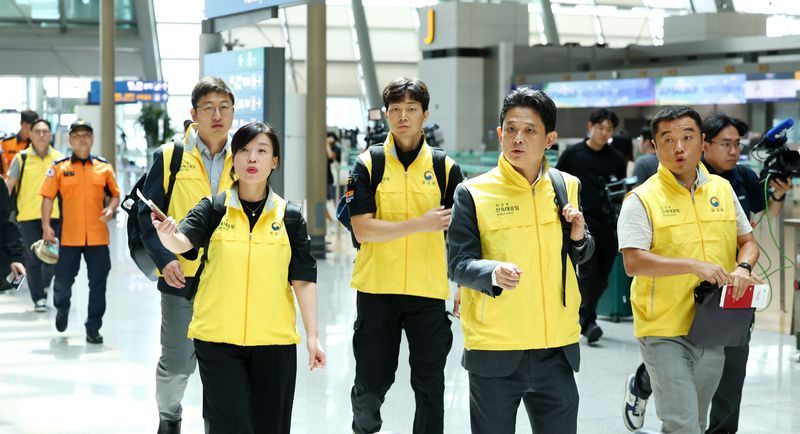
Above all, the government and companies must devote all available resources to finding the South Koreans who are missing in Nepal right now. At the same time, this tragedy should become a turning point for strengthening the national safety net that protects our companies and workers abroad. As unpredictable complex disasters become more common, safety systems at overseas sites must also change.