Jeju National University Plans an Ocean MRO Industrial Ecosystem, Builds Strategy with KAIST and Hanwha Ocean
- Input
- 2026-08-27 18:26:48
- Updated
- 2026-08-27 18:26:48
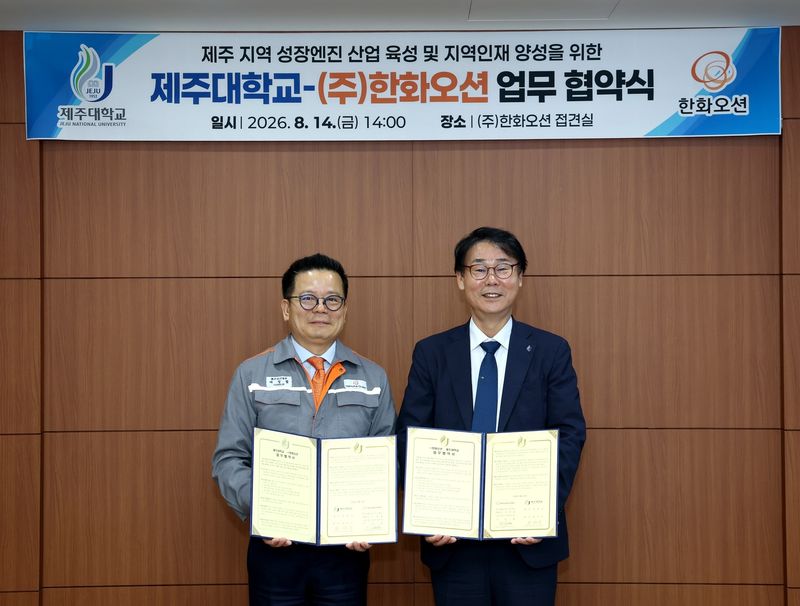
[Financial News, Jeju = Reporter Jeong Yong-bok] Discussions are gaining momentum in Jeju Province on developing marine MRO as a new industrial ecosystem. The goal is to combine universities' research and talent development, companies' market experience, and the policy capabilities of local governments and specialized institutions to create a virtuous cycle that nurtures talent in Jeju and links it to jobs and long-term settlement.
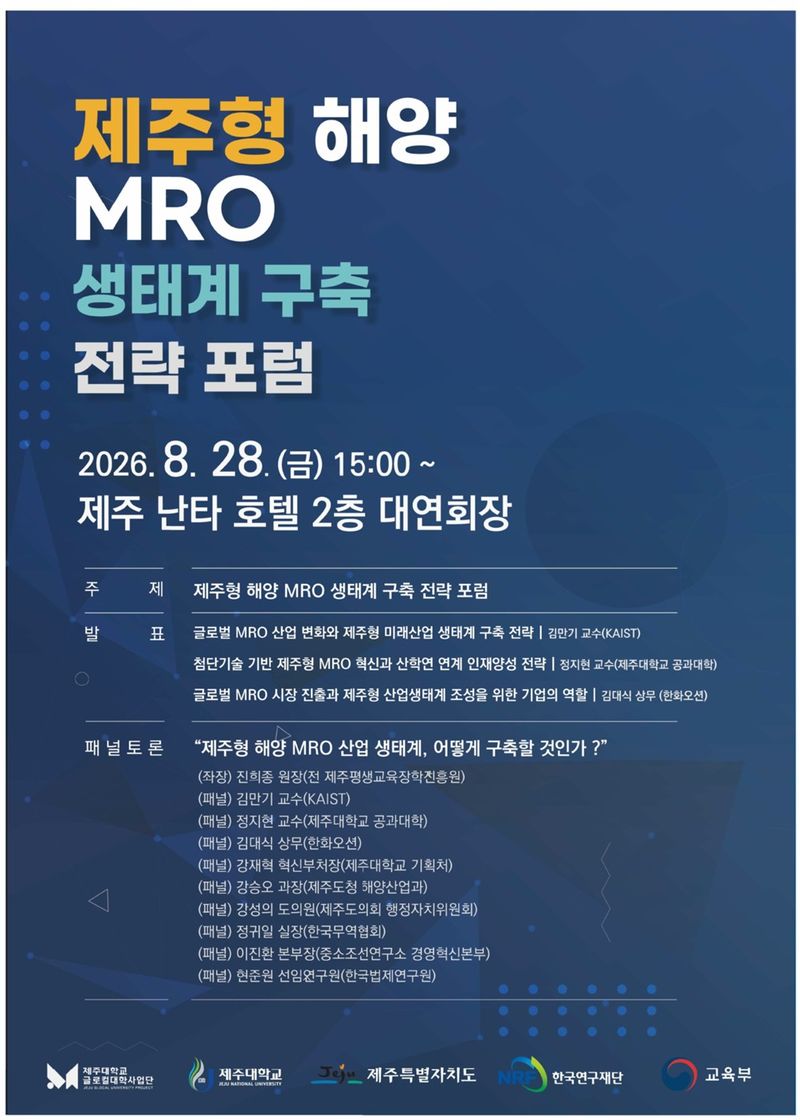
According to JNU on the 27th, it will host the "Jeju-Style Marine MRO Ecosystem Building Strategy Forum" at 3 p.m. on the 28th in the Grand Ballroom on the second floor of Hotel Nanta Jeju.
MRO stands for Maintenance, Repair, and Overhaul (MRO). At the forum, participants will examine changes in the global MRO industry, the use of advanced technologies, talent development linked to industry-academia-research cooperation, and companies' expansion into global markets, while assessing the potential for building a Jeju-style industrial ecosystem.
The forum, hosted by JNU, will bring together officials from universities, Jeju Province, industry, and research institutions. Rather than focusing on short-term industrial issues, the event aims to identify a cooperative framework that connects research and development, workforce training, and corporate participation to foster Jeju as a hub for the future marine industry.
The first presentation will be delivered by Professor Kim Man-ki of KAIST. Under the theme "Changes in the Global MRO Industry and Strategies for Building a Jeju-Style Future Industrial Ecosystem," he will outline the competitiveness Jeju can secure amid global industrial shifts and the direction for building an industrial ecosystem.
Professor Jeong Ji-hyeon of JNU's College of Engineering will present on "Jeju-Style MRO Innovation Based on Advanced Technology and Talent Development Strategies Linked to Industry, Academia, and Research." The session will discuss how to connect technological innovation with university education to cultivate the workforce needed on site.
From the corporate side, Kim Dae-sik, managing director at Hanwha Ocean, will speak on "The Role of Companies in Entering the Global MRO Market and Building a Jeju-Style Industrial Ecosystem." He will examine the conditions needed to connect Jeju's MRO industry with the market from the perspective of a company active in the global market.
A panel discussion will follow under the theme "How Should Jeju Build a Marine MRO Industrial Ecosystem?"
Jin Hee-jong, former head of the Jeju Lifelong Education and Scholarship Promotion Agency, will serve as moderator, and the three presenters — Professor Kim Man-ki, Professor Jeong Ji-hyeon, and Managing Director Kim Dae-sik — will join the discussion.
Also joining the panel will be Kang Jae-hyeok, deputy director of innovation at JNU's planning office; Kang Seung-oh, head of the marine industry division at Jeju Province; Kang Seong-ui, a member of the Security and Public Administration Committee of the Jeju Provincial Council; Jeong Gwi-il, director at KITA; Lee Jin-hwan, head of management innovation at the Small and Medium Shipbuilding Research Institute; and Hyun Jun-won, senior researcher at KLRI.
JNU believes that, because the forum brings together universities, local government, companies, and specialized institutions in trade, shipbuilding, and legislation, it will be possible to comprehensively discuss the policies, corporate participation, and talent development systems needed to actually build a Jeju-style MRO industrial ecosystem.
In particular, JNU is seeking ways to connect talent development, employment, and long-term settlement into a single flow. The idea is to build a structure in which the university trains relevant professionals, the industrial ecosystem creates jobs, and people can remain in the region.
Whether the discussions presented at this forum will lead to actual joint projects among industry, academia, and research institutions, corporate participation, and specialized training programs is expected to be a key factor in the future development of Jeju's marine MRO ecosystem.
[email protected] Reporter Jeong Yong-bok Reporter