Constitutional Court of Korea: Foreign Children Born in Korea Also Have the Right to Birth Registration
- Input
- 2026-08-27 16:38:53
- Updated
- 2026-08-27 16:38:53
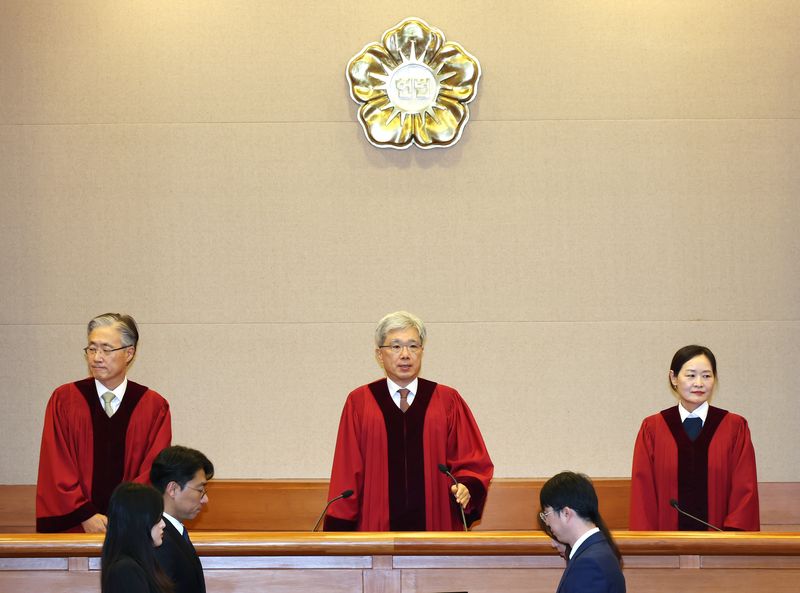
[Financial News] The Constitutional Court of Korea has ruled that the National Assembly's failure to establish a birth registration procedure for foreign children born in Korea is unconstitutional. The court said the right to be registered at birth cannot be treated differently depending on whether a child is a Korean national or a foreign national.
On the 27th, in a constitutional complaint filed by B, a 7-year-old son of a Vietnamese national identified as A, the court unanimously held that "the legislative inaction that failed to provide for birth registration under Korean law for foreigners born in the Republic of Korea is unconstitutional." Although the complaint was filed by A and his wife together with their child, the court accepted B's claim as the party directly affected by the violation of fundamental rights.
A entered Korea in 2008 on a non-professional employment visa and married a Vietnamese woman in 2016. He later remained in the country without legal status after overstaying his approved period of stay.
The couple had a child at a medical center in Seoul in April 2019, but could not file a birth report. Under the current Act on Registration of Family Relations, only the births, marriages and deaths of "nationals" are covered, leaving no legal basis to accept birth registration for foreigners born in Korea.
For a foreigner staying without legal status to register a child's birth, the family must return to the home country or visit a diplomatic mission under the laws of the country of nationality. B was eventually registered in Vietnam under Vietnamese law the following year, but in the country where he was born, he still had no official documentary existence.
A's side filed the constitutional complaint in February 2022, arguing that this legal framework prevented the child from enjoying universal rights that should be guaranteed to children, including medical care, childcare and education.
The court first defined the nature of the "right to be registered at birth." It said the right is one to have a child's birth and other basic information recorded by the state at the earliest possible time after birth, so that the child can be protected.
It added that this is "an independent fundamental right not explicitly stated in the Constitution, and a basic prerequisite for realizing the general personality right, which allows a child to freely develop as a person and to demand minimum safeguards so that the child can grow and develop healthily under the protection of parents and family."
The court stressed that "the scope of this protection cannot be made to depend on whether the child is a Korean national or a foreign national." It explained that "anyone should be able to request that their birth be officially recorded by the state with jurisdiction over the place of birth, and to obtain documents proving it," adding that "under constitutional interpretation, a foreign child born in the Republic of Korea also has the right to be registered at birth immediately after birth."
In a March 2023 decision on birth registration for children born outside marriage, the court had already recognized the right to be registered at birth as an independent fundamental right not explicitly stated in the Constitution. This ruling is seen as extending that right from Korean children to foreign children born in Korea.
Following the ruling that the legislative inaction was unconstitutional, the National Assembly must move to enact legislation that allows birth registration for children born in Korea regardless of nationality or residency status. However, unlike a decision of constitutional nonconformity, no deadline for revision was set.
[email protected] Lee Hwan-ju Reporter