Why Treasury bond yields fell across the curve even after the base rate was raised to 3% [fn Market Watch]
- Input
- 2026-08-27 16:39:48
- Updated
- 2026-08-27 16:39:48
Still, securities firms see the decline in yields as a relief rally driven by expectations of a slower pace of tightening, rather than the start of a lasting bullish trend. According to the Bond Information Center of the Korea Financial Investment Association on the 27th, Treasury bond yields closed lower across the curve that day. 1 basis points from the previous session. 238%.
4 basis points. 00%. It was the second straight increase, following July. 75%.
Normally, a rate hike pushes market interest rates higher and bond prices lower. This time, however, the market moved in the opposite direction. Right after the policy decision, the 3-year Treasury bond yield jumped by about 8 basis points as investors absorbed the hike, but it reversed course as they digested the policy statement and the press conference.
1 basis points below the previous day. 0% in a second consecutive move after July," and added, "The bond market, which weakened immediately after the hike, turned stronger as the press conference was interpreted as dovish. " What reassured the market most was the BOK's emphasis on a preemptive response and the pace of future hikes.
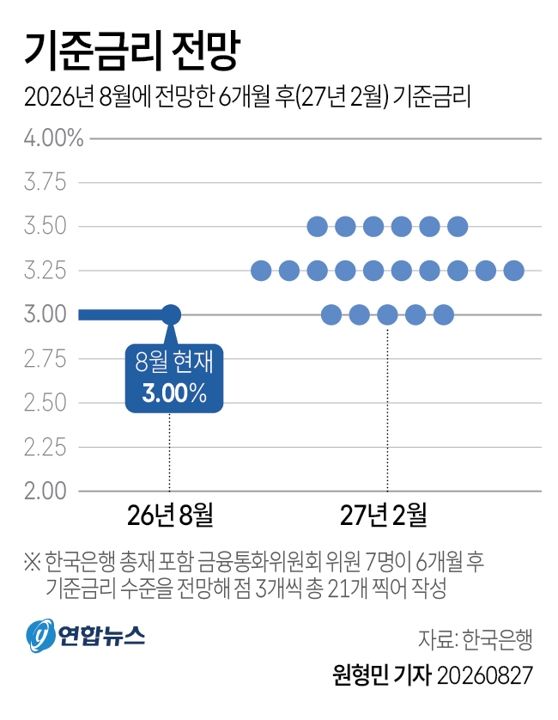
In its policy statement, the central bank removed the previous wording that said it was necessary to maintain the tightening stance, and instead said it would decide on the timing and pace of any additional hikes while assessing inflation, growth, and financial stability. The dot plot for the next six months also eased market concerns. 00%.
25%. That fueled expectations that, after two consecutive hikes, the pace of future increases could slow. Ahn Yeha of KIWOOM Securities Co.
, Ltd. 25%, it was interpreted as a signal that the bank may take a gradual tightening path going forward. " She also noted, "Market rates initially came under upward pressure right after the hike decision, but they reversed lower after the dissenting vote and the dot plot were confirmed.
" The BOK governor also described the back-to-back hikes as a measure taken "to fix a problem with a hoe before it becomes a problem that requires a shovel. " The idea was to respond early, before inflation spreads more broadly, and reduce the economic cost of a larger hike later. The governor also stressed the need to assess how the two consecutive increases are affecting the real economy.
Park Jun-woo of Hana Securities assessed the market reaction that day by saying it was "surprised by the hike and reassured by the preemptive approach. " He said Treasury bond yields fell on expectations of a slower pace of tightening, but added that the decline may be temporary given that the economy is still in the early stage of an expansion cycle. In fact, the BOK's assessment of growth and inflation remains hawkish.
9%. 5% for both years. That suggests it is still too early to say the rate-hike cycle is over, given solid growth and demand-driven inflation pressures.
Securities firms remain divided on the final base rate outlook. 25%, after which the chance of further increases would likely fall. By contrast, Hana Securities and KIWOOM Securities Co.
, Ltd. 50%. Meanwhile, some said it is too early to view the broad strength in Treasury bonds on the day as the start of a lasting decline in yields.
90%.
[email protected] Kim Hyun-jung Reporter