FINEMEDIX to Join Korea-U.S. Joint R&D Project to Develop Endoscopy-Based Pancreatic Cancer Treatment Device
- Input
- 2026-08-27 16:15:37
- Updated
- 2026-08-27 16:15:37
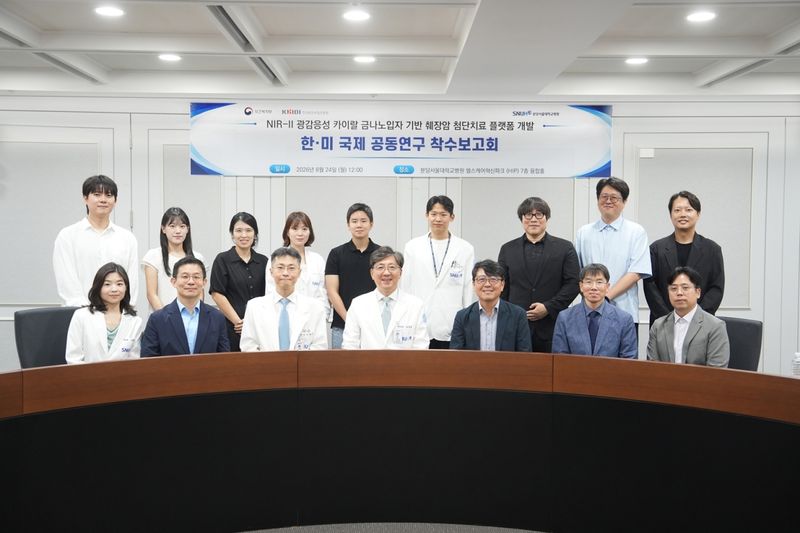
[Financial News] FINEMEDIX is launching the development of a pancreatic cancer treatment device using endoscopic ultrasound (EUS). The company aims to expand EUS, which has mainly been used for diagnosis and tissue sampling, into the treatment field and strengthen its competitiveness in the next-generation therapeutic endoscopy market.
FINEMEDIX announced on the 27th that it had been selected as a joint research institution for the Ministry of Health and Welfare (MOHW)-led "2026 Research-Driven Hospital Korea-U.S. Innovation Outcome Creation R&D" project.
The study will be led by Lee Jong-chan, a professor in the Department of Gastroenterology at Seoul National University Bundang Hospital, as the principal investigator. It will also involve domestic research institutions such as Seoul National University, Korea Advanced Institute of Science and Technology (KAIST), and Konkuk University, as well as U.S. institutions including Harvard Medical School (MGH) and UC San Diego School of Medicine (UCSD Health). The research period is about two years and six months, with a total R&D budget of 7 billion won.
Under this project, FINEMEDIX will be responsible for developing EUS devices equipped with advanced-material needles. The company has the technology to handle the entire process in-house, from design to production of needles used in EUS-guided fine needle aspiration (EUS-FNA). Based on this capability, it plans to develop therapeutic devices that can access the inside of the pancreas and deliver treatment substances directly.
In particular, it will apply its experience in developing the EUS device "ClearTip," which uses proprietary precision machining technology, to this research. While conventional EUS has focused on identifying pancreatic tumors or collecting tissue samples, the goal this time is to evolve it into a hybrid device that combines treatment-substance injection functions.
The consortium will develop a next-generation platform that uses endoscopic ultrasound to deliver therapeutic substances directly into hard-to-reach areas inside the pancreas and, through the same route, transmit light-based stimulation to enhance treatment effects.
Pancreatic cancer is considered one of the most intractable cancers, not only because of the tumor itself but also because of the tumor microenvironment (TME) surrounding it, which makes treatment difficult. As a result, new therapeutic approaches that target not only cancer cells but also the surrounding immune, vascular, and tissue environment are drawing attention.
FINEMEDIX plans to connect the technologies and data secured through this research to future joint platform development, technology transfer, and cooperation with global research institutions and companies.
CEO Jeon Seong-woo of FINEMEDIX said, "This project will be a turning point that expands the EUS devices we have developed over many years into the treatment field." He added, "We will apply our core technologies to the next-generation pancreatic cancer treatment platform and further strengthen our position in the domestic and overseas biliary and pancreatic endoscopy markets."
[email protected] Kang Jung-mo Reporter