Governor Wi Seong-gon and Jeju City Mayor Lee Sang-bong hold first policy meeting, set up a "72-hour response" system for civil complaints
- Input
- 2026-08-27 16:15:28
- Updated
- 2026-08-27 16:15:28
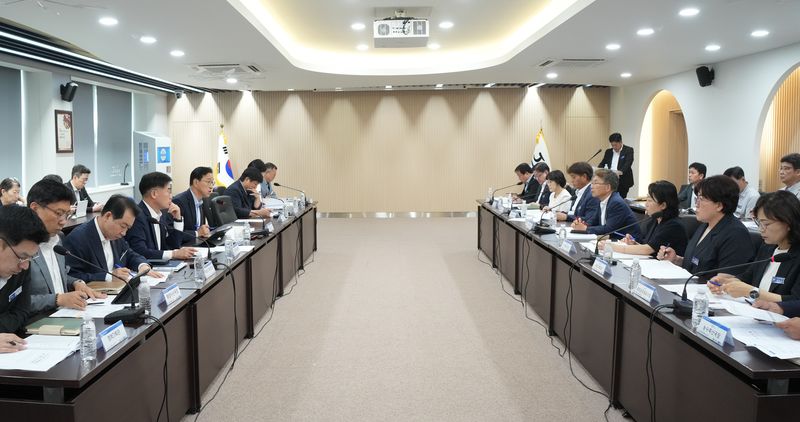
[Financial News Jeju = Reporter Jeong Yong-bok] Jeju Special Self-Governing Province and Jeju City will launch a permanent cooperation system that informs residents of how their complaints will be handled within 72 hours and links local issues identified in eup, myeon and dong districts to provincial policy and the budget.
According to Jeju Special Self-Governing Province on the 27th, Governor Wi Seong-gon and Jeju City Mayor Lee Sang-bong held the first Jeju Province-Jeju City policy meeting of the 9th elected term at Samda Hall in the Jeju Special Self-Governing Provincial Office. They discussed responses to livelihood issues and ways to strengthen cooperation with the administrative city.
The meeting, the first since Lee took office, was attended by Jeju City bureau chiefs and officials from relevant provincial departments. They shared key work plans and pending issues, and reviewed matters that require provincial authority or budget support.
The main focus was on speeding up administrative responses. Governor Wi shared a principle with Jeju City that once a citizen complaint is received, the government should explain the direction of handling it within 72 hours. Even if more time is needed to resolve the matter, the goal is to let residents know in advance when and how it will be addressed, reducing the inconvenience of waiting for a reply.
Jeju City's integrated handling system will also be used more actively. Rather than passing complaints from one department to another, the relevant departments will review them together to speed up responses.
On-site administration centered on eup, myeon and dong districts will also be strengthened. Governor Wi urged the mayor to continue checking local sites and to ensure that the administration first examines issues closely tied to residents' daily lives and the situations of vulnerable neighbors. The idea is to make problems identified in the field the starting point for policy decisions, rather than internal administrative reports.
Requests collected on site will also be linked to next year's budget process. Governor Wi said that "the budget is policy" and stressed that Jeju Province and Jeju City must prepare together so that citizen demands and local issues can be reflected in actual projects while drafting the 2027 budget bill.
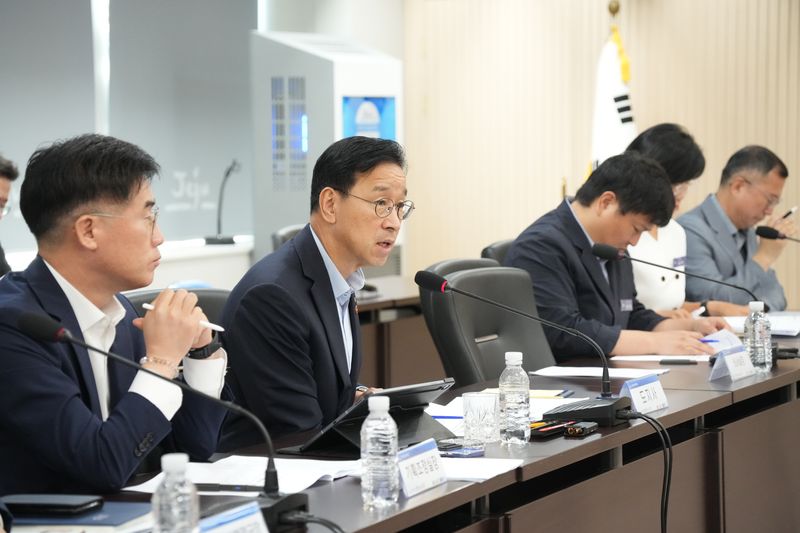
The two sides also agreed to clarify their division of roles. Jeju City will handle matters it can resolve on its own, while issues requiring provincial authority or budget support will be coordinated quickly through the policy meeting.
Governor Wi said, "Jeju City should clearly take responsibility for matters it can handle, and issues involving authority or budget that require consultation with the province should be raised actively so we can coordinate them together."
Mayor Lee also said he would place livelihood issues at the top of city administration and actively relay voices gathered from eup, myeon and dong districts to the provincial government.
He added, "We will create practical changes that 500,000 residents can feel in their daily lives," and "we will work closely with Jeju Province toward the shared goal of improving the quality of life for all residents."
Jeju Province plans to make these administrative city policy meetings a regular event. It intends to operate them as a standing channel for consultation on authority, budget and institutional reform issues that Jeju City and Seogwipo City cannot resolve on their own, while also managing follow-up results.
The key question is whether the province-administrative city policy meetings launched under the 9th elected term will go beyond one-time work reports and actually shorten complaint-handling times while linking local issues to the budget and policy agenda.
[email protected] Jeong Yong-bok Reporter