Government to unveil measures to spur next-generation network investment this year, raising hopes for regulatory reform
- Input
- 2026-08-27 16:25:02
- Updated
- 2026-08-27 16:25:02
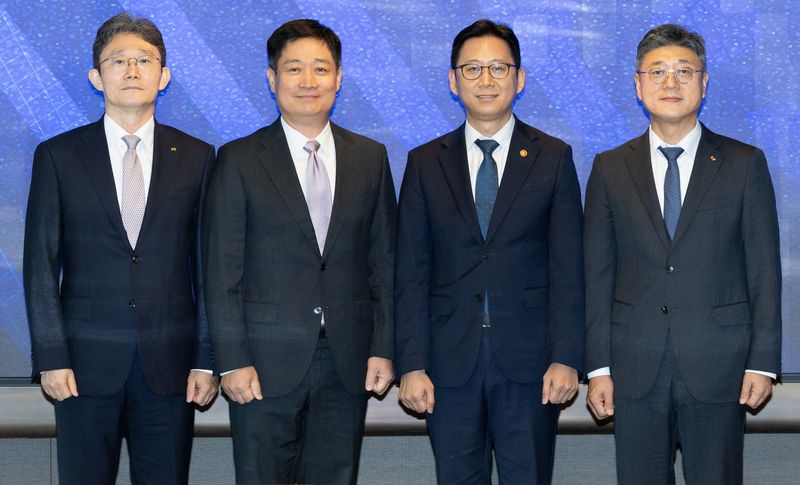
[Financial News] The government, together with the country's three major mobile carriers, will unveil measures this year to encourage investment in next-generation networks, including 6G. Broader discussions are also expected on ways to repurpose 3G networks, which SK Telecom and KT are in the process of shutting down, for next-generation network infrastructure.
The Ministry of Science and ICT said on the 27th that it held a launch meeting for a public-private consultative body with SK Telecom, KT Corporation and LG Uplus to promote network investment in the era of Artificial Intelligence (AI).
The consultative body is a follow-up to the July meeting between Deputy Prime Minister and MSIT Minister Bae and the CEOs of the three major telecom companies. It was created to discuss next-generation network investment, regulatory reform and tax incentives as a comprehensive package.
At the meeting, participants shared the current trend of declining capital expenditure by telecom operators after the heavy investment phase that accompanied the early rollout of 5G.
They also discussed ways to stimulate investment by upgrading wired and wireless networks and building next-generation infrastructure. In particular, they talked about introducing AI-RAN (Artificial Intelligence-powered Radio Access Network), 6G and other next-generation technologies, along with related investment plans, to respond to rising data traffic and the growing need for network upgrades driven by the spread of AI services.
Policy support measures were also discussed to quickly address on-site difficulties that are hindering network investment.
Key topics included easing regulations to promote innovation in telecom services, reviewing government budget programs and tax support measures, including pilot projects to boost network investment, and ensuring the safe and gradual transition of legacy networks such as 3G, with user protection as a prerequisite.
MSIT said it will continue to pursue policies that remove institutional uncertainty so telecom operators can maintain stable investment. Based on the discussions and working-level consultations, it plans to draw up and announce a comprehensive plan for next-generation network investment and regulatory reform within the year.
The ministry also reviewed progress on the planned commercialization of 5G standalone mode later this year. Telecom companies are expanding 5G core networks and verifying device interoperability to build a stable 5G SA environment. They are also pushing ahead with technology demonstrations without disruption, including providing event staff at FIFA World Cup street cheering sites, where large crowds gather, with dedicated communication networks separated from the public network and powered by Network Slicing technology to ensure stable connectivity.
The government also plans to support the spread of 5G SA-compatible devices and actively back the creation of innovative services that consumers can directly experience.
To help innovative services using new technologies such as Network Slicing spread smoothly in the AI era, the government will revise its net neutrality guidelines by taking into account cases from major countries. It will update the guidelines around priority transmission for emergency rescue communications and the application criteria for special services, and plans to release a draft revision in the fourth quarter of this year and reflect the feedback it receives.
Choi Woo-hyuk, head of the Network Policy Bureau for Information Security and Networks at MSIT, said, "The foundation of national competitiveness in the AI era is intelligent wired and wireless communication networks that support it." He added, "The government and telecom companies will work together to boldly remove regulatory and tax barriers that hinder network investment and create a virtuous cycle for next-generation network investment."
[email protected] Jang Min-kwon Reporter