Soongsil University Graduate School Produces Korea's First Doctorate in Overseas Koreans Protection Against Transnational Crime
- Input
- 2026-08-27 15:07:53
- Updated
- 2026-08-27 15:07:53
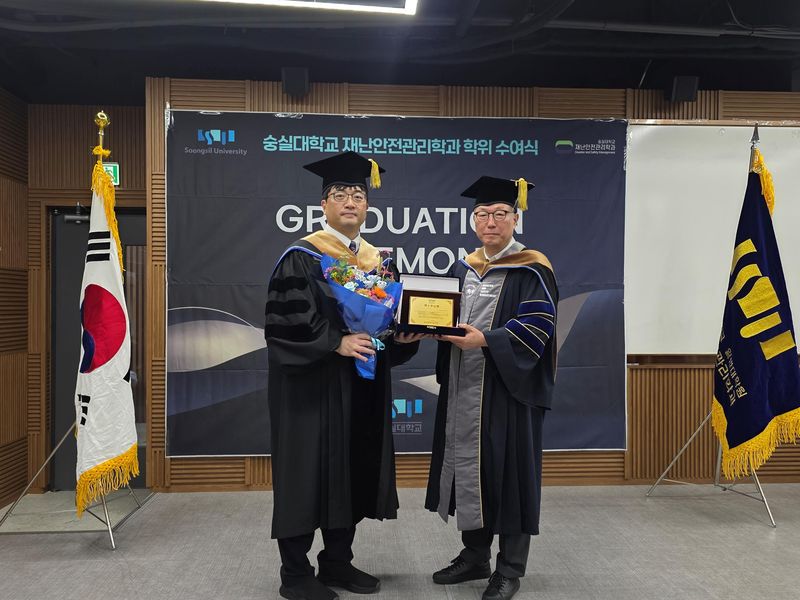
[Financial News] As transnational crimes targeting Koreans living abroad become increasingly sophisticated, a study has found that a "continuity of operations plan (COOP)" tailored to overseas diplomatic missions should be institutionalized as soon as possible so that their ability to protect citizens does not break down during a crisis.
Soongsil University Graduate School's Department of Disaster and Safety Management said on the 27th that it had produced Korea's first doctorate in the field of overseas Koreans protection against transnational crime. In his dissertation, "The Impact of Perceptions of Transnational Crime Threats on Demand for the Introduction of a Continuity of Operations Plan (COOP) at Overseas Diplomatic Missions," Park Jun-seok analyzed new security and public safety threats and the crisis response system of diplomatic missions from the perspective of overseas Koreans protection policy.
A continuity of operations plan (COOP) is a business continuity management system designed to keep an institution's core functions running without interruption even in emergencies such as disasters or terror attacks. According to the study, overseas Koreans and diplomatic officials increasingly feel the "institutional gaps" in the current system as overseas crime threats grow. The findings also show that demand for improving overseas Koreans protection policy is directly linked to calls for introducing COOPs at diplomatic missions.
The dissertation pointed out that, although overseas diplomatic missions are designated as disaster management agencies under current law, there are still no practical response guidelines tailored to each mission. As policy alternatives, it proposed establishing standardized guidelines for diplomatic missions in line with international standards such as ISO 22301 and U.S. federal standards such as FCD 1 and FCD 2, developing emergency response and business continuity scenarios centered on missions in high-crime-risk regions, and strengthening the provision of safety information and education for Koreans staying overseas.
The study is drawing attention because it offers policy solutions from a practitioner who is active in the field of diplomacy. Park currently serves as a senior analyst at the Consulate General of South Korea in Hong Kong, where he analyzes economic trends in Greater China.
His adviser, Chong-Soo Cheung, chair professor of the Department of Disaster and Safety Management at Soongsil University, said, "This dissertation is the first domestic study to empirically analyze the new threat of transnational crime, overseas Koreans protection policy, and the continuity of operations plan for diplomatic missions within a single framework." He added, "It will serve as important basic data for discussions on improving crisis management systems and legal frameworks at overseas diplomatic missions to protect the lives and property of our citizens abroad."
[email protected] Kim Man-ki Reporter