"70,000 Won Even for Chinese Family Members?"... NPS Overseas Dependent Benefits Expose Another Loophole
- Input
- 2026-08-27 15:23:30
- Updated
- 2026-08-27 15:23:30
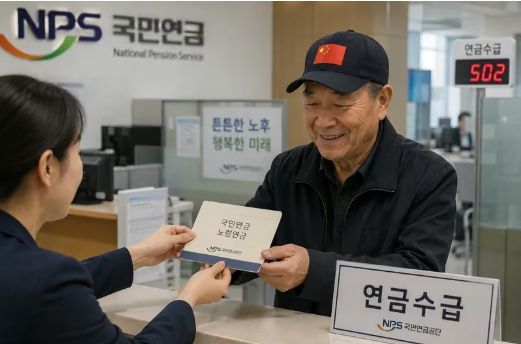
[Financial News] A controversy has erupted after it was reported that a foreigner who worked in South Korea for just one month could make retroactive contributions for 119 months of National Pension Service (NPS) premiums and receive an old-age pension for life. It has also emerged that the person’s spouse, children, and parents can be registered as dependents to receive additional pension benefits, further fueling criticism of loopholes in the system for foreign beneficiaries.
Cases of Chinese applicants seeking dependent pension benefits are on the rise
According to a report by Asia Economy on the 27th, an increasing number of Chinese nationals who recently became eligible for old-age pensions through retroactive contributions are also applying for dependent pension benefits.
The National Pension Service (NPS) provides an additional dependent pension, similar to a family allowance, to old-age pension recipients who have a spouse, children under 19, or parents aged 63 or older who are financially dependent on them. As of January 2026, the annual benefit is 306,630 won for a spouse and 204,360 won per child under 19 or parent aged 63 or older.
The problem is that this dependent pension also applies to foreign recipients if certain requirements are met. In particular, there appears to be no clear basis for excluding registered family members even if they do not actually reside in South Korea or have no record of entering the country. In other words, foreigners can register dependents and increase the monthly pension amount they receive.
If a recipient supports one parent, one spouse, and one child, they can receive an additional 715,350 won a year in dependent pension benefits, separate from the old-age pension. The dependent pension is raised each year at the same rate as the basic pension amount, and this year it increased by 2.1% from the previous year. Notably, NPS does not set a separate cap on the number of eligible dependents, so the more qualifying family members a recipient has, the larger the additional pension amount can become.
There are also reports that some within the NPS are questioning whether the current dependent pension structure is consistent with the system’s original purpose. The concern is whether it is appropriate to pay a family-allowance-style pension to the relatives of foreign recipients who have never worked or paid taxes in South Korea.
Overseas remittance fees and currency exchange costs also fall on recipients, drawing public anger
When foreign recipients receive pensions into overseas bank accounts, remittance fees and currency exchange costs are incurred as well. Another limitation cited is that it is difficult to verify whether the recipient and dependents living abroad are still maintaining a genuine support relationship.
An NPS official told the media, "There is considerable complaint-related stress in the process of requesting documents needed to prove a genuine support relationship." It was also reported that some people have even threatened to share the name of a specific branch on online communities if their request is denied.
As the news spread, public calls have grown louder for a broader overhaul of the foreigner pension system.
In response, President Lee Jae-myung said at a State Council of South Korea meeting on the 25th that "when loopholes are found, we need to fix them as quickly as possible." The Ministry of Health and Welfare (MOHW) is now reviewing foreign use of retroactive contribution rules and overseas cases, while considering ways to strengthen eligibility requirements for enrollment, retroactive contributions, and pension benefits.
[email protected] An Ga-eul Reporter