UST Launches Flagship Major in AI Mobility
- Input
- 2026-08-27 14:47:05
- Updated
- 2026-08-27 14:47:05
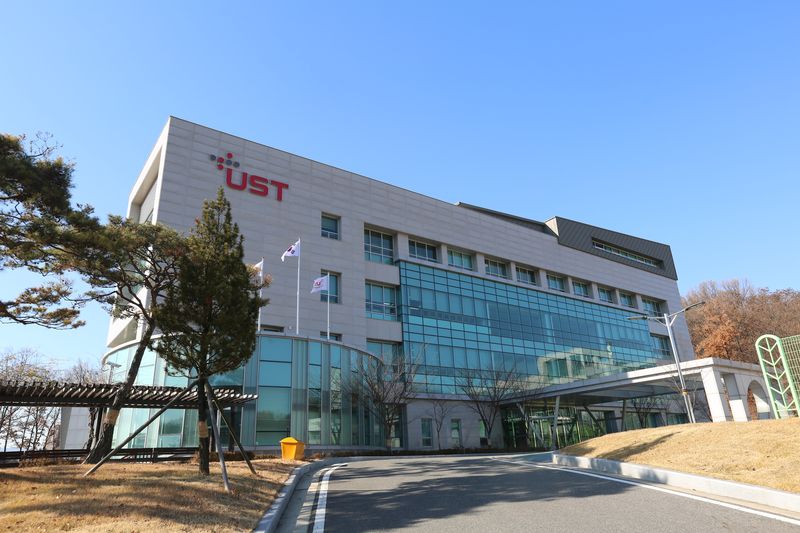
[Financial News] Korea University of Science and Technology (UST) will launch a new flagship major in "AI Mobility" for the Jeonnam-Gwangju region to train key advanced R&D talent and support balanced national development. It will begin recruiting freshmen for the spring semester of the 2027 academic year, with classes starting in March.
On the 27th, UST said the new "AI Mobility" major has been established as a "UST flagship major" jointly operated by multiple UST national research institute schools centered on strategic national industries. It is a convergence major jointly created and run by branches of five schools located in Jeonnam-Gwangju Integrated Metropolitan City. Korea Institute of Industrial Technology (KITECH) will lead the program, with participation from the Electronics and Telecommunications Research Institute (ETRI), Korea Institute of Energy Research (KIER), Korea Electrotechnology Research Institute (KERI), and Korea Basic Science Institute (KBSI) schools.
The major covers key future industries in the region, including artificial intelligence, future mobility, energy and semiconductors. Its main goal is to train advanced R&D talent, prevent the outflow of local talent, and help outstanding domestic and international talent settle in the region by building an integrated industry-academia-research ecosystem.
UST, research institutes, industry, local governments, including Gwangju Metropolitan City, and regional companies and universities will build an organic research and education system. The program will focus on field-oriented education that combines theory and practice, as well as problem-solving research.
Students will share and use world-class advanced research infrastructure and equipment at the five research institute branches. They will also receive project-based learning (PBL) education linked to companies, centered on real-world technical challenges faced by leading firms driving the local economy, including Kia Motors Corporation, Gwangju Global Motors Co., Ltd. (GGM), and Korea Electric Power Corporation (KEPCO).
Focusing on intelligent autonomous-driving future mobility, the program will integrate research and education across four areas: intelligence (AI and semiconductors), electric propulsion (energy and batteries), body systems (materials and structures), and human-centered technologies (bio and healthcare). It will combine the research capabilities of each school to operate an interdisciplinary curriculum. UST and the global networks of each research institute school will also be used to actively attract and train talented students from overseas, including Vietnam and Indonesia, with the aim of matching them with local industries and encouraging them to remain in the region.
In addition, the university plans to respond flexibly to demand in specialized and strategic regional industries by actively reflecting the need for semiconductor professionals and expanding related courses in the future.
The AI Mobility major will recruit its first students for the spring semester of the 2027 academic year. Related information will be available on the UST admissions website on Aug. 28. For students and researchers interested in admission, UST will hold an information session for the "AI Mobility" major at 6 p.m. on Sept. 10 at I-PLEX in Gwangju's Dong-gu district. The session will provide detailed guidance on the curriculum, research and education infrastructure at the five research institute schools, UST scholarships and other support programs, along with one-on-one consultations.
Meanwhile, UST is focusing on operating "UST flagship majors," in which multiple research institute schools jointly establish and run majors centered on strategic national fields. The new AI Mobility major is the fifth flagship major, following programs in artificial intelligence, quantum information, advanced biotechnology and advanced robotics.
[email protected] Yeon Ji-an Reporter