Korean Companies Speed Up U.S. Investment Plans as Semiconductor and Auto Production Accelerates
- Input
- 2026-08-27 15:59:06
- Updated
- 2026-08-27 15:59:06
[Financial News] Major Korean conglomerates, including Samsung, SK and Hyundai Motor Group, are moving ahead more quickly with plans to build advanced production bases in the United States. As Washington steps up its push to strengthen advanced manufacturing and pressure grows for more investment in the U.S., Korean companies are bringing forward promised spending in key future industries such as semiconductors, finished vehicles and robotics. They are also keeping open the possibility of further expansion, signaling a stronger commitment to their local business foundations.
■Samsung and SK race ahead in advanced packaging and foundry investmentAccording to industry sources on the 27th, SK hynix will begin building its Advanced Packaging plant in West Lafayette, Indiana, starting with a groundbreaking ceremony for the local production base. The company will invest a total of $3.87 billion to establish an advanced packaging facility for artificial intelligence (AI) HBM and an R&D center.
The company is also leaving open the possibility of building an additional front-end production facility in the United States after the packaging plant. SK Group Chairman Chey Tae-won said in a foreign media interview shortly after SK hynix's American Depositary Receipt (ADR) listing on Nasdaq that "additional investment in semiconductor production facilities in the United States is possible if the right location and conditions are in place." The remark is being interpreted to mean that a memory chip plant could also be built in the U.S. if conditions such as power, water, labor and supply chains are secured.
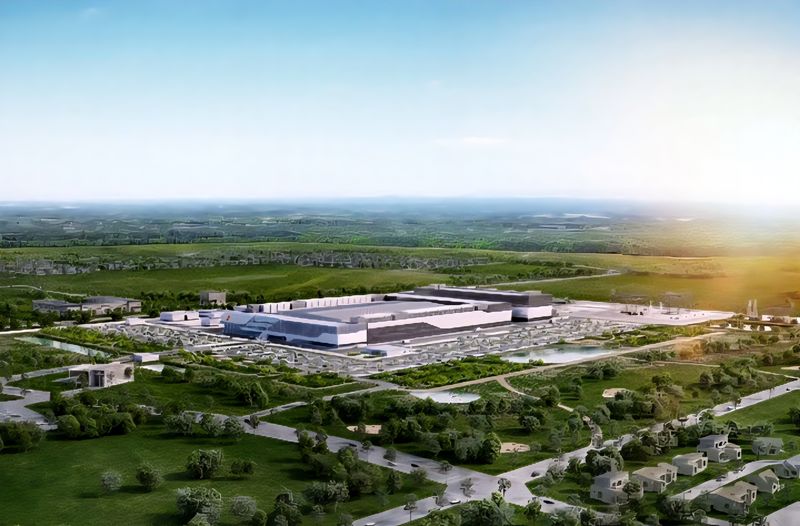
Samsung Electronics is also rapidly expanding its production footprint in the United States. The company is investing a total of $37 billion to build a Samsung foundry plant in Taylor, Texas. Taylor Plant 1, which will serve as a key hub, is in its final preparation stage and aims to begin operations within the year. Taylor Plant 2 is scheduled to break ground at the end of this year, with mass production targeted for 2030. As customer inquiries about the 1.4-nanometer process have recently increased, the possibility of securing an additional fab is also being discussed.
These moves also come as the United States has recently shown discomfort with Korea's expansion of advanced industry investment, including in the Honam semiconductor cluster. In particular, U.S. Secretary of Commerce Howard Lutnick has publicly called on Samsung Electronics and SK hynix to expand memory production in the United States, adding to pressure for further investment.
An industry official said, "While faithfully carrying out existing investments in the U.S., companies may also more actively review building additional production facilities or expanding capacity, taking into account U.S. demands."
■Hyundai Motor Group's 'robot forward base'A $26 billion investment through 2028Investment plans in the United States are also accelerating in the finished vehicle and future mobility sectors. Hyundai Motor Group will invest a total of $26 billion in the U.S. through 2028 across steel, automobiles and robots. By sector, $12 billion will go toward building a local production system for 1.2 million vehicles, $7 billion will be allocated to strengthening the supply chain, including steel mills, and another $7 billion will be invested in future industries such as autonomous driving, robotics and AI.
Expansion is also being considered for the flagship Hyundai Motor Group Metaplant America (HMGMA) site in Georgia. Hyundai Motor Company President José Muñoz said in a CNBC interview on the 20th local time that the company is reviewing a plan to raise HMGMA's annual production capacity, currently around 500,000 units, to 700,000 to 800,000 units by 2028.
The robot business, a next-generation growth engine, will also use the United States as a forward base. After opening the Robot Metaplant Application Center (RMAC) in Georgia in June, Hyundai Motor Group decided to expand the site to 10 times its current size by the end of the year. The facility trains manufacturing AI robots in an environment identical to an actual production site, and the validated humanoid robot Atlas will be deployed at HMGMA starting in 2028.
The company is also pushing ahead with a robot mass-production plant capable of producing 300,000 units a year, with operations targeted for 2028. At the 2026 Kia CEO Investor Day held on the 26th at Conrad Seoul Hotel in Yeongdeungpo District, Muñoz said, "It will become the world's first large-scale commercial robot manufacturing facility," adding, "The initial order of 25,000 units has already been secured." The specific production site will be announced within the year.
[email protected] Im Subin Kim Dongchan Reporter