NVIDIA Quells AI Bubble Talk, but HBM-Driven Margin Pressure Raises Concerns
- Input
- 2026-08-27 13:25:36
- Updated
- 2026-08-27 13:25:36
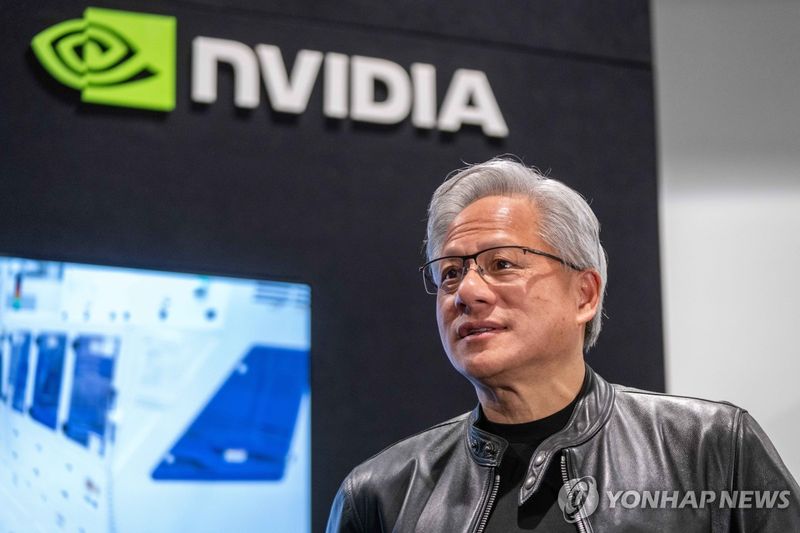
[Financial News] NVIDIA Corporation has shown in numbers that enthusiasm for artificial intelligence (AI) investment has not cooled. Quarterly revenue more than doubled in a year, and the company said next year’s sales growth would far exceed market expectations. Still, analysts say the surge in AI infrastructure spending has fueled shortages and price spikes in high-bandwidth memory (HBM), putting pressure on NVIDIA’s strong profitability.
On the 26th local time, NVIDIA Corporation said revenue for the second quarter of fiscal 2027, covering May through July, rose 106% from a year earlier to $96.22 billion, or about 133 trillion won. That easily topped the $92.17 billion forecast compiled by London Stock Exchange Group (LSEG) and marked a record for the 13th straight quarter.
The main driver of growth was AI data center demand. Revenue from the data center segment reached $89 billion, up 117% from a year earlier and accounting for 92% of total sales.
Jensen Huang, Chief Executive Officer (CEO) of NVIDIA Corporation, said, "AI has reached an inflection point." He added, "Tokens are productive and profitable. Now, compute capacity is revenue."
NVIDIA Corporation guided third-quarter revenue at $108 billion, above the market estimate of $104 billion. Colette Kress, Chief Financial Officer (CFO), also offered an unusually long-term outlook, saying fiscal 2028 sales are expected to grow by about 70%. That is well above the market forecast of 45%.
The company is also pouring money into securing its supply chain to keep up with demand. NVIDIA Corporation’s purchase commitments related to supply and facilities more than doubled from $119 billion in the first quarter to $279 billion in the second quarter. Most of that is tied to memory procurement and concentrated in supply for fiscal 2027 through 2029.
Amazon Web Services (AWS) will also add 2 million NVIDIA graphics processing units (GPUs) in 2027 and 2028. These are separate from the 1 million units it plans to install starting this year and include NVIDIA Blackwell Ultra, Rubin GPU architecture, and NVIDIA Rubin Ultra.
The problem is profitability. NVIDIA Corporation projected gross margin at around 74% for the third quarter, down from 75% in the second quarter. It expects that figure to fall to 71% to 72% in the fourth quarter before stabilizing at 72% to 73% from fiscal 2028.
The direct cause is the sharp rise in memory prices, including HBM. Kress explained, "The current memory shortage is largely being caused by the buildout of AI infrastructure itself." She added, "Tight memory supply is one symptom of the same surge in demand that is driving our growth."
The more NVIDIA Corporation sells GPUs amid the AI boom, the more demand rises for HBM used in those chips. As memory prices climb, led by suppliers such as SK hynix and Samsung Electronics, NVIDIA’s costs also increase. Market watchers are even raising the possibility of price hikes for next-generation AI servers.
Even without the Chinese market, the growth outlook remains strong. In the second quarter, Hopper sales to China accounted for less than 1% of data center revenue, and China revenue was not included at all in the third-quarter outlook.
Meanwhile, NVIDIA Corporation shares, which fell 1.59% in regular trading that day, rebounded by more than 4% in after-hours trading following the earnings release.
[email protected] Kim Kyung-min Reporter