Government to Restructure Half of SME Support Programs, Save 4 Trillion Won for New Growth Investment
- Input
- 2026-08-27 13:58:39
- Updated
- 2026-08-27 13:58:39
[Financial News] The South Korean government will launch a sweeping restructuring of 472 SME support programs. It plans to merge or abolish overlapping or low-performing programs, cut budgets, and save 4 trillion won, which will then be reinvested in core projects in new growth sectors. In four key areas — new security, pharmaceuticals and biotech, climate tech, and K-Consumer Goods — ministries will work together to provide bundled support of more than 10 billion won per company over up to five years.
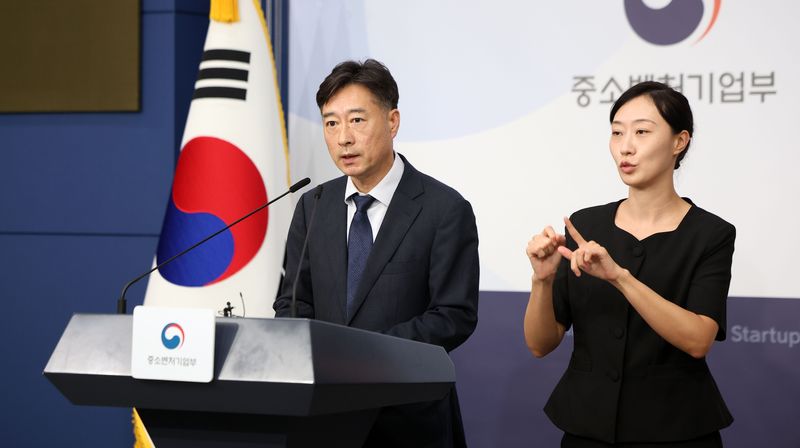
The Ministry of SMEs and Startups and other relevant ministries announced the measures on the 27th at the Fiscal Management Strategy Council, including the "Plan to Improve SME Support Programs Across All Ministries" and the "Plan to Foster Innovative Companies in New Growth Sectors."
At present, 22 ministries, including the Ministry of SMEs and Startups, the Ministry of Science and ICT, and the Ministry of Trade and Industry, are operating 671 SME support programs worth 31 trillion won. The government has drawn up efficiency measures for 472 of those programs, totaling 25.5 trillion won, excluding MSS programs and new programs introduced this year.
First, the government will revise 232 programs. Of those, 88 will be merged or abolished, and 144 will see budget cuts. Programs with overlapping support or similar purposes and target groups will be consolidated, reducing 19 programs and securing 240 billion won.
Small-scale, piecemeal support programs will also be reorganized. Among 196 programs with budgets of less than 5 billion won, 53 will be reduced, saving 130.9 billion won. Structural reform will also be applied to programs with weak performance or those continued out of habit. Of the 83 programs that received unsatisfactory ratings in SME support evaluations conducted from 2023 through this year, 13 will be abolished and 31 will be cut. Another 18 routine programs deemed unnecessary will be abolished, and budgets for 35 programs will be reduced.
The 4 trillion won saved through the streamlining effort will be reinvested in support for SMEs with strong growth potential. The budget for the Jump-Up program, which provides promising SMEs with consulting, open vouchers, and networking support for three years, will rise from 59.5 billion won this year to 164.2 billion won next year. In selecting beneficiaries, the government will consider growth indicators such as sales and employment growth rates, along with growth potential analyzed using artificial intelligence (AI).
Park Yong-soon, director of SME policy at MSS, said, "There has been criticism that there are too many overlapping SME support programs, so the Planning and Budget Ministry and MSS worked on this together." He added, "We will thoroughly manage and review overlap with existing programs from the stage when new programs are created."
At the same time, the government will accelerate efforts to foster innovative companies in four new growth sectors: new security, pharmaceuticals and biotech, climate tech, and K-Consumer Goods. Moving away from one-time subsidies, the plan is to provide long-term support by combining commercialization, finance, exports, talent, and research and development (R&D) through interministerial cooperation.
Starting next year, the government will identify 300 innovative companies in new growth sectors each year. Selected firms will receive priority support for two years, after which their progress toward stage-by-stage goals will be evaluated before three additional years of support are provided. Each company will receive more than 10 billion won over up to five years, and the Planning and Budget Ministry and MSS have reflected 238.8 billion won in related spending in next year’s government budget proposal.
Cooperation by sector will also be strengthened. In the new security sector, the government will establish a specialized investment institution in coordination with the Ministry of National Defense and DAPA, and support demonstrations using drone test units and training grounds. In pharmaceuticals and biotech, it will encourage hospital researchers to launch startups and promote technology transactions between global drugmakers and biotech ventures. Measures for climate tech and K-Consumer Goods are also scheduled to be announced sequentially by October.
No Yongseok, first vice minister at MSS, said, "We will ensure that the SME support budget is used efficiently where it is truly needed." He added, "We will shift the policy paradigm for SMEs in new growth sectors and deliver tangible results that lead the global market."
[email protected] Kim Hyun-chul Reporter