Gwangju, home to two automakers and AI infrastructure, should go beyond a self-driving demonstration city and become an industrial platform
- Input
- 2026-08-27 14:00:00
- Updated
- 2026-08-27 14:00:00
■ Sensor and ECU makers must also shift to SDV
On the 27th, the Gwangju–Jeonnam Chapter of the Korean Auto-vehicle Safety Association held a forum titled "Strategies for Success in an AI Autonomous Driving Mobility Demonstration City" at the Kim Daejung Convention Center in Gwangju.
At the event, Professor Lee Cheon-hwan of Chonnam National University (CNU) said in a presentation on "Local Success Strategies for an AI Autonomous Driving Demonstration City" that the entire city of Gwangju should be transformed into a giant autonomous-driving testbed and an industrialization platform. He said the goal should be to build a "Mobility AX industrial platform" that starts with a robo-taxi living lab and leads to demonstration, data, technology development, localization of parts and software, corporate growth, and the creation of new industries.
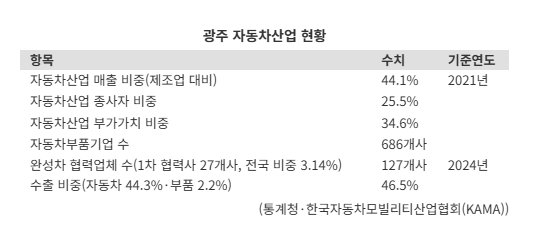
Gwangju's strengths include being the only city in the country with two automakers, Kia and Gwangju Global Motors. It also has the future mobility national industrial complex designated in 2023, which will receive 697.4 billion won over nine years, as well as the Materials, Parts and Equipment Specialized Complex covering 2.16 million pyeong. Other assets include the National AI Data Center, with 88.5 PF and 107 PB, and the country's largest AI infrastructure, equipped with 77 types of AI demonstration equipment and backed by 426.5 billion won in investment from 2020 to 2024. The professor concluded that Gwangju can leverage its strength as a city with automakers, parts suppliers and AI infrastructure all at once.
He also outlined ways for AI and software companies to take part. He said the key tasks are building a "Data Fabric" to clean and process data, and developing foundation models that cover vision, driving and traffic prediction. He also suggested that existing sensor, ECU and automotive electronics companies should ride the shift from a powertrain-, chassis-, body- and electronics-centered structure to one focused on motors, batteries and Software-Defined Vehicle (SDV).
■ Data use and regulatory reform must move faster
The panel discussion that followed brought together seven officials from the government, local governments and companies to discuss the conditions needed for a demonstration city to lead to real industries and services. Participants agreed that, for the demonstration city to deliver results, safety verification, access to demonstration data, regulatory improvements, local company participation, infrastructure development and service model creation must all work together.Particular attention was drawn to remarks from companies already operating autonomous-driving services. Autonomous-driving startup Autonomous A2Z shared its experience running demonstration services with its self-developed Level 4 shuttle, ROii, in Anyang, Sejong City and Incheon International Airport. RideFlux, together with Hanjin, has recently begun regular operation of a 25-ton autonomous cargo truck on the 116-km route from Gunsan to Jeonju and Daejeon, entering the commercialization stage with actual revenue. Based on these demonstration and commercialization experiences, the two companies pointed to technical and institutional challenges in service implementation, including liability, data use and licensing.
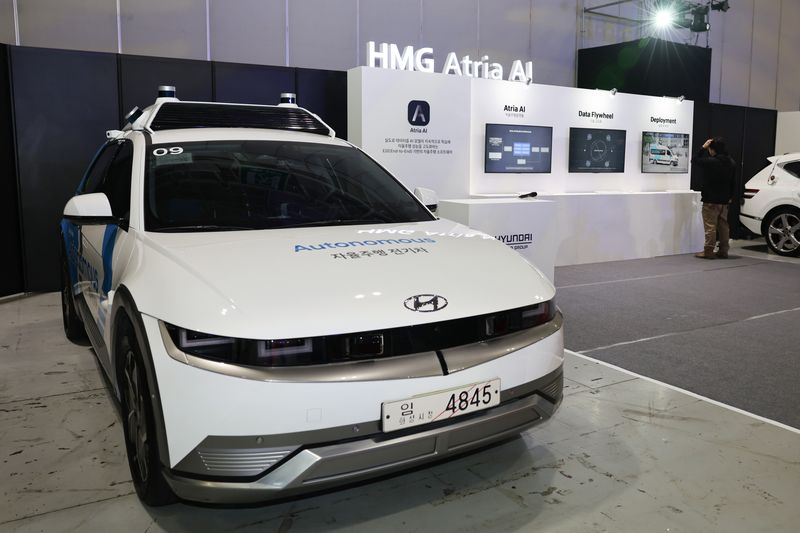
In response, Park Jeong-hyeok, head of the autonomous-driving policy division at the ministry, explained the government's support policy. Earlier this year, the ministry announced its initiative to promote autonomous-driving demonstration cities and designated the entire city of Gwangju as the country's first citywide demonstration zone. In April, it also selected Hyundai Motor Company, Autonomous A2Z and RideFlux as national flagship autonomous-driving companies and allocated 200 dedicated test vehicles on a differentiated basis. The ministry's basic direction is to gradually shift from manned to unmanned autonomous driving and aim for Level 4 commercialization in 2027.
Lee Dong-hyun, head of the future mobility division of the Jeonnam-Gwangju Integrated Metropolitan City, outlined the local government's direction for the demonstration city project. The city is recently pushing for a transformation of the automobile industry in the southwest region by focusing on M.AX, or AI transformation in manufacturing, and has said it plans to link the demonstration city with support for technological upgrading and commercialization among local parts companies.
Noh Hee-ok, head of the innovation strategy task force at the Gwangju Future Mobility Promotion Agency, explained how local companies can be nurtured. She said the agency's 25 types of autonomous-driving demonstration support equipment, including shared data, V2X, virtual environments, parts and vehicle development, and network security, as well as its large driving simulator and other infrastructure, can be used by local firms.
KASA Chairman Ha Seong-yong said, "For the success of an AI autonomous-driving demonstration city, not only technology development and testing, but also traffic safety, policy and regulations, the industrial ecosystem and service commercialization must be discussed together."
[email protected] Kim Dong-chan Reporter