Household real income rises in Q2 as high fuel price aid is paid out; spending on alcohol and tobacco falls
- Input
- 2026-08-27 12:00:00
- Updated
- 2026-08-27 12:00:00
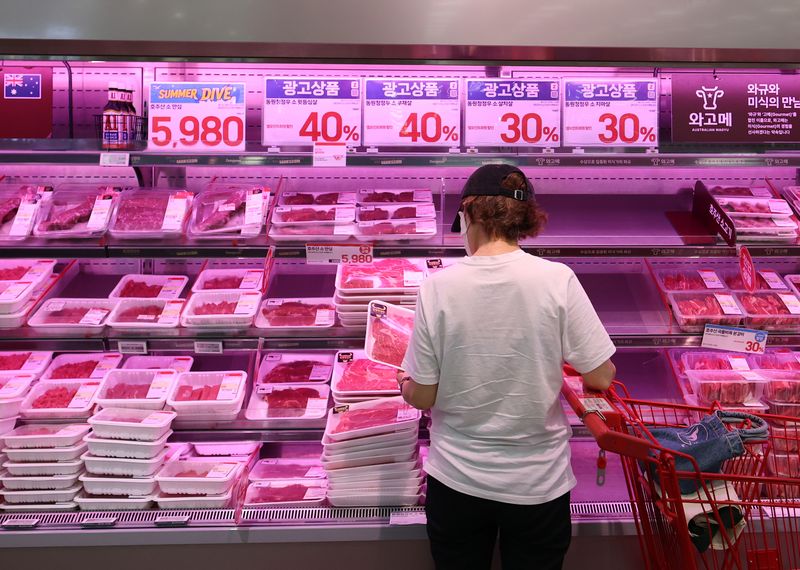
[Financial News] Household income and spending both rose in the second quarter, boosted by the tens of thousands of won in Financial Assistance for Damages Caused by High Fuel Prices distributed to the public in the first half of the year. However, real income increased only 1.5%, and real consumer spending rose just 0.4%, as inflation and interest burdens weighed on households.
Households that saw higher income thanks to the aid spent more on meat and health supplements. They cut back on alcohol and tobacco, while fixed housing costs such as rent rose sharply.
On the 27th, the Ministry of Data and Statistics said in its Household Income and Expenditure Survey for the second quarter of 2026 that average monthly household income came to 5.295 million won, up 4.5% from a year earlier.
Real income rose 1.5%. Current income stood at 5.193 million won, up 4.6%.
Among the categories, transfer income posted the largest increase, rising 20.4% to 931,000 won. It was the biggest jump since the fourth quarter of 2022, when large-scale livelihood support payments were distributed during COVID-19. The increase was driven by public transfer income, which reflected the Financial Assistance for Damages Caused by High Fuel Prices of 100,000 won to 600,000 won per person for the bottom 70% of income earners under a supplementary budget. The government has paid out more than 6 trillion won in total to about 35 million people since May.
Park Soon-ok, head of the Household Income and Expenditure Trends Division at the Ministry of Data and Statistics, said, "Total income in the second quarter increased across earned income, business income and transfer income, marking 12 consecutive quarters of growth." She added, "A notable feature was the sharp rise in public transfer income, driven by the high fuel price relief payments that began in April."
Earned income came to 3.218 million won, while business income reached 977,000 won, up 0.8% and 3.8%, respectively, from a year earlier. Earned income has now risen for 11 straight quarters.
Spending also rose significantly.
Consumer spending totaled 3.993 million won, up 3.0% from the same quarter a year earlier.
Consumer spending rose to 2.932 million won, up 3.4%, while non-consumer spending increased to 1.06 million won, up 1.9%.
Spending on household goods and domestic services posted the largest increase, jumping 17.9%. It was the biggest rise since 2020.
In particular, spending on appliances and household devices surged 40.1% due to Samsung Electronics' special sales event for home appliances held in the second quarter.
Education spending rose 3.0% on private tutoring and cram schools. Spending on food and lodging increased 3.5%, while outlays on recreation and culture climbed 7.6%.
Housing-related spending increased 3.0%. Actual housing costs such as rent and other housing-related services rose 7.3% and 7.9%, respectively.
By contrast, transportation spending fell 0.5% due to higher fuel prices stemming from the war in the Middle East. Spending on alcohol and tobacco also declined 2.2%.
Among non-consumer expenditures, interest payments borne by households rose sharply by 12.1% as interest rates continued to climb. Social insurance spending also increased 5.6%.
Disposable income, which is income minus non-consumer spending, averaged 4.235 million won per household per month, up 5.2% from a year earlier.
The surplus amount rose 9.6% to 1.302 million won. The surplus ratio stood at 30.8%, up 1.2 percentage points from a year earlier.
However, the average propensity to consume, which measures disposable income relative to consumer spending, fell 1.2 percentage points from a year earlier to 69.2%.
Income inequality eased somewhat.
The quintile ratio for equivalized disposable income, a key income distribution indicator, fell 0.48 points to 4.97 times. It is the lowest level since statistics began in 2007. The figure is usually affected by seasonality and policy changes in the 5% to 7% range, but this is the first time it has fallen into the 4% range.
Specifically, average monthly income for first-quintile households, or the bottom 20%, was 1.283 million won, up 7.5% from a year earlier. Their disposable income rose 7.5% to 1.094 million won. The increase was driven by the Financial Assistance for Damages Caused by High Fuel Prices and various fiscal support measures for low-income households.
Average monthly income for fifth-quintile households, or the top 20%, rose 3.8% to 11.15 million won. Their disposable income increased 4.3% year on year to 8.621 million won.
[email protected] Jung Sang-gyun Reporter