"Even a 14-pyeong monthly rental in northern Seoul costs 1 million won... Jeonse Is Extinct, and Landlords Can Name Their Price"
- Input
- 2026-09-04 05:00:00
- Updated
- 2026-09-04 05:00:00
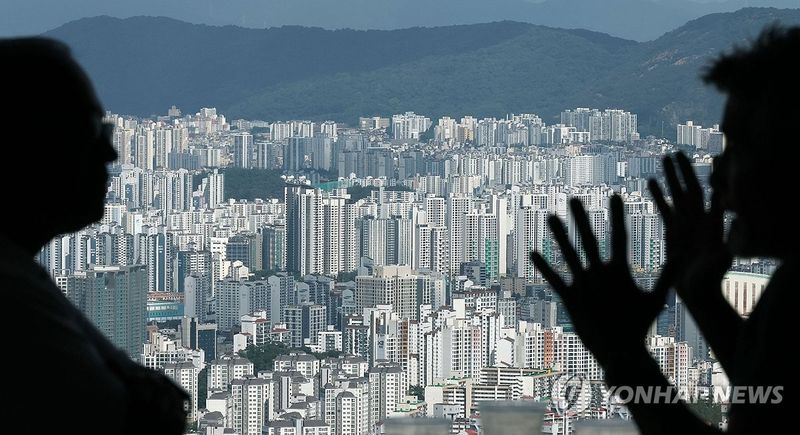
[Financial News] As apartment jeonse listings have plunged in Seoul’s Nowon, Dobong, and Gangbuk districts, prices are rising sharply amid concentrated demand. Monthly rents are also surging, increasing the housing-cost burden on tenants and likely intensifying the trend of people being pushed out of Seoul.
Sanggye-dong real-estate agent: "Jeonse listings are virtually impossible to find"
Nowon, Dobong, and Gangbuk districts have long been regarded as relatively affordable areas of Seoul, attracting many actual housing demanders, including young people and newlyweds. With large apartment complexes concentrated there, jeonse supply was plentiful and prices were relatively low compared with central Seoul. The districts therefore served as a housing ladder for people seeking to remain in the capital.
Jeonse prices fluctuated sharply around 2020 as the real-estate boom coincided with the implementation of the Three Lease Acts. They later recovered and the jeonse and monthly-rental market remained relatively stable.
However, the market atmosphere observed on the 3rd was completely different.
After all of Seoul was designated a land transaction permit zone last October and an owner-occupancy requirement was imposed, it became difficult to purchase homes with jeonse tenants in place. The number of jeonse listings entering the market also fell rapidly. As supply dwindled relative to demand, upward pressure on jeonse prices intensified, with contracts still being signed even when landlords listed homes at higher prices.
The average apartment jeonse prices per 3.3m2 (pyeong) were 19.67 million won in Nowon District, 16.99 million won in Dobong District, and 20.25 million won in Gangbuk District, up 12% to 16% from a year earlier. These increases exceeded Seoul’s average rise of 10% over the same period. In other words, the housing-cost burden is rapidly growing for tenants who had moved to Nowon, Dobong, and Gangbuk in search of relatively affordable jeonse homes.
The head of real-estate agency A in Sanggye-dong said, "Jeonse listings are virtually impossible to find at present. Listings are so scarce that people are saying landlords can name their price."
Monthly rent for a standard-size apartment in Mia reaches 3.1 million won... Tenants reeling under housing costs
As the jeonse shortage continues, the burden of monthly rent is also increasing. Referring to small and medium-sized units in the high-teens to low-20-pyeong range at Sanggye Jugong 3 Complex, the agent said, "In the past, units were available for a 10 million won deposit and monthly rent of around 600,000 won. Now, the deposit has risen to 20 million won and the monthly rent to 700,000–800,000 won. Recently, one landlord even asked to list a unit at a 20 million won deposit and 1 million won in monthly rent."
As the shortage of jeonse listings persists, high-priced monthly-rent contracts are appearing one after another even in Gangbuk, an area that had relatively low housing costs.
According to the Ministry of Land, Infrastructure and Transport’s actual transaction price disclosure system, a new lease for a 46m2 unit at Byeoksan Apartment Complex in Sanggye-dong, Nowon District, was signed on July 25 for a 30 million won deposit and monthly rent of 1 million won. It was the first time that monthly rent for a unit of the same size in the complex had reached 1 million won.
A 41m2 unit at Chang-dong Jugong 3 Complex (Haedeung Village) in Dobong District was also leased on July 30 for a 50 million won deposit and monthly rent of 1 million won. A unit of the same size had traded on May 8 for a 20 million won deposit and monthly rent of 750,000 won.
In particular, a contract for an 84m2 unit at Hanwha Forena Mia in Mia-dong, Gangbuk District, was signed on June 25 for a 50 million won deposit and monthly rent of 3.1 million won. High monthly rents, previously seen mainly in Gangnam, have effectively spread to northern Seoul.
With the shortage of jeonse supply expected to persist and monthly rents rising sharply, the housing-cost burden on tenants who wish to live in Seoul is likely to grow further. Concerns are mounting that the trend of people being pushed to the outskirts of Seoul, including Gyeonggi Province, could intensify, particularly among young people and lower-income households unable to afford these costs.
[email protected] Ahn Ga-eul Reporter