Six of Seven Monetary Policy Board Members Say a Rate Hike Was Needed, Citing Preemptive Action Against Inflation [Full Text of the Monetary Policy Direction Statement]
- Input
- 2026-08-27 11:00:33
- Updated
- 2026-08-27 11:00:33
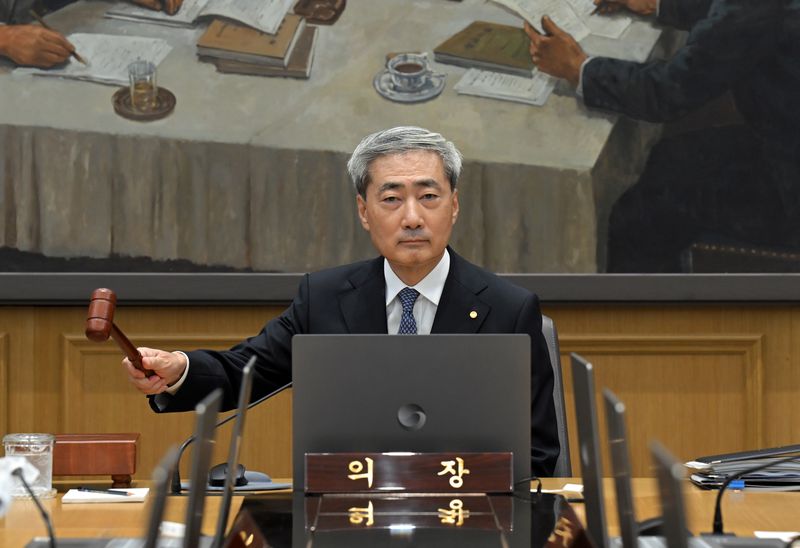
After its monetary policy decision meeting on the 27th, the Monetary Policy Board said, "The domestic economy is continuing to grow at a stronger-than-expected pace, supported by robust exports and a recovery in domestic demand, while inflation is expected to remain above the target level for an extended period." It added, "It is important to prevent the spread of price increases through preemptive action."
It also said, "Inflation will likely remain elevated for some time, partly due to higher energy prices," and analyzed that "the pass-through of the higher cost pressures accumulated so far will continue, while demand-side pressure from improving income conditions will gradually strengthen, leading to price increases that stay above the target for a considerable period."
In fact, the consumer price inflation forecasts for this year and next were left unchanged from the May outlook at 2.7% and 2.3%, respectively. However, the outlook for core inflation, which excludes food and energy and is given greater weight by the BOK, was raised to 2.5% from 2.4% and 2.3%.
The board also pointed to support from economic growth. It said, "The domestic economy is expected to maintain solid growth, with exports and investment continuing to post strong gains on the back of the favorable semiconductor cycle, while consumption recovery is gradually broadening as income conditions improve."
The growth forecast for this year was announced at 3.3%. That is 1.5 percentage points higher than the November forecast of 1.8%, 1.3 points above the February forecast of 2.0%, and 0.7 points above the May forecast of 2.6%. The 2027 growth forecast was also raised by 0.7 points to 2.9%.
Accordingly, the Monetary Policy Board raised the benchmark rate by 0.25 percentage point to 3.00% on the day. Six members, including BOK Governor Hyun Song Shin, supported the move, while only board member Hwang Geon-il argued for keeping the rate at 2.75%.
In the dot plot, 16 of the 21 points were placed in the 'hike' category. Specifically, six points were set at 3.50% and 10 at 3.25%. That suggests there could be as many as two more rate hikes within the next six months. The remaining five points were assigned to a hold at 3.00%. The dot plot is released alongside the economic outlook in February, May, August and November.
The following is the full text of the monetary policy direction statement released on August 27.
□The Monetary Policy Board decided to conduct monetary policy by raising the Bank of Korea's base rate from 2.75% to 3.00% until the next monetary policy direction decision. The domestic economy is continuing to grow at a stronger-than-expected pace, supported by robust exports and a recovery in domestic demand, while inflation is expected to remain above the target level for an extended period. In this situation, it is important to prevent the spread of inflation through preemptive action, and as financial stability risks also require continued attention, the Board judged that a 0.25 percentage point increase in the base rate was appropriate.
□The world economy is still facing tensions in the Middle East, but it is showing moderate growth thanks to solid AI CAPEX, and inflation is expected to remain elevated for the time being due to higher energy prices. In the international financial market, uncertainty over Fed policy and the Middle East situation persisted, while concerns about fiscal soundness in major countries pushed up long-term Treasury yields and weakened the U.S. dollar. Stock prices generally rose, reflecting solid corporate earnings despite concerns about the profitability of global AI CAPEX. Going forward, the world economy and the international financial market are expected to be affected by developments in the Middle East, the outlook for AI CAPEX, changes in monetary and fiscal policy in major countries, and shifts in the trade environment.
□The domestic economy continued to post strong growth, led by exports and investment. Employment continued to rise at a moderate pace, mainly in the service sector. Going forward, the domestic economy is expected to maintain solid growth as exports and investment continue to expand strongly on the back of the favorable semiconductor cycle, while consumption recovery gradually broadens as income conditions improve. As a result, growth for this year and next is projected at 3.3% and 2.9%, well above the May forecasts of 2.6% and 2.1%, respectively. Uncertainty remains over the future growth path, including the extent of the semiconductor cycle's expansion and spillover into domestic demand, as well as developments in the Middle East and changes in the trade environment.
□Looking at prices, consumer inflation in July fell to 2.8% as the pace of increase in petroleum products and agricultural, livestock and fishery prices slowed, but core inflation, excluding food and energy, rose to 2.6% as price increases in personal services and durable goods widened. Short-term inflation expectations among the public remained in the high 2% range. Going forward, prices are expected to remain above the target level for a considerable period as the pass-through of the higher cost pressures accumulated so far continues and demand-side pressure from improving income conditions gradually strengthens. Accordingly, consumer inflation for this year and next is forecast at 2.7% and 2.3%, unchanged from the May outlook, while core inflation is projected at 2.5% for both years, above the previous forecasts of 2.4% and 2.3%, respectively. There is considerable uncertainty in the future price path, including movements in international oil prices and the exchange rate, the pace of domestic demand recovery, and the extent of wage increases spreading.
□In the financial and foreign exchange markets, high volatility persisted across major price variables. The won–dollar exchange rate fell sharply as foreign capital outflows from equities eased, improving foreign exchange supply and demand conditions, and the U.S. dollar weakened. Treasury yields fluctuated widely, influenced by stronger domestic economic growth, movements in U.S. Treasury yields and international oil prices. Stock prices plunged, especially in the semiconductor sector, before partially rebounding. Housing prices in the Capital Region continued to rise sharply, and household lending also increased significantly.
□The Monetary Policy Board will continue to manage monetary policy with attention to financial stability while assessing growth and ensuring that inflation stabilizes at the target level over the medium term. The domestic economy is expected to maintain solid growth as exports and investment remain strong and consumption recovery broadens, while inflation is projected to stay above the target for some time due to the pass-through of accumulated cost pressures and stronger demand-side pressure. On the financial stability side, continued attention is needed to rising housing prices in the Capital Region and the expansion of household debt. Accordingly, future monetary policy will closely monitor inflation, growth and financial stability conditions in deciding the timing and pace of any additional rate hikes.
□Six Monetary Policy Board members supported the decision to raise the benchmark rate this time, while member Hwang Geon-il said it would be preferable to keep the base rate at 2.75%.
□The world economy is still facing tensions in the Middle East, but it is showing moderate growth thanks to solid AI CAPEX, and inflation is expected to remain elevated for the time being due to higher energy prices. In the international financial market, uncertainty over Fed policy and the Middle East situation persisted, while concerns about fiscal soundness in major countries pushed up long-term Treasury yields and weakened the U.S. dollar. Stock prices generally rose, reflecting solid corporate earnings despite concerns about the profitability of global AI CAPEX. Going forward, the world economy and the international financial market are expected to be affected by developments in the Middle East, the outlook for AI CAPEX, changes in monetary and fiscal policy in major countries, and shifts in the trade environment.
□The domestic economy continued to post strong growth, led by exports and investment. Employment continued to rise at a moderate pace, mainly in the service sector. Going forward, the domestic economy is expected to maintain solid growth as exports and investment continue to expand strongly on the back of the favorable semiconductor cycle, while consumption recovery gradually broadens as income conditions improve. As a result, growth for this year and next is projected at 3.3% and 2.9%, well above the May forecasts of 2.6% and 2.1%, respectively. Uncertainty remains over the future growth path, including the extent of the semiconductor cycle's expansion and spillover into domestic demand, as well as developments in the Middle East and changes in the trade environment.
□Looking at prices, consumer inflation in July fell to 2.8% as the pace of increase in petroleum products and agricultural, livestock and fishery prices slowed, but core inflation, excluding food and energy, rose to 2.6% as price increases in personal services and durable goods widened. Short-term inflation expectations among the public remained in the high 2% range. Going forward, prices are expected to remain above the target level for a considerable period as the pass-through of the higher cost pressures accumulated so far continues and demand-side pressure from improving income conditions gradually strengthens. Accordingly, consumer inflation for this year and next is forecast at 2.7% and 2.3%, unchanged from the May outlook, while core inflation is projected at 2.5% for both years, above the previous forecasts of 2.4% and 2.3%, respectively. There is considerable uncertainty in the future price path, including movements in international oil prices and the exchange rate, the pace of domestic demand recovery, and the extent of wage increases spreading.
□In the financial and foreign exchange markets, high volatility persisted across major price variables. The won–dollar exchange rate fell sharply as foreign capital outflows from equities eased, improving foreign exchange supply and demand conditions, and the U.S. dollar weakened. Treasury yields fluctuated widely, influenced by stronger domestic economic growth, movements in U.S. Treasury yields and international oil prices. Stock prices plunged, especially in the semiconductor sector, before partially rebounding. Housing prices in the Capital Region continued to rise sharply, and household lending also increased significantly.
□The Monetary Policy Board will continue to manage monetary policy with attention to financial stability while assessing growth and ensuring that inflation stabilizes at the target level over the medium term. The domestic economy is expected to maintain solid growth as exports and investment remain strong and consumption recovery broadens, while inflation is projected to stay above the target for some time due to the pass-through of accumulated cost pressures and stronger demand-side pressure. On the financial stability side, continued attention is needed to rising housing prices in the Capital Region and the expansion of household debt. Accordingly, future monetary policy will closely monitor inflation, growth and financial stability conditions in deciding the timing and pace of any additional rate hikes.
□Six Monetary Policy Board members supported the decision to raise the benchmark rate this time, while member Hwang Geon-il said it would be preferable to keep the base rate at 2.75%.
[email protected] Kim Tae-il Reporter