Jeju Exposes Gaps in Missing-Person Response; Governor Wi Seong-gon Redesigns Public-Private Police Safety Network
- Input
- 2026-08-27 10:17:21
- Updated
- 2026-08-27 10:17:21
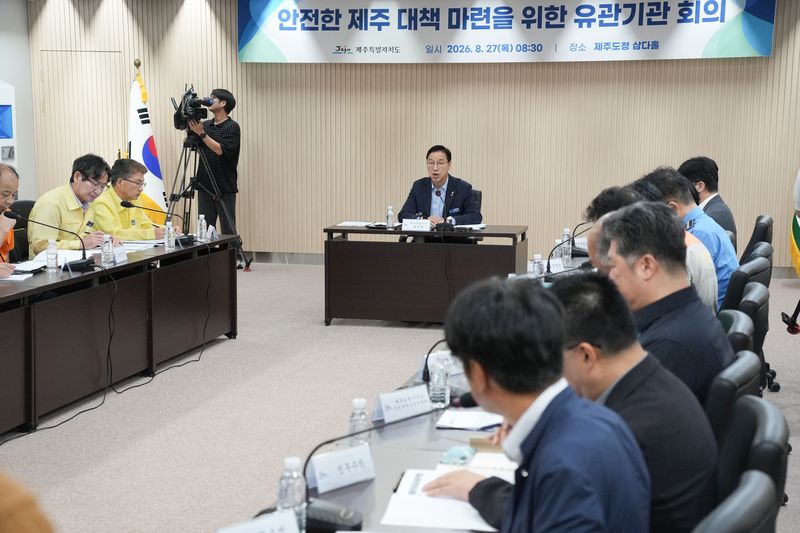
[Financial News Jeju = Jung Yong-bok] Jeju has begun overhauling its safety response system after recent missing-person cases exposed gaps in report handling, supervisor checks, and computer-based control.
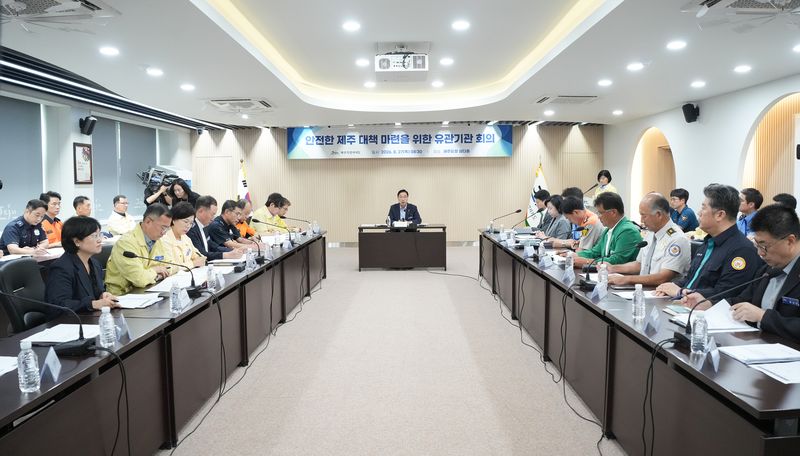
According to Jeju Special Self-Governing Province on the 27th, Governor Wi Seong-gon chaired the "Meeting of Relevant Agencies for a Safe Jeju" at Samdahol in the Jeju Special Self-Governing Provincial Office that morning. Police, fire services, the coast guard, administrative cities, autonomous police, and private safety groups such as volunteer fire brigades, local autonomous disaster prevention teams, autonomous crime prevention units, and resident autonomous police teams took part.
The starting point for the new measures is the management gap revealed in the existing missing-person response system. In briefing materials, the Jeju Autonomous Police Commission explained that missing-person reports are handled by the chief of the Jeju Provincial Police Agency, who has been delegated the commission's command and supervisory authority, while investigations and searches are directed by the head of the National Office of Investigation. It said it had identified a failure of the management system to function properly, as supervisor checks and computer-based controls were insufficient to prevent poor or false case handling.
Jeju will form a consultative body this month to unify agency responses when missing-person or crisis cases occur. The province, the autonomous police commission, the Jeju Provincial Police Agency, the Fire & Safety Department, the Jeju Coast Guard, administrative cities, and private safety organizations will share available personnel and equipment in advance and respond jointly as soon as an incident occurs.
An integrated manual detailing each agency's role will also be prepared in early September. It will define step-by-step responsibilities and reporting lines, from report intake and situation assessment to search and rescue, information disclosure, family support, and case closure. When police request support, resources from relevant agencies, including drones, search dogs, vessels, personnel, and emergency text alerts, will be deployed quickly.
A key goal is to expand missing-person response beyond the police and turn it into a community-wide safety net. The roles of volunteer fire brigades, local autonomous disaster prevention teams, autonomous crime prevention units, resident autonomous police teams, and township and neighborhood safety councils will be expanded, while joint public-private-police patrols will be regularized around coastal areas, Olle trails, and other vulnerable nighttime zones.
The Autonomous Police Unit will launch a special safety campaign for 30 days starting on the 28th and running through September 27. It will deploy up to 152 autonomous police officers to the field and expand daytime patrols from a maximum of 14 teams with 28 officers to 20 teams with 40 officers. Night patrols will grow from a maximum of four teams with 8 to 9 officers to eight teams with 16 officers.
During the day, patrols will focus on sparsely populated areas such as Olle trails, oreum volcanic cones, and coastal zones. Drone patrols will also be used at popular oreum sites, including Yongnunioreum Volcanic Cone, Baekyagi Oreum, Abu Oreum, Darangswi Oreum (Wollangbong Peak), Jeoji Oreum (Dakmol Oreum, Sae Oreum), Gunsan Oreum, and Mulyeongari Volcanic Cone.
At night, base patrols and foot patrols will be strengthened in crime-prone areas such as Tamna Culture Plaza, Nuwemaru Street, and the Seogwipo Maeil Olle Market area. Areas where residential and tourist routes overlap, including Gwangyang Market, Jeonnong-ro, the Jeju Intercity Bus Terminal, Arang Joeul Street in Jeongbang-dong, and the stretch from Songsan-dong to Jaguri Port, will also be closely monitored.
The smart safety network will also be expanded. Jeju plans to install additional AI-based coastal surveillance systems and CCTV cameras in coastal areas, ports, and vulnerable neighborhoods, and raise the AI conversion rate of ordinary CCTV from the current 58% to 75% by 2030.
AI detection functions will also be broadened from missing-person and fall detection to include fire, flooding, violence, and coastal hazards. At the CCTV Integrated Control Center, 78 control staff members will monitor high-risk areas around the clock, and when a missing-person or crisis case occurs, live footage will be quickly shared with police, fire authorities, and others.
To prepare for long-term missing-person cases, the province will also seek to extend the current 30-day retention period for public CCTV footage and expand storage capacity.
Tourism safety will be strengthened as a separate pillar. The province will prepare response manuals so that lodging businesses and rental car companies can quickly report cases when solo travelers lose contact for long periods or go missing. It will also expand QR-code-based emergency reporting and location guidance at major tourist sites and provide multilingual safety information for foreign visitors.
Safety monitoring through Jeju Olle information centers and Olle guides will also be reinforced, and emergency response systems at tourist facilities such as accommodations and theme parks will be reviewed.
Behind Jeju's heightened response to tourism safety is the view that prolonged safety concerns could spill over into the local economy.
According to the province, the number of domestic tourists visiting Jeju between the 15th and 25th fell year on year on many days. Jeju said it is difficult to conclude that recent safety concerns had an immediate effect on daily visitor numbers, and no reservation cancellations have been confirmed so far. However, as concerns are spreading on overseas social media, the province is wary that prolonged unrest could affect tourist arrivals.
Jeju's safety indicators are mixed. Based on preliminary figures for last year, the number of the five major crimes stood at 6,940, down 11.0% from 7,798 a year earlier. By contrast, traffic fatalities rose 16.7% from 48 to 56, while suicides fell 10.3% from 243 to 218.
The province said that because Jeju is a region where not only registered residents but also large numbers of tourists and temporary residents move around each year, safety indicators based solely on the resident population make it difficult to gauge how safe people actually feel.
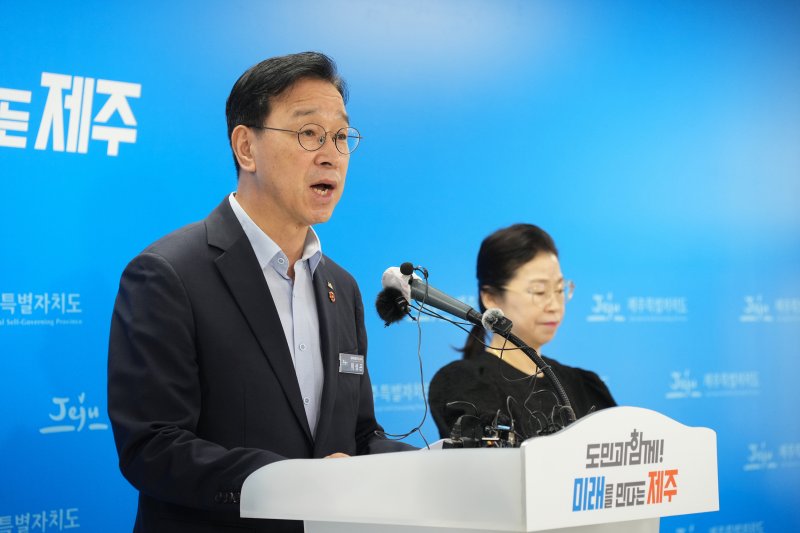
Governor Wi said, "Protecting the lives and safety of residents and tourists is a basic duty of the provincial government that cannot be compromised under any circumstances." He added, "Using the recent missing-person cases as an opportunity, we will reexamine the blind spots in the existing safety system and whether information sharing and coordination among agencies are truly working on the ground." He continued, "We will build a practical response system in which not only the police, fire services, and coast guard, but also private safety organizations that know local conditions well, move together."
[email protected] Jung Yong-bok Reporter