Minister Kim Yun-duk Says "10,000 Homes Can Be Supplied in the Capital Region if Seoul Is Consulted"
- Input
- 2026-08-27 14:43:32
- Updated
- 2026-08-27 14:43:32
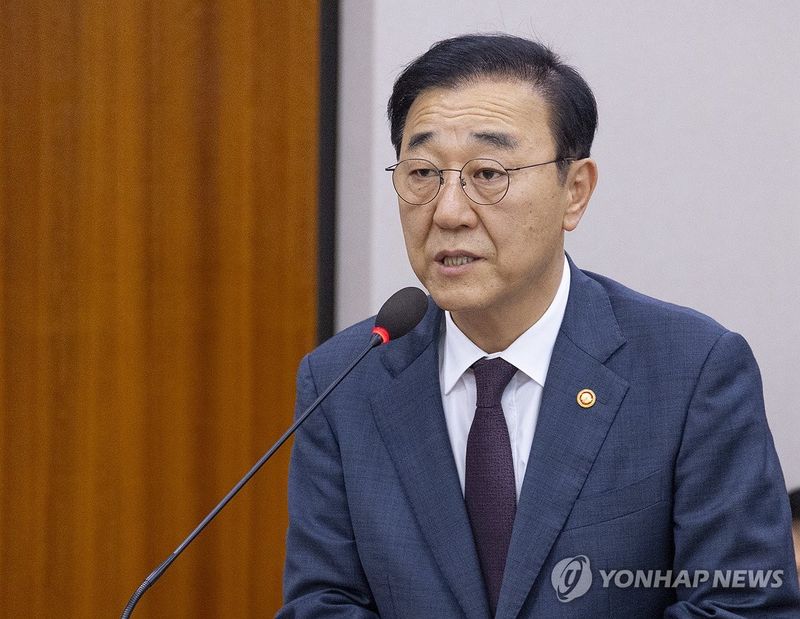
[Financial News] Kim Yun-duk, Minister of Land, Infrastructure and Transport of South Korea, said that 100,000 homes could be supplied in the Capital Region if talks with the Seoul Metropolitan Government move forward. On Yongsan Park, he said the government would not designate the Children’s Garden as a direct development site, but would instead open public discussion centered on already damaged land. He also said it would likely be difficult to find an alternative site for the Tancheon wastewater treatment center, which the Seoul Metropolitan Government has proposed as a substitute.
Kim Yun-duk appeared on CBS FM's 'Park Sung-tae's News Show' on the 27th and said that if consultations with the Seoul Metropolitan Government proceed smoothly and an additional 30,000 to 40,000 homes are secured, the government's planned new housing supply in the Capital Region could exceed 100,000 homes.
The government announced in its Aug. 13 rapid housing supply plan that it would add 230,000-plus homes in the Capital Region. Of that total, new public housing districts account for 100,000-plus homes. It has already unveiled 27,000 homes in western Seoul and in Namyangju and Gwangju in Gyeonggi Province, and plans to announce the remaining candidate sites for 73,000-plus homes, plus additional supply, in stages by the end of the year. Any additional volume discussed with the Seoul Metropolitan Government would be separate from that plan and could further expand supply capacity.
In discussions over Yongsan Park, he drew a line, saying the Children’s Garden would not immediately become a housing supply site. Kim Yun-duk mentioned already developed or damaged areas such as a hospital site, the former U.S. military school, the Defense Acquisition Program Administration site, and officers’ housing as possible candidates. He explained that the idea was to ask whether housing for young people could be supplied on such sites through social discussion.
MOLIT also issued an official clarification on the 14th regarding the controversy over housing supply at Yongsan Park, saying it did not mean the entire park would be developed as housing land. The government appears to have reaffirmed that it will examine the possibility of using only some damaged or altered areas, rather than targeting the park’s entire green space.
The ministry is also reviewing a broader range of housing types beyond existing public rental housing. Kim Yun-duk said that "there should also be universal public housing that middle-class families can live in," adding that the government will prioritize young people, newlyweds, and families with multiple children. He said the specific rent levels and income requirements will be decided after public discussion.
The area around the Tancheon wastewater treatment center in Gangnam-gu, which Seoul has proposed as an alternative to Yongsan Park, is also under review. The Seoul Metropolitan Government believes that if the Tancheon wastewater treatment center, the Eastern Road Office, and the SETEC site are developed together, 10,000 to 13,000 homes could be supplied.
However, finding a relocation site for the wastewater treatment center remains the first hurdle. Kim Yun-duk said that choosing the actual relocation site could be more difficult than deciding to move the center itself. He said, "I received the proposal directly from the mayor, asked for cooperation because there was no data, and once the data is provided, we will begin a full review of feasibility."
He also cited the case of public backlash over relocating Jeonju Prison, saying, "I told Mayor Oh that Tancheon wastewater treatment center is similar, and that selecting a relocation site and location would be even more difficult." He added that if housing is actually built at the wastewater treatment center site, the priority should not be luxury apartments, but public housing that can be supplied to young people and newlyweds.
At the second meeting between Kim Yun-duk and Seoul Metropolitan City Mayor Oh Se-hoon the previous day, differences remained over Yongsan Park. Instead, the two sides agreed to continue consultations on other supply measures, including the Tancheon wastewater treatment center, the Greenbelt, and easing regulations on the Rearrangement Project.
After the meeting, the two sides also appeared to interpret the agreement differently. Mayor Oh said MOLIT was positively reviewing a plan to raise the floor area ratio for redevelopment to 1.2 times the legal maximum. Seoul estimates that this could increase net redevelopment supply by about 43,000 homes. MOLIT, however, said the specific direction and details of any easing of floor area ratio rules have not yet been decided. When Kim Yun-duk emphasized Seoul's review of Greenbelt use, the Seoul Metropolitan Government pushed back, saying that a withdrawal of the Yongsan Park housing supply plan must come first.
MOLIT and the Seoul Metropolitan Government are scheduled to meet again next week to continue discussions on Yongsan Park, the Tancheon wastewater treatment center, Greenbelt use, and easing regulations on the Rearrangement Project.
[email protected] An Seung-hyun Reporter